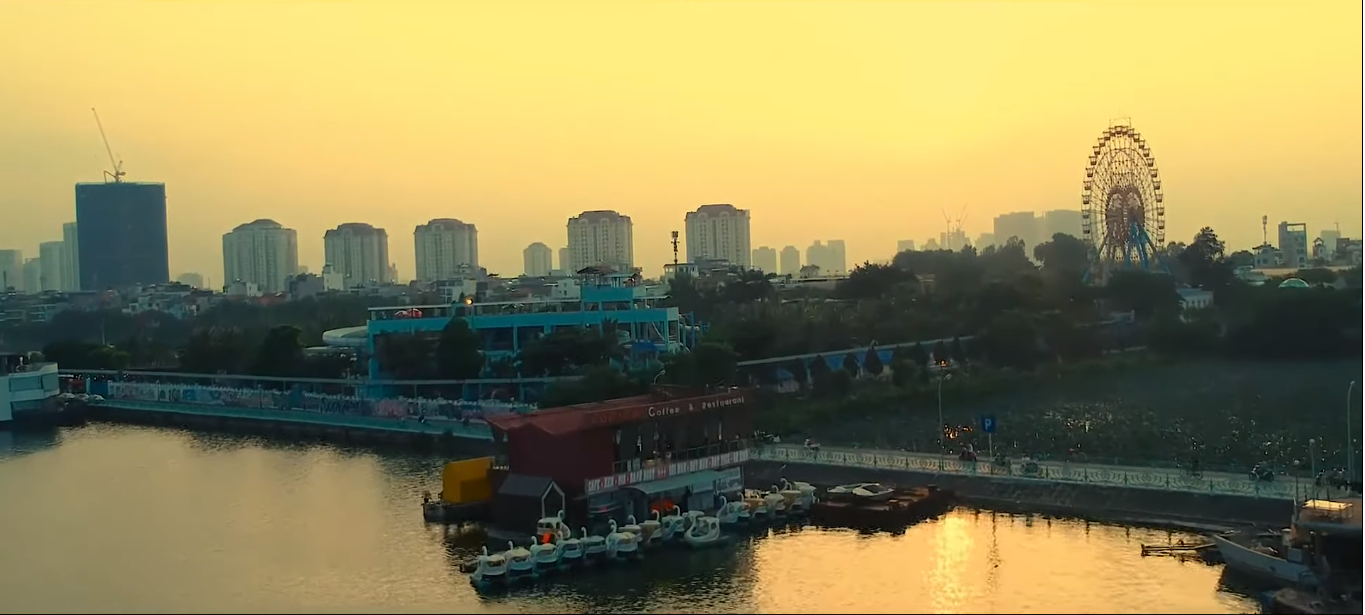
West Lake is Hanoi's largest lake — a 500-hectare body of water northwest of the Old Quarter that has been a retreat for Vietnamese royalty, French colonists, and modern Hanoians who escape the city's density by walking, cycling, or sitting at the lakeside cafés that ring the shore. The lake is surrounded by pagodas, temples, and the kind of residential development that reflects Hanoi's transformation from socialist austerity to capitalist ambition.
Trấn Quốc Pagoda, on a small island connected to the eastern shore by a causeway, is the oldest Buddhist temple in Hanoi — founded in the 6th century and moved to its current location in the 17th century. The multi-tiered pagoda, rising above the lake with the city skyline behind, is one of Hanoi's most photographed landmarks, and the combination of ancient pagoda, water, and modern towers captures the temporal layering that defines the city.
The lakeside road (Thanh Niên, meaning 'Youth,' because it was built by young volunteers in the 1950s) divides West Lake from the smaller Trúc Bạch Lake and is one of Hanoi's most pleasant cycling routes. The Tây Hồ district around the northern shore has become Hanoi's expat quarter, with international restaurants, craft breweries, and the Xuân Diệu strip of lakeside bars that provide the closest thing Hanoi has to a waterfront entertainment district. The shrimp cake vendors along the lakeside — selling bánh tôm, deep-fried shrimp fritters, at tables overlooking the water — are a Hanoi institution.
Verified Facts
West Lake covers approximately 500 hectares
Trấn Quốc Pagoda was founded in the 6th century
Thanh Niên road was built by young volunteers in the 1950s
Bánh tôm (shrimp fritters) are a signature lakeside food
Get walking directions
Trung Tam Ha Noi To, Dong Ngac, Hanoi, Vietnam