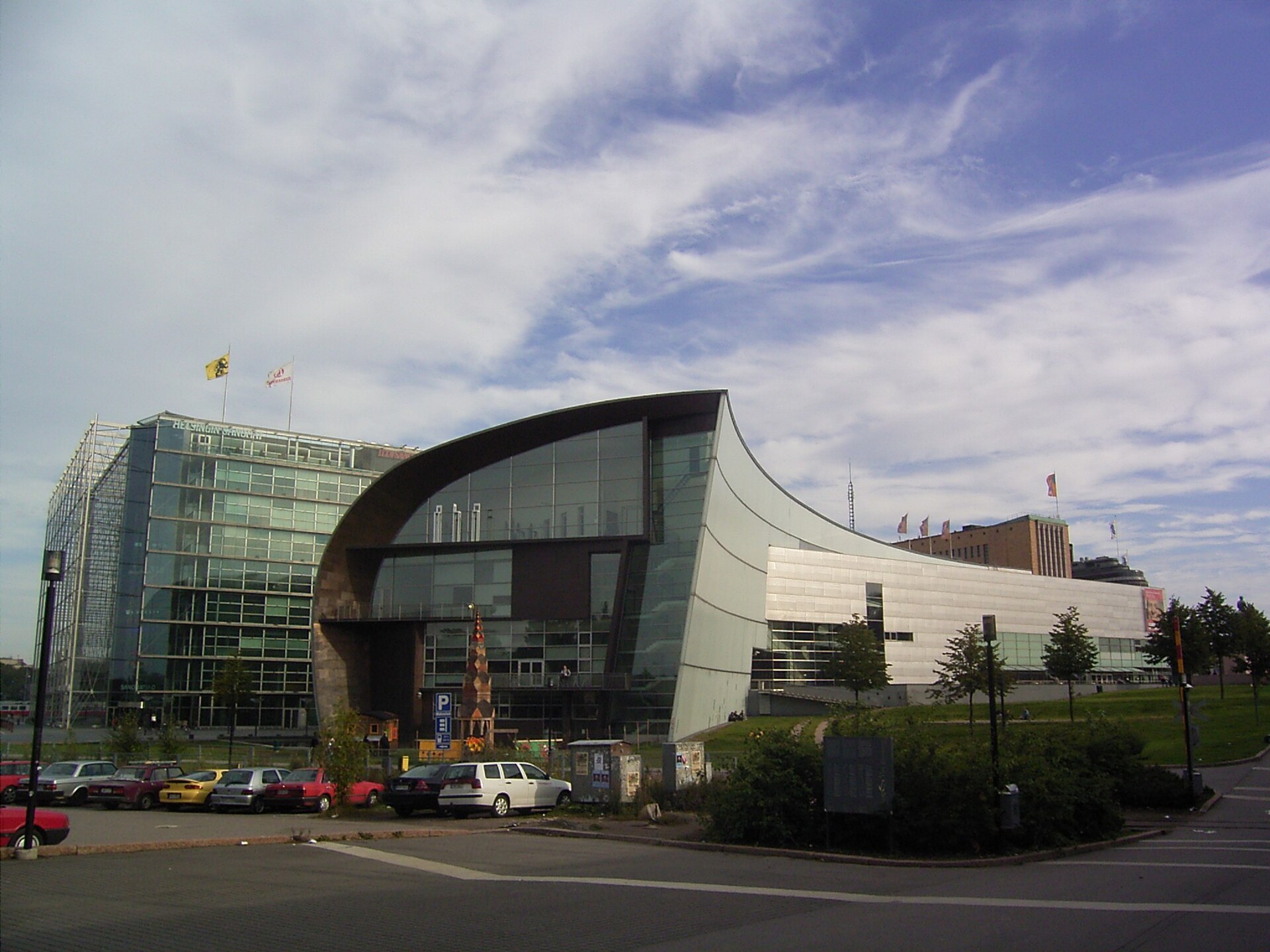
Kiasma is Finland's national museum of contemporary art — a curving, asymmetric building designed by American architect Steven Holl and completed in 1998 that was controversial when it opened (Finns are not natural enthusiasts of asymmetry) and has since become one of Helsinki's most important cultural landmarks. The building's form — which Holl described as an 'intertwining' of the building with the landscape and light of Helsinki — creates a series of curved galleries where natural light enters through skylights and slots in the walls, producing lighting conditions that change throughout the day and across the seasons.
The name 'Kiasma' comes from the chiasma, the point where optical nerve fibres cross in the brain, and the building's architecture literalises this crossing — the curved form is a meeting point between the city grid and the waterfront, between geometric and organic, between the building's interior light and the Finnish sky outside. The galleries, which wind through the building in a spiralling sequence, display works from the collection of the Finnish National Gallery alongside temporary exhibitions that lean toward installation, video, and the immersive formats that the curved spaces are particularly suited to.
Kiasma sits on Mannerheimintie between the Parliament building and the central railway station, and its location — at the intersection of Helsinki's civic, commercial, and cultural axes — makes it a natural stop on any city walk. The museum's programme extends beyond the galleries to include performance, cinema, and the kind of participatory events that blur the boundary between audience and artwork.
Verified Facts
Kiasma was designed by Steven Holl and completed in 1998
The name comes from 'chiasma,' where optical nerve fibres cross
Kiasma is part of the Finnish National Gallery
The building is located on Mannerheimintie
Get walking directions
Mannerheiminaukio 2, 00100 Helsinki