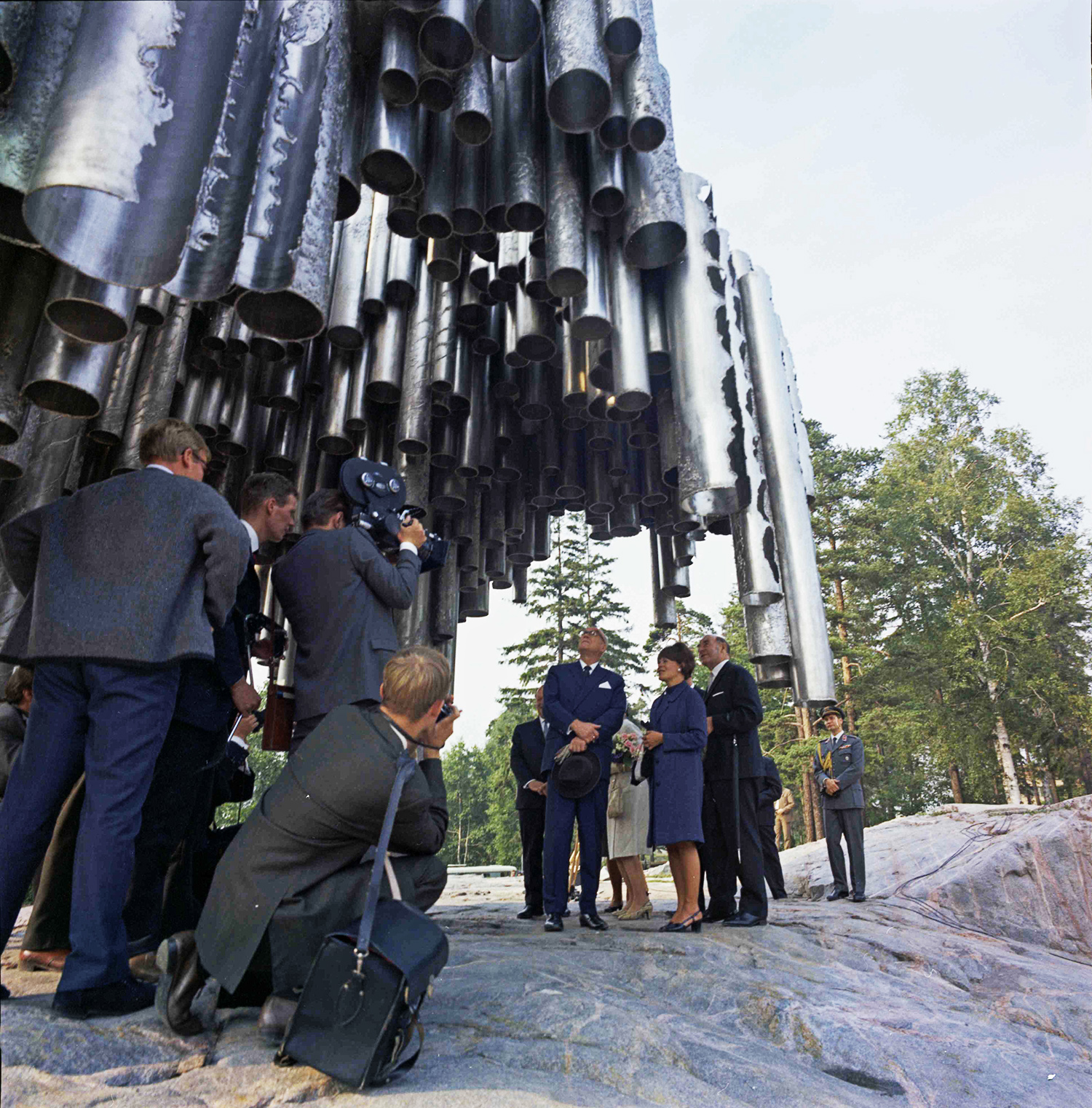
The Sibelius Monument is Finland's most famous public sculpture — a cluster of over 600 hollow steel pipes welded together into an abstract wave form that honours Jean Sibelius, Finland's greatest composer and one of the most important figures in the country's cultural identity. Designed by Eila Hiltunen and unveiled in 1967, the sculpture was controversial at first (critics wanted a figurative likeness, and Hiltunen added a portrait bust nearby as a compromise) but has since become so identified with Helsinki that it appears on nearly every tourist brochure.
The pipes, which range in size from narrow tubes to wide cylinders, are arranged to suggest both organ pipes and a natural formation — a frozen wave, a cluster of birch trees, or the sound of Sibelius's music made physical. The sculpture weighs 24 tonnes and, when the wind passes through the hollow pipes, produces a faint humming that visitors strain to hear and that may or may not be audible depending on conditions and imagination.
Sibelius Park, surrounding the monument, is a pleasant green space in the Töölö neighbourhood with views of the sea through the trees. Sibelius's importance to Finnish identity cannot be overstated — his tone poem 'Finlandia' (1899) became an anthem of Finnish resistance to Russian rule and is still played at national events. The monument's location in a residential neighbourhood rather than a ceremonial square reflects the Finnish preference for integrating culture into daily life rather than setting it apart on a pedestal.
Verified Facts
The Sibelius Monument was designed by Eila Hiltunen and unveiled in 1967
The sculpture consists of over 600 hollow steel pipes
The monument weighs 24 tonnes
Sibelius's 'Finlandia' became an anthem of Finnish resistance to Russian rule
Get walking directions
39 Mechelininkatu, Taka-Töölö, Helsinki, 00250, Finland