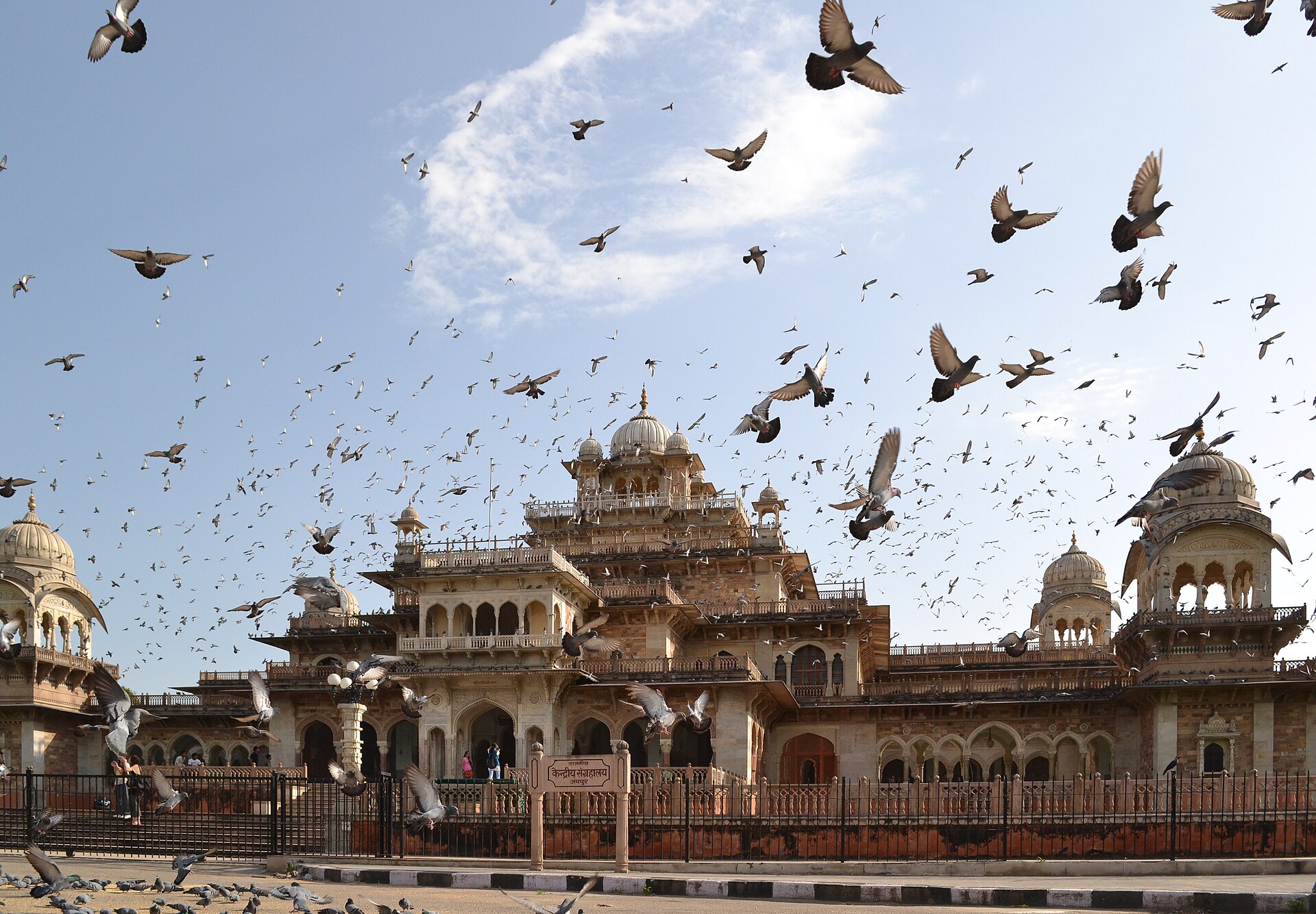
Jaipur's bazaars are among the most colourful and commercially vibrant in India — a network of wide streets lined with pink-painted shops that sell jewellery (Johari Bazaar, the jewellers' market, where Jaipur's renowned gem-cutting industry is visible in workshop after workshop), textiles (Bapu Bazaar, for block-printed fabrics and the tie-dye bandhani that Rajasthan is famous for), and the lac bangles, blue pottery, and leather jootis (embroidered shoes) that define Rajasthani craft.
The bazaars occupy the grid of streets that Jai Singh II laid out when he founded the city in 1727 — one of the earliest examples of planned urban design in India, with streets arranged in a grid pattern following principles from the ancient Indian architectural text, the Shilpa Shastra. The pink colour of the buildings (originally yellow, repainted pink in 1876) gives the commercial streets a visual consistency that is unique among Indian cities.
The food in the bazaars is Rajasthani street food at its most abundant — dal bati churma (the quintessential Rajasthani dish of lentils, baked wheat balls, and sweetened crushed wheat), ghewar (a honeycomb-shaped sweet), pyaaz kachori (onion-filled fried pastry), and the lassi that Jaipur's dairy culture produces in quantities and richness that make the lassi elsewhere in India taste thin.
Verified Facts
Johari Bazaar is the traditional jewellers' market
Jaipur was laid out on a grid following the Shilpa Shastra in 1727
The city was repainted pink in 1876
Dal bati churma is the quintessential Rajasthani dish
Get walking directions
Pink City, Jaipur, 302003, India