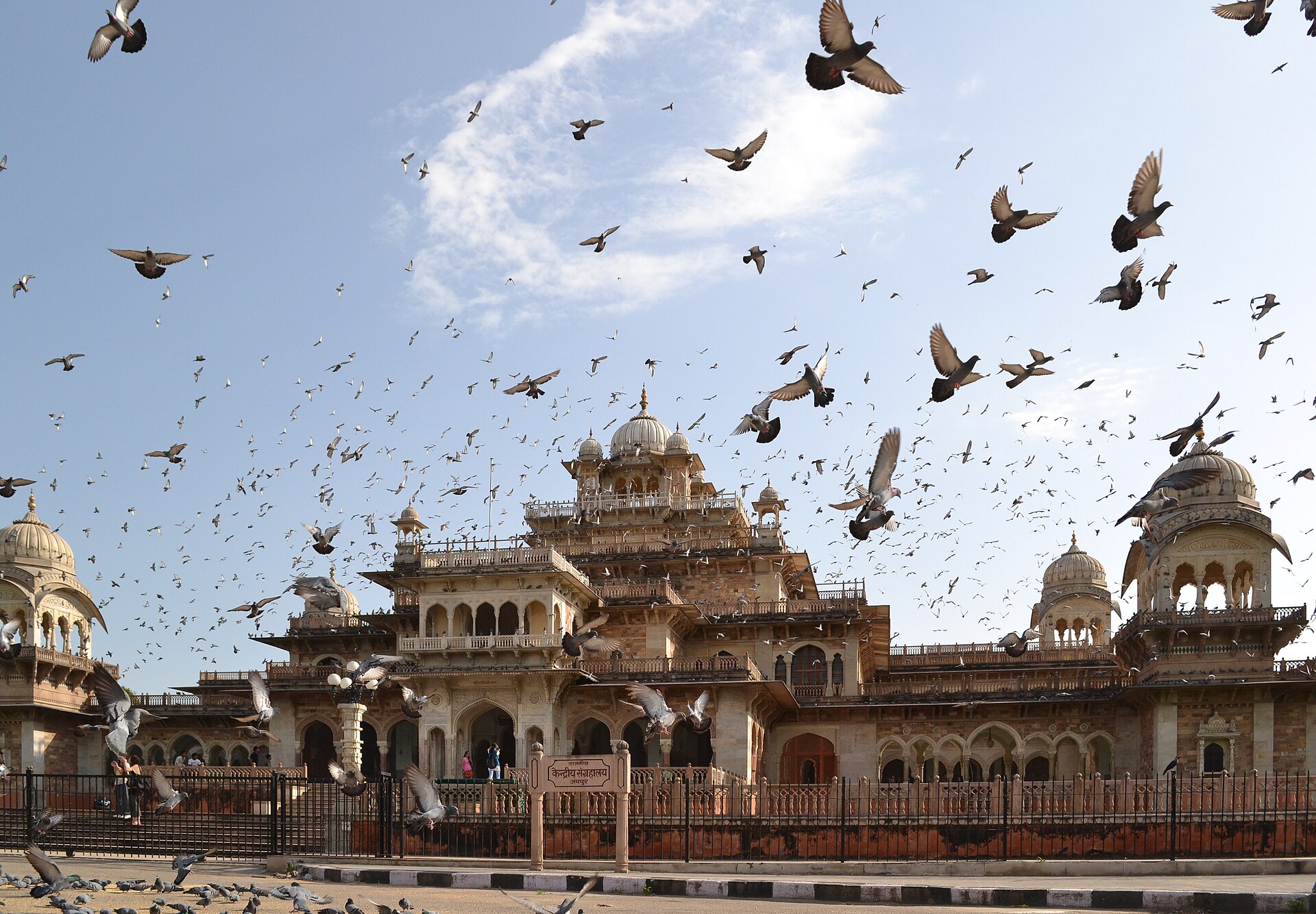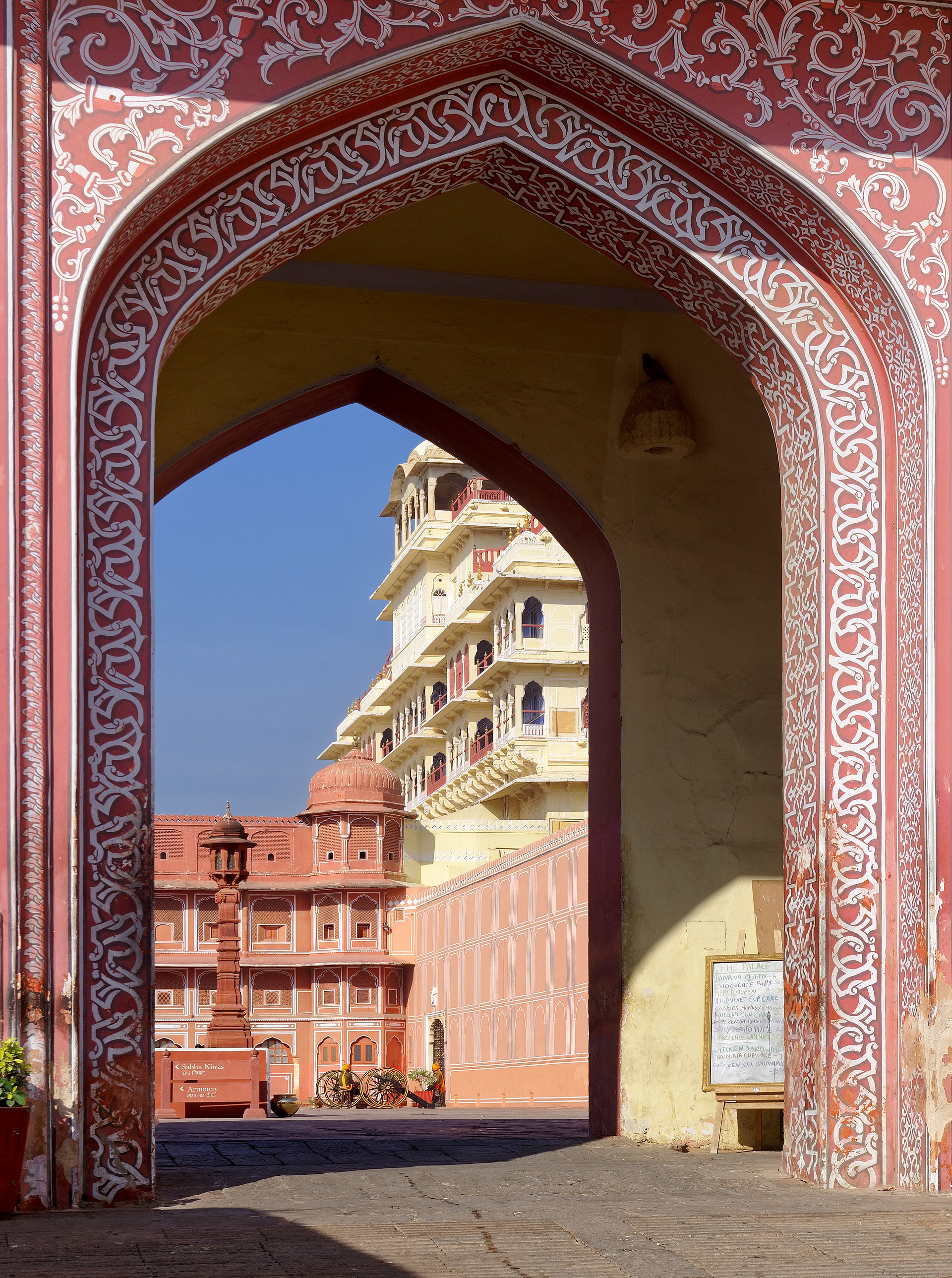
The City Palace is Jaipur's most important architectural complex — a walled compound of courtyards, gardens, and buildings at the centre of the Pink City that has been the seat of the Jaipur royal family since the city was founded in 1727 and where the current maharaja still lives in a section of the palace. The complex blends Rajasthani and Mughal architecture in a series of courtyards that progress from public to private, each more ornate than the last.
The Pritam Niwas Chowk (Peacock Courtyard) contains four painted gates representing the four seasons — the Peacock Gate (autumn), the Lotus Gate (summer), the Green Gate (spring), and the Rose Gate (winter) — each painted in the vivid colours and detailed patterns that make Rajasthani decorative art one of the most visually intense traditions in the world. The Mubarak Mahal (a blend of Islamic, Rajput, and European architecture built to receive foreign dignitaries) now houses the Textile and Costume Museum.
The palace's most famous objects are the two giant silver vessels (Gangajalis) in the Diwan-i-Khas — each 1.6 metres tall and holding 4,091 litres, they are the largest silver objects in the world and were used by Maharaja Madho Singh II to carry Ganges water to London for Edward VII's coronation in 1902.
Verified Facts
The City Palace was founded in 1727 with the city of Jaipur
The current maharaja still lives in part of the palace
The two silver Gangajalis are the largest silver objects in the world
Maharaja Madho Singh II took Ganges water to Edward VII's coronation in 1902
Get walking directions
Tulsi Marg, Adarsh Nagar, Jaipur, 302004, India