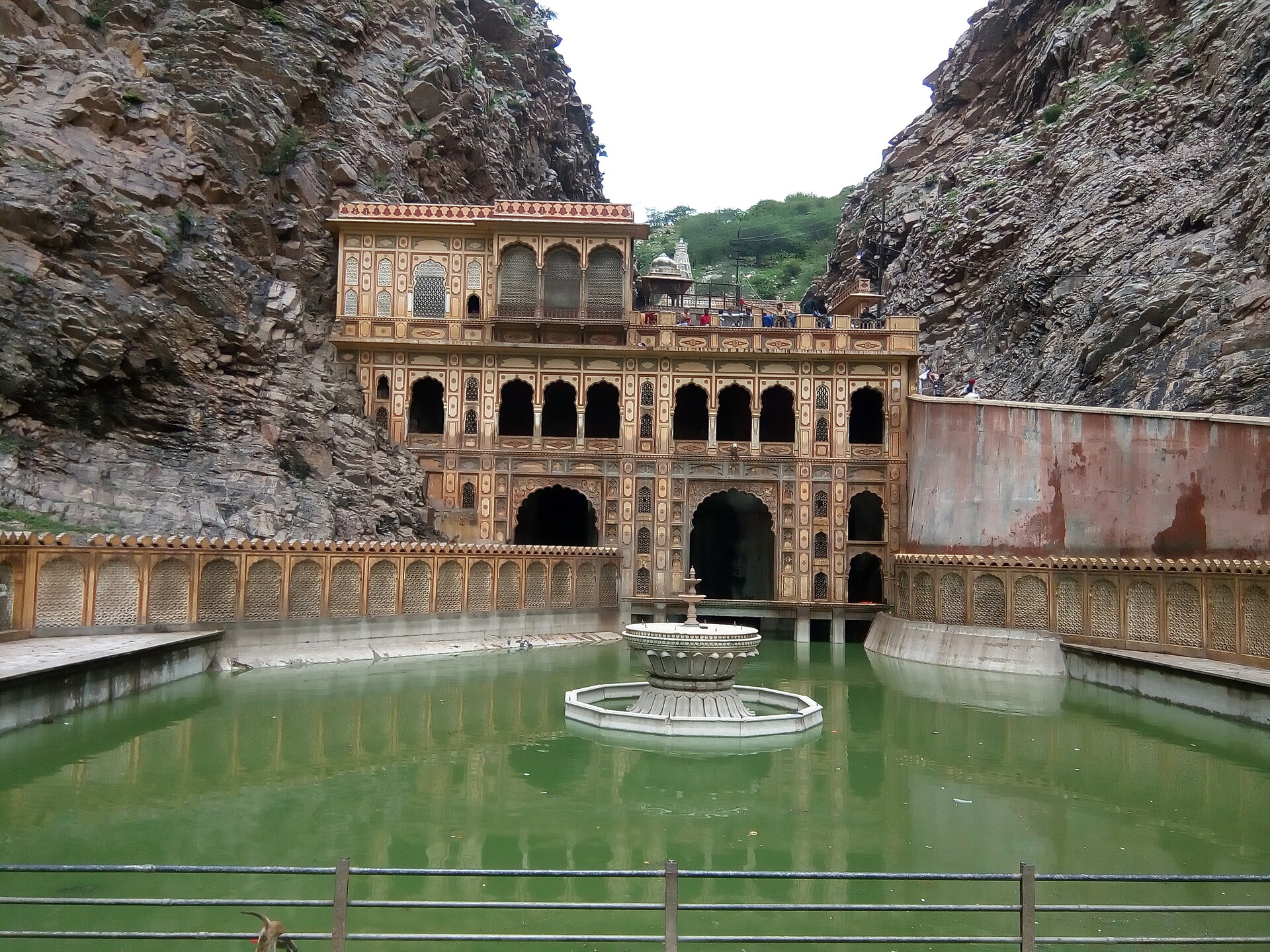
Galtaji is a 10th-century Hindu pilgrimage site in a mountain pass east of Jaipur — a complex of temples, natural springs, and sacred kunds (pools) built into a narrow gorge that is inhabited by hundreds of macaque monkeys who have made the temple their territory. The monkeys (rhesus macaques) are the temple's most famous residents and the reason for its tourist nickname — they congregate around the water tanks, climb the temple walls, and interact with visitors with the confidence of animals who know they are protected by religious tradition.
The temple complex includes the Galta Kund (a natural spring-fed pool where pilgrims bathe), the Surya Temple (dedicated to the sun god, perched on the ridge above with panoramic views of the city), and several smaller temples decorated with the painted frescoes and carved stonework that Rajasthani temple architecture produces at every scale. The climb to the Surya Temple provides one of the best views in Jaipur — looking back across the city to the forts and the Aravalli hills.
Galtaji is less visited than Jaipur's major forts and palaces, which gives it a more authentic atmosphere — the pilgrims who come to bathe in the sacred springs and the sadhus (holy men) who live in the temple complex provide a glimpse of living Hindu religious practice that the tourist-oriented monuments can't offer.
Verified Facts
Galtaji dates to the 10th century
Hundreds of rhesus macaques inhabit the temple complex
Natural springs feed the sacred bathing pools
The Surya Temple is dedicated to the sun god
Get walking directions
Sri Galta Ji, Jaipur