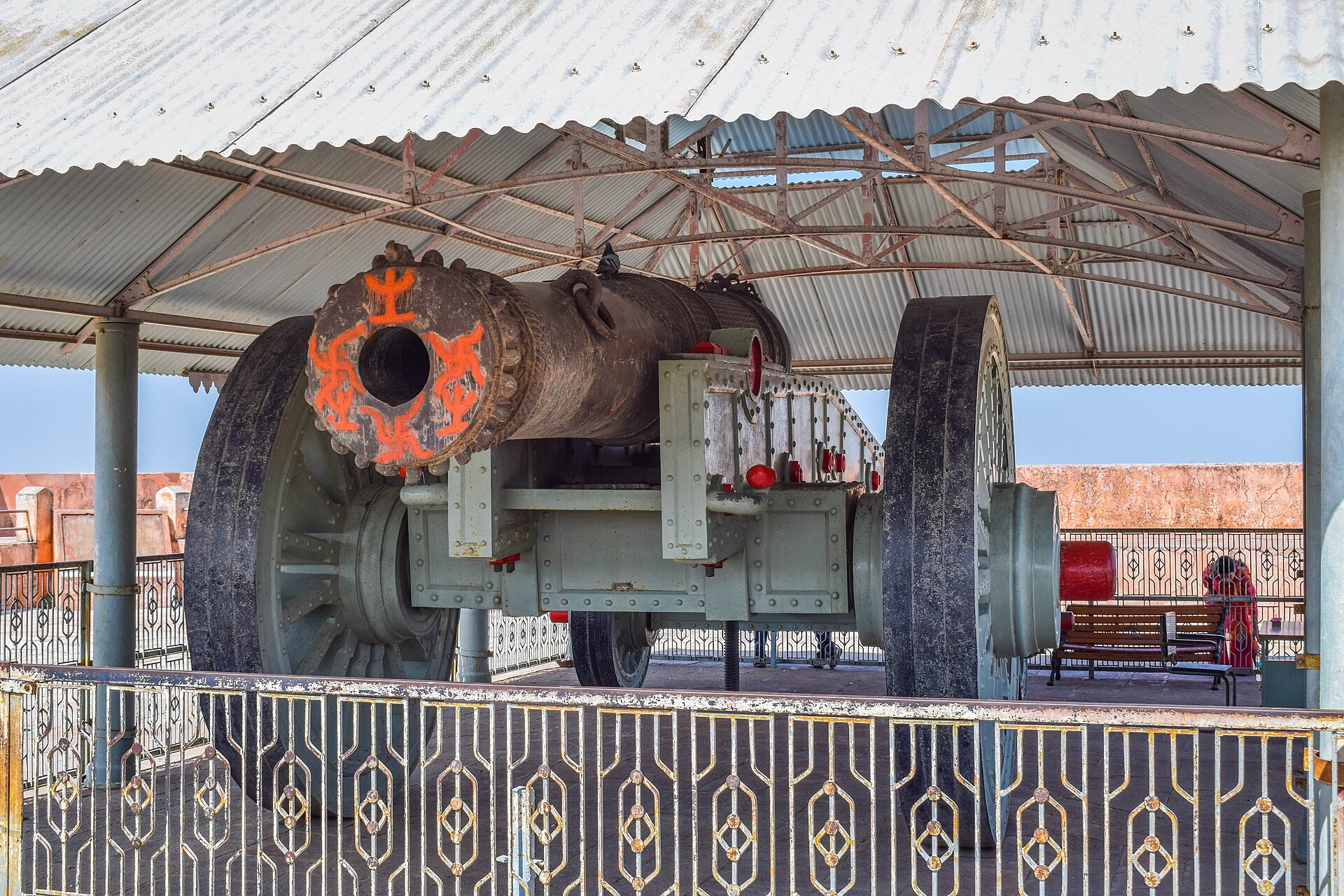
Jaigarh Fort sits on the Cheel ka Teela (Hill of Eagles) above Amber Fort — a military fortress built in 1726 that houses the Jaivana cannon, the largest wheeled cannon ever made. The cannon, cast in the Jaigarh foundry in 1720, weighs 50 tonnes and could fire a cannonball 35 kilometres — a range that meant it could theoretically hit any target in the Jaipur valley from its hilltop position. The cannon was fired once (as a test) and the sound reportedly broke windows across the valley.
Jaigarh's primary function was military — the massive walls, watchtowers, and the underground tunnels connecting it to Amber Fort below formed the defensive infrastructure that protected the Jaipur kingdom's treasury (which was stored in Jaigarh's underground vaults). When Indira Gandhi's government searched the vaults in 1976 (acting on rumours that the Jaipur royal family had hidden billions in treasure there), the search reportedly found the vaults empty — whether the treasure was moved before the search or was never there remains one of Rajasthan's most entertaining mysteries.
The fort provides panoramic views of Amber Fort below, the Jaipur city in the distance, and the Aravalli hills extending in every direction. The walk along the fort walls — which extend for several kilometres along the ridge — is one of the most rewarding in Jaipur, and the elevation (higher than Nahargarh) provides the most expansive perspective available.
Verified Facts
Jaigarh Fort was built in 1726
The Jaivana cannon weighs 50 tonnes and could fire 35 kilometres
The Indian government searched the fort's vaults in 1976
Underground tunnels connect Jaigarh to Amber Fort below
Get walking directions
Jaigarh Fort, Amer, Jaipur