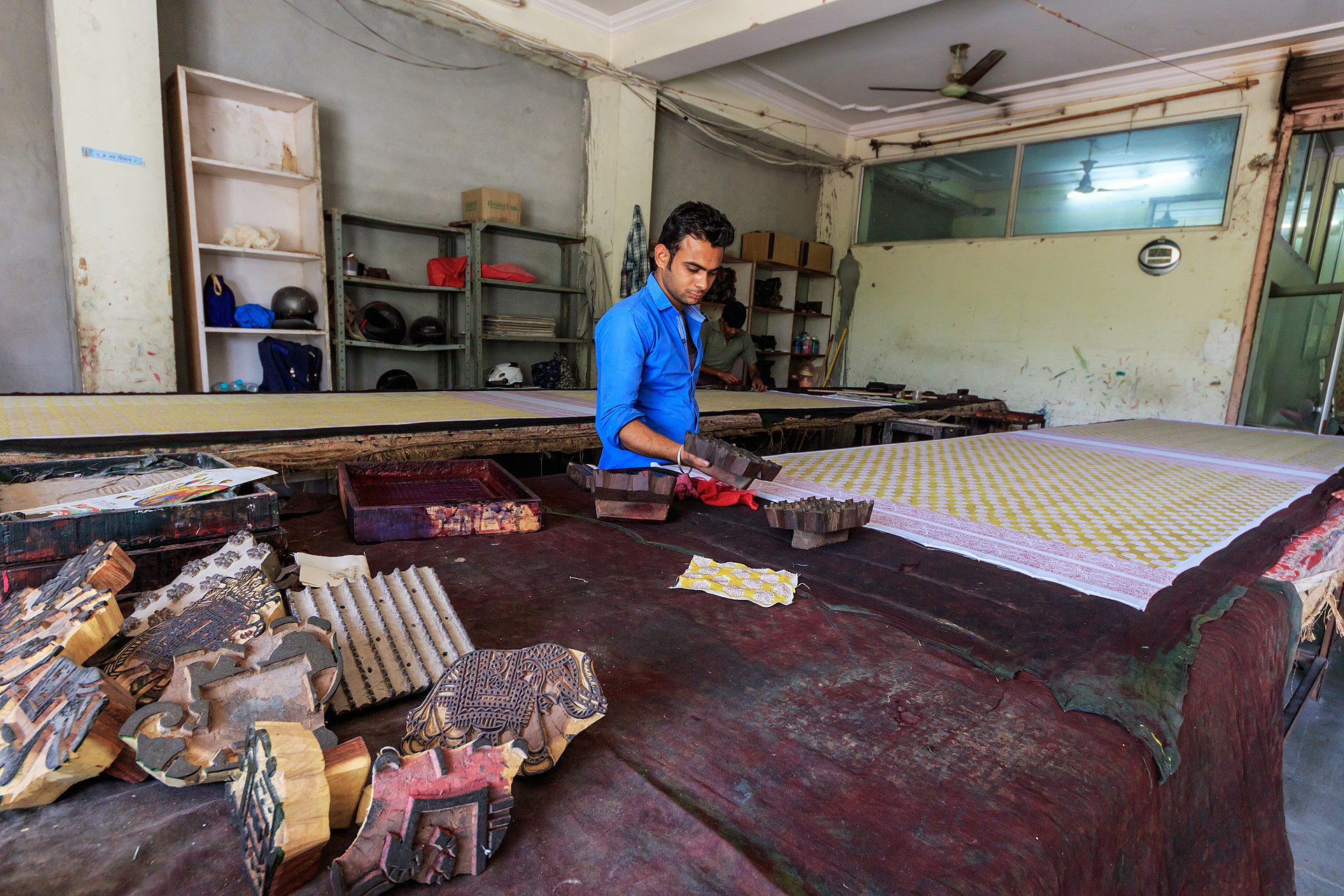
Jaipur is the centre of India's block-printing tradition — a textile craft that has been practised in the surrounding villages (Sanganer and Bagru) for over 500 years, producing the hand-printed fabrics that have been exported from Rajasthan to the world since the Mughal era. The process involves carving wooden blocks with intricate patterns, dipping them in natural dyes (indigo, pomegranate, madder root), and stamping them onto cotton in precise, repetitive patterns that a skilled printer can reproduce without variation for hours.
Anokhi Museum of Hand Printing in Amber (housed in a restored haveli near Amber Fort) is the best introduction — a museum and working demonstration centre that explains the craft's history, shows the printing process, and sells finished textiles in a setting that connects the historical tradition to the contemporary design market. The Sanganer village itself, 16 kilometres south of Jaipur, is where the largest concentration of printing workshops is found — the riverbanks where printers wash and dry their fabrics in the sun create one of the most photogenic craft landscapes in India.
The textile tradition extends beyond block printing — Jaipur is also a centre for bandhani (tie-dye), leheriya (wave-pattern dyeing), and the mirror-work embroidery that Rajasthani women produce for domestic use and commercial sale. The combination of textile workshops, bazaar shopping, and the Anokhi Museum provides a day-long immersion in a craft tradition that is both ancient and commercially thriving.
Verified Facts
Block printing has been practised in the Jaipur area for over 500 years
Sanganer and Bagru are the traditional block-printing villages
Natural dyes include indigo, pomegranate, and madder root
The Anokhi Museum is housed in a restored haveli near Amber Fort
Get walking directions
Sanganer, Jaipur, 302029, India