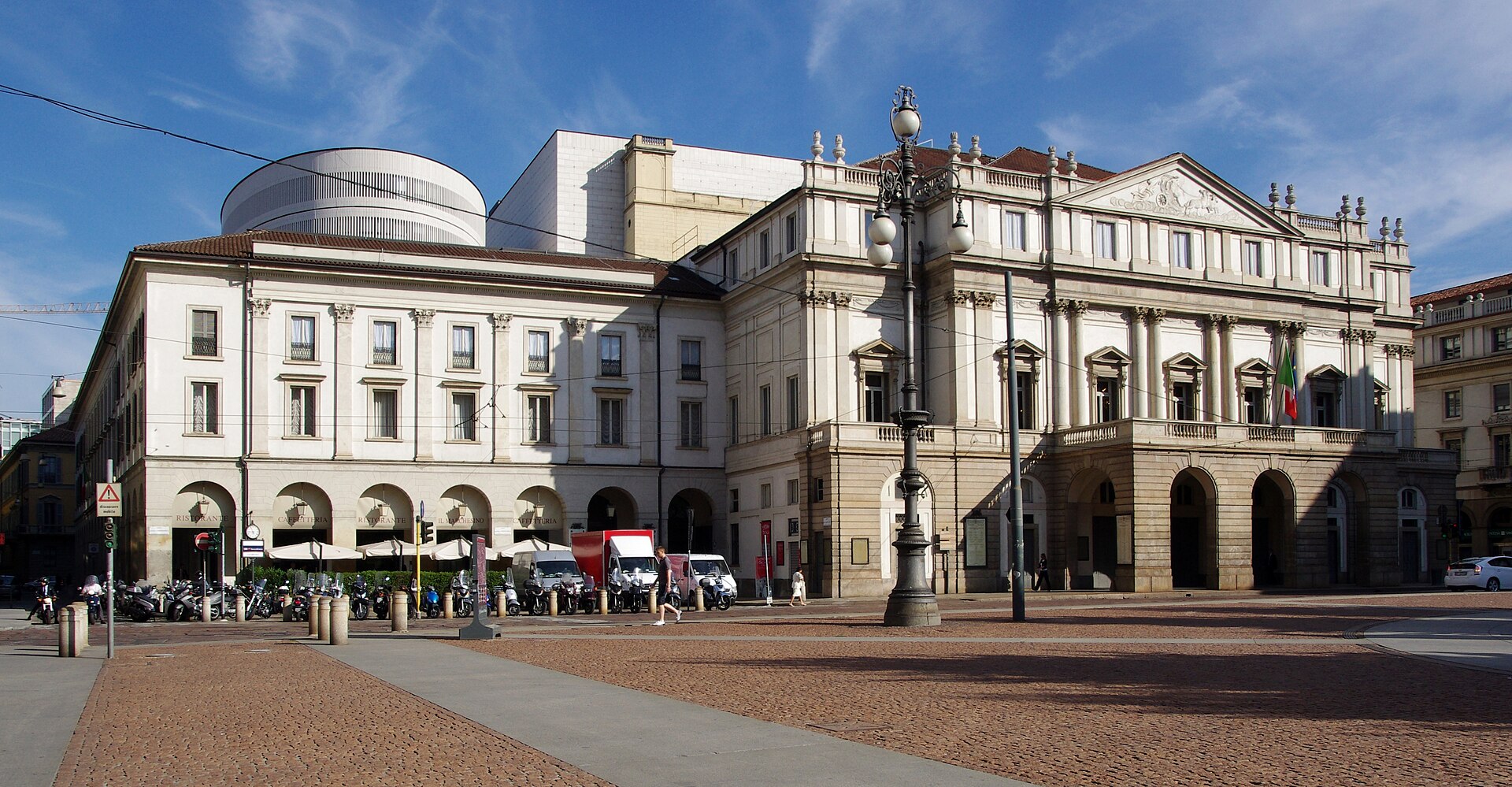
La Scala is the most famous opera house in the world — a neoclassical theatre that has premiered operas by Verdi, Puccini, Bellini, Donizetti, and Rossini, and whose opening night on December 7 (the feast of Sant'Ambrogio, Milan's patron saint) is the most important date in the international opera calendar. The theatre seats 2,030 in a horseshoe auditorium of red velvet, gold leaf, and six tiers of boxes that have hosted every major operatic voice since the building opened in 1778.
The interior is intimate by modern standards — the stage is relatively small, and the boxes bring the audience close to the performers, creating an acoustic and visual relationship between singer and listener that larger opera houses can't replicate. The acoustics, refined over centuries of performance and reconstruction (the theatre was heavily damaged by Allied bombing in 1943 and rebuilt by 1946), are considered among the finest in the world, and the 'La Scala sound' — warm, immediate, and unforgiving of vocal imperfection — has been the standard against which opera singing is measured for two centuries.
The La Scala Museum, in an adjacent building, displays opera costumes, set designs, portraits of composers and singers, and a collection of musical instruments that includes Liszt's piano. The museum provides access to the auditorium (from a box) when rehearsals aren't in progress, letting you see the theatre without attending a performance. But attending a performance — even standing-room in the gallery — is one of the essential experiences of European culture, and last-minute tickets are sometimes available at the box office on performance day.
Verified Facts
La Scala opened in 1778
Opening night is traditionally December 7, feast of Sant'Ambrogio
The theatre was damaged in WWII bombing and rebuilt by 1946
The theatre seats 2,030 people
Get walking directions
Via Filodrammatici 2, 20121 Milan