Walking Tours in Milan
30 Landmarks in Milan
Arco della Pace
Piazza Sempione, 20154 Milan
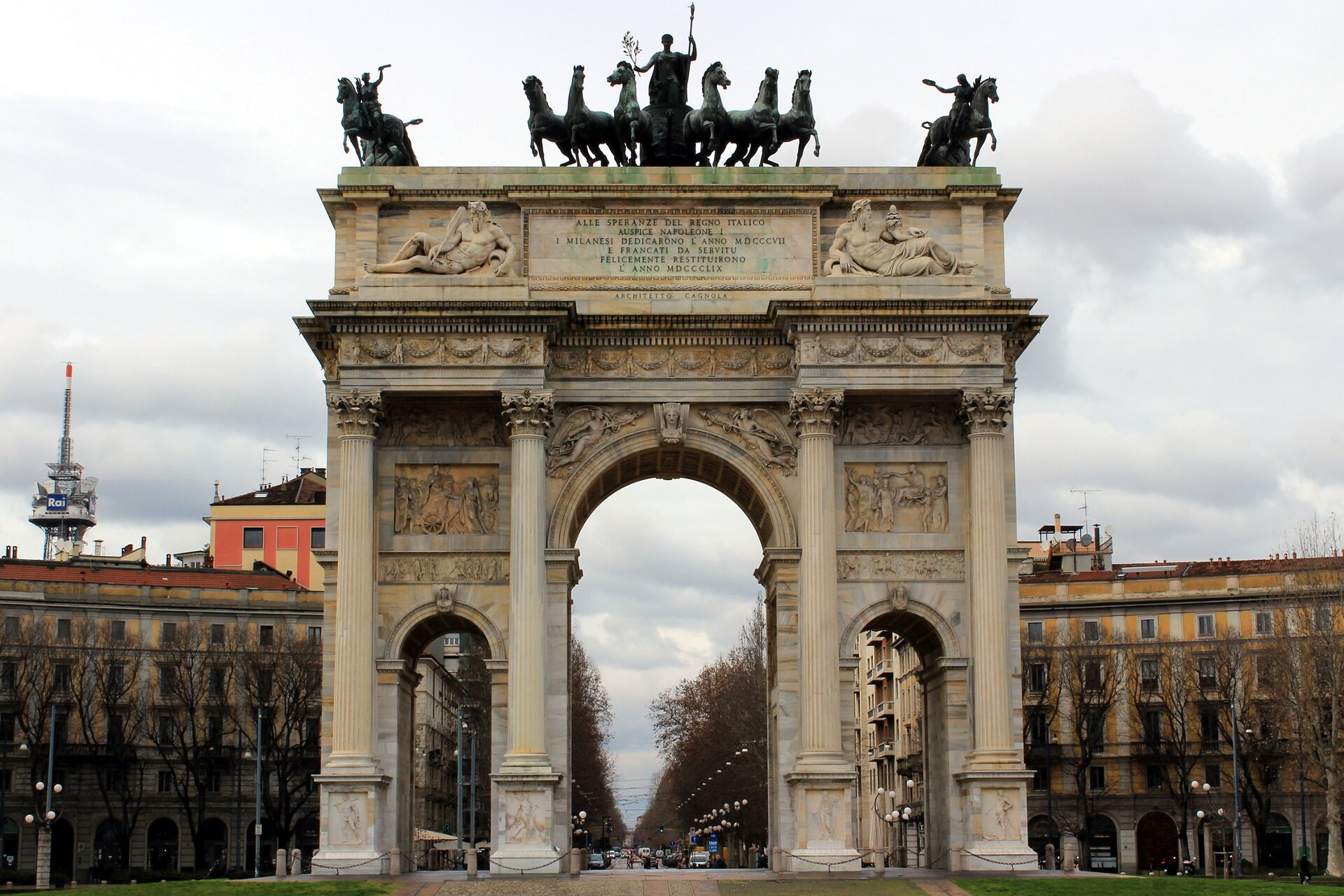
The Arco della Pace is Milan's triumphal arch — a neoclassical marble gate at the northwestern end of Parco Sempione that was begun in 1807 to celebrate Napoleon's victories and completed in 1838 as a monument to peace after the Austrian Empire reclaimed Lombardy. The arch's political identity changed mid-construction, which is a very Milan story — the city has been conquered, liberated, and reconquered so many times that its monuments have learned to be diplomatically flexible. The arch is modelled on the Roman triumphal arch tradition and is topped by a bronze quadriga (six-horse chariot) of the Goddess of Peace, originally facing Paris (toward Napoleon) and turned around after Waterloo to face the city (away from France). The reliefs on the arch depict Napoleon's victories and the Congress of Vienna, which means the monument simultaneously celebrates a conqueror and his defeat — an ambiguity that the Milanese, who have lived under French, Austrian, Spanish, and Italian rule, find entirely appropriate. The arch sits at the end of a formal avenue that runs the length of Parco Sempione from the Castello Sforzesco, and the view through the arch — with the park stretching behind and the castle's tower visible at the far end — is the most satisfying architectural axis in Milan. The piazza around the arch is a popular aperitivo spot, with bars and cafés filling their terraces in the evening, and the sunset light on the marble gives the arch the warm glow that Napoleon's architects intended.
Basilica di Sant'Ambrogio
15 Piazza Sant'Ambrogio, Centro Storico, Milan, 20123, Italy
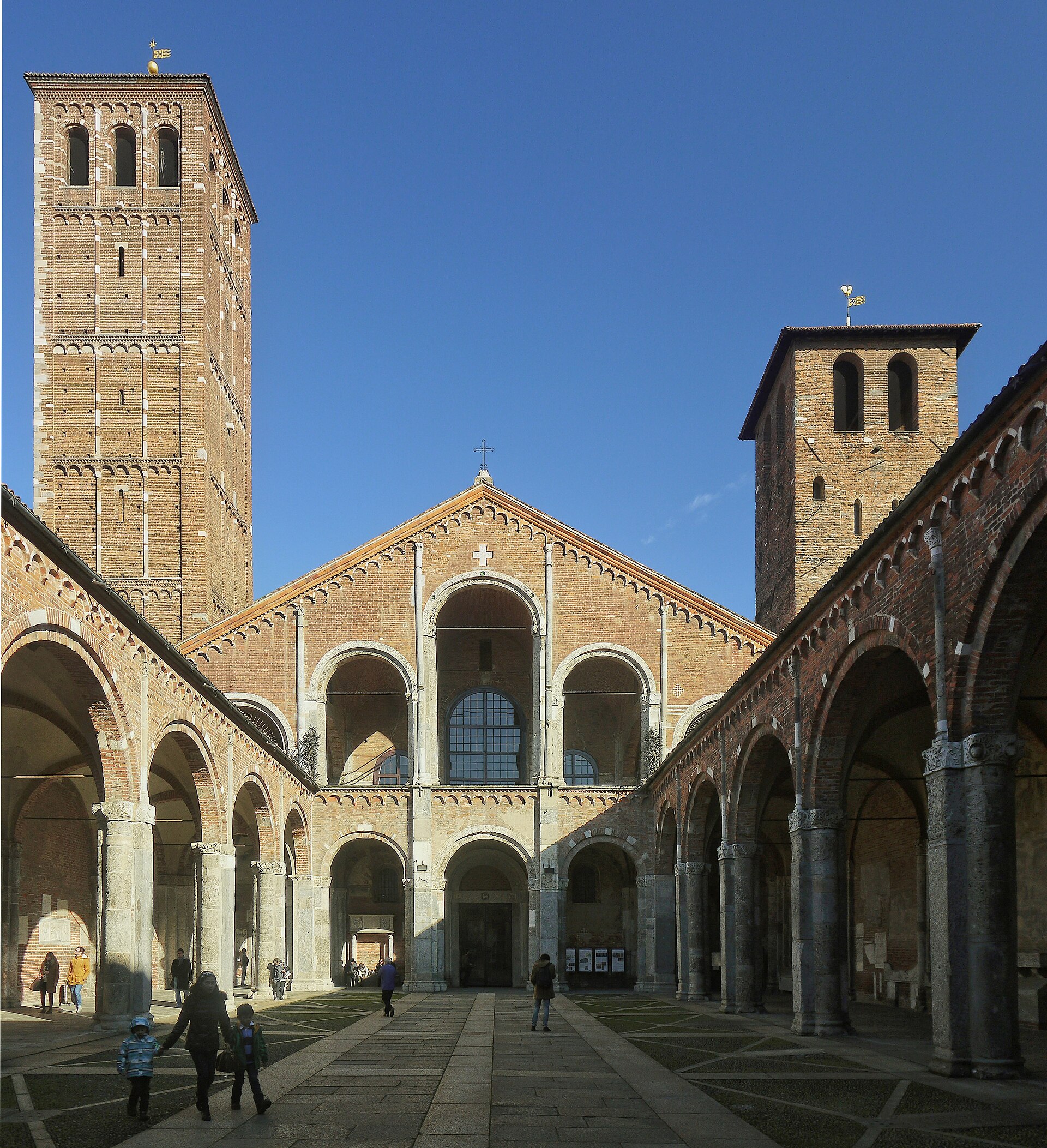
Sant'Ambrogio is Milan's most important church — older than the Duomo by nearly a millennium, founded in 379 AD by Saint Ambrose (Milan's patron saint and one of the four original Doctors of the Church), and rebuilt in its current Romanesque form in the 11th and 12th centuries. The basilica is the spiritual heart of Milan in a way that the Duomo, for all its scale, can never be — this is where Ambrose baptised Augustine, where Milanese emperors were crowned, and where the city's identity as a centre of Christianity was established. The exterior is austere Romanesque — brick and stone, two mismatched bell towers (one from the 9th century, one from the 12th), and an atrium of arched porticoes that serves as a transition space between the street and the sacred interior. The interior is equally restrained: brick vaults, Romanesque columns with carved capitals, and a golden altar (the Paliotto di Sant'Ambrogio) from the 9th century that is one of the most important works of Carolingian goldsmith art in existence. The crypt beneath the altar holds the remains of Saint Ambrose and the martyrs Gervasius and Protasius — three skeletons dressed in episcopal robes and displayed in a glass case, which is either a moving expression of medieval piety or deeply macabre depending on your sensibility. The basilica sees a fraction of the Duomo's tourist traffic, which means you can often stand in the nave alone and experience the quality of Romanesque space — massive, solid, and silent — that the Duomo's Gothic verticality deliberately rejected.
Basilica di Santa Maria delle Grazie
Piazza di Santa Maria delle Grazie, 20123 Milan
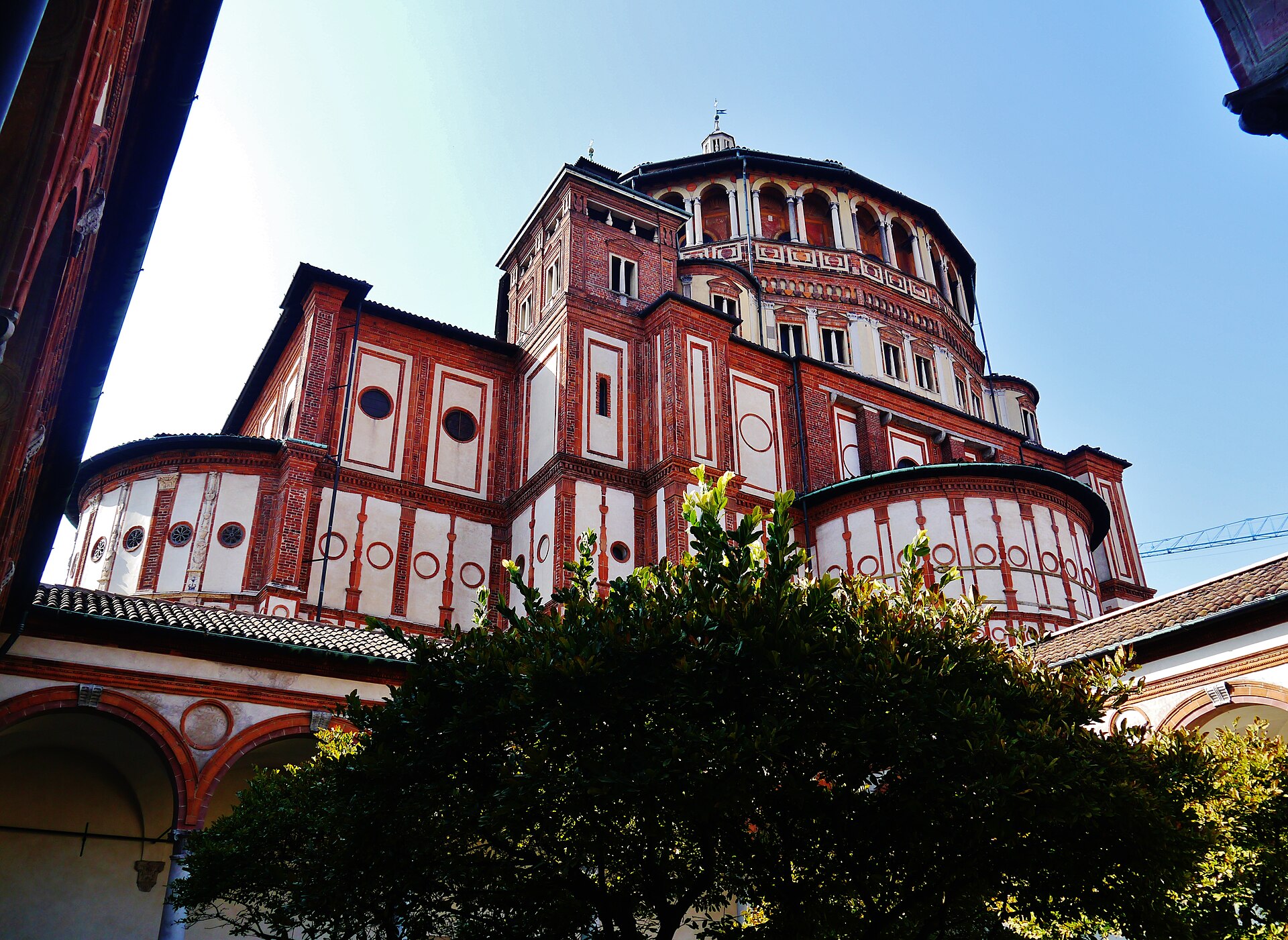
Santa Maria delle Grazie is a UNESCO World Heritage Site — a 15th-century Dominican church whose exterior combines a brick Gothic nave by Guiniforte Solari with a Renaissance tribune added by Bramante in the 1490s. The church is most famous as the home of Leonardo's Last Supper (in the adjacent refectory), but the building itself deserves attention as one of the finest examples of Lombard Renaissance architecture and a key work by Bramante, the architect who would later design the original plan for St. Peter's Basilica in Rome. Bramante's tribune — the domed crossing and apse that replaced Solari's original Gothic east end — is a masterpiece of geometric clarity. The exterior is a composition of circles, arches, and pilasters in red brick and white marble that demonstrates the Renaissance principle of harmonic proportion with the precision of a mathematical proof. The interior of the dome, decorated with frescoes and illuminated by the light that enters through the drum windows, creates a space of luminous serenity that contrasts with the darker Gothic nave. The cloister, accessible from the church, is a peaceful courtyard that most visitors miss because they go directly to the Last Supper entrance next door. The cloister's simplicity — brick arches, a central well, potted citrus trees — provides the kind of contemplative pause that churches were designed to offer but that tourism has largely eliminated. Santa Maria delle Grazie is free to enter (the Last Supper next door requires a separate ticket), and attending a service here — in a church that Bramante designed and Leonardo decorated — is a Renaissance experience that no museum can replicate.
Brera District
Via Brera, Centro Storico, Milan, 20121, Italy
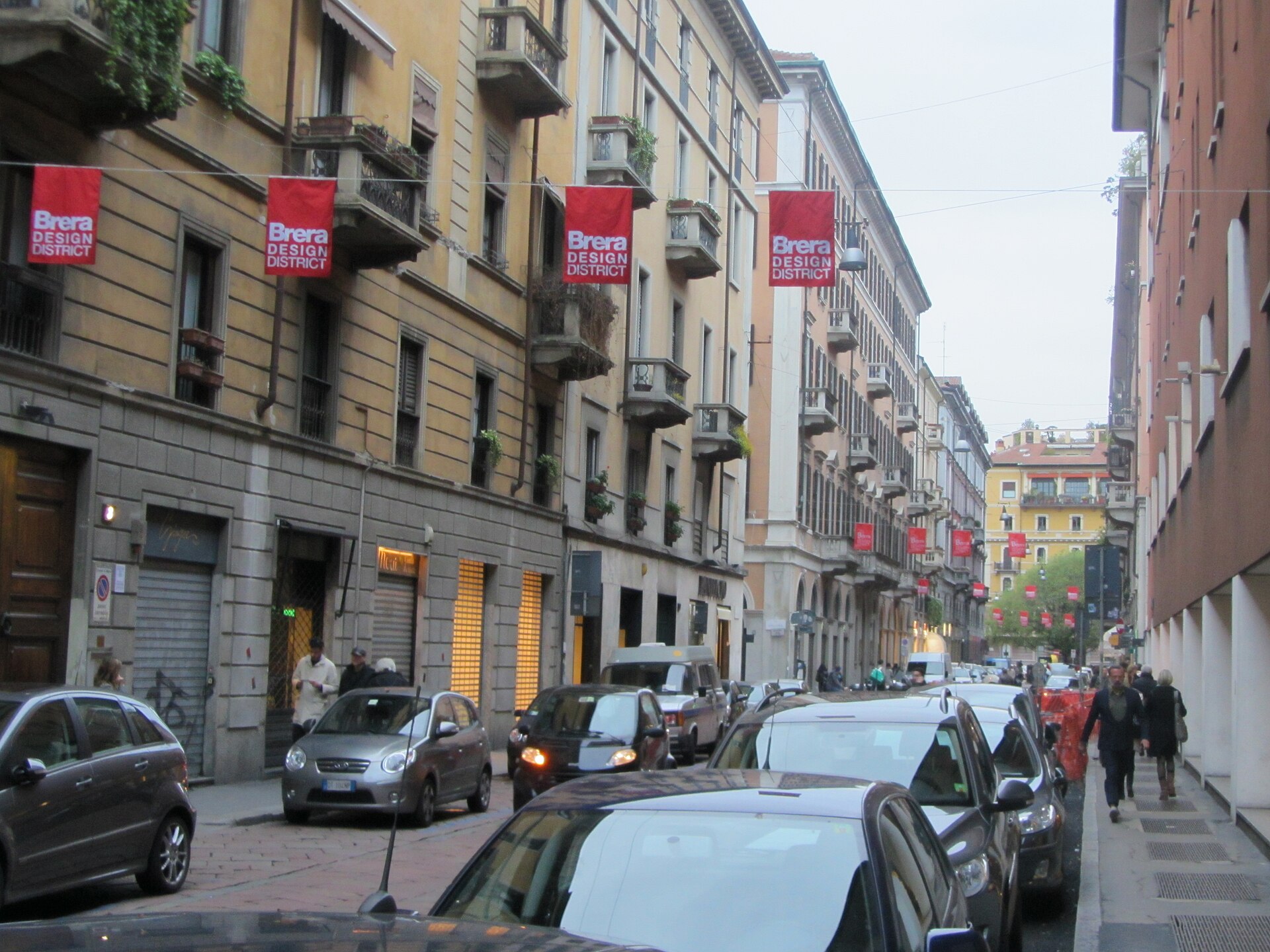
Brera is Milan's most walkable and atmospheric neighbourhood — a grid of cobblestone streets north of the Duomo that houses the Pinacoteca di Brera, the Brera Academy of Fine Art, and a concentration of galleries, antique shops, design studios, and restaurants that make it the cultural heart of a city whose heart is usually measured in euros rather than aesthetics. The neighbourhood's character comes from the art academy — the Accademia di Belle Arti di Brera, one of Italy's most important art schools, has occupied the Palazzo di Brera since 1776, and generations of students have shaped the surrounding streets into an art district. The galleries on Via Brera, Via Fiori Chiari, and Via Madonnina range from old-master dealers to contemporary project spaces, and the monthly gallery openings (particularly during Fuorisalone, the design week events in April) turn the streets into an open-air exhibition. The food scene is intimate rather than showy — neighbourhood trattorias serving risotto alla milanese and cotoletta alla milanese (the breaded veal cutlet that is Milan's signature dish) alongside wine bars pouring by the glass from Piedmontese and Lombardy producers. The Brera Botanical Garden, hidden behind the palazzo, is a small walled garden that provides the kind of unexpected urban oasis that makes Italian cities continuously rewarding to explore on foot. Brera is best experienced in the evening, when the academy students fill the bars, the galleries stay open late, and the cobblestone streets glow in the light from the restaurant windows.
Castello Sforzesco
Via Giovanni de Castro, Forze Armate-San Siro-Baggio, Milan, 20144, Italy
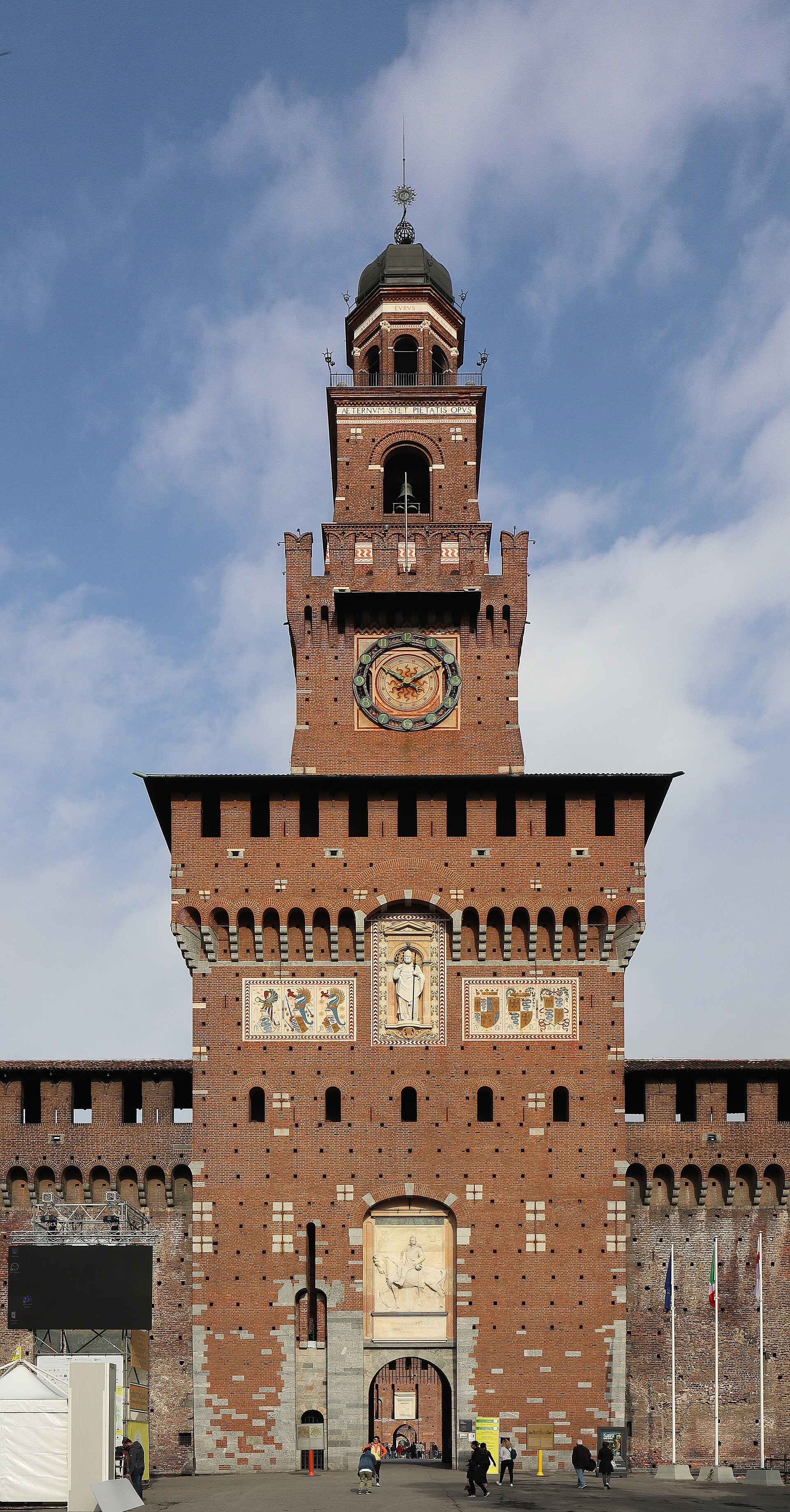
The Castello Sforzesco is a massive red-brick fortress in the centre of Milan that has served as a military stronghold, a ducal palace, a barracks, and now one of the city's most important museum complexes. Built by Francesco Sforza in the 15th century on the ruins of an earlier Visconti castle, it was restored in the late 19th century by architect Luca Beltrami, who gave the castle the crenellated towers and imposing facade that define its current appearance. The museums inside are excellent and undervisited. The Pinacoteca del Castello (picture gallery) includes works by Mantegna, Bellini, Correggio, and Tintoretto. The Museum of Ancient Art houses Michelangelo's final sculpture — the unfinished 'Rondanini Pietà,' a haunting, skeletal work that the artist was still carving six days before his death at 88. The Egyptian collection, the musical instrument collection, and the applied arts galleries round out a museum complex that could easily consume half a day. The castle sits at the end of Via Dante, a pedestrianised shopping street that connects it to the Duomo area, and opens at the rear onto Parco Sempione — Milan's largest central park, designed in the English landscape style in the 1890s. The Arco della Pace (Arch of Peace), a neoclassical triumphal arch at the park's far end, provides a visual counterpoint to the castle and frames the view from the park's main avenue. The castle's courtyards are free to enter, and the museums are covered by a single ticket.
Chiesa di San Bernardino alle Ossa
2 Via Verziere, Centro Storico, Milan, 20122, Italy
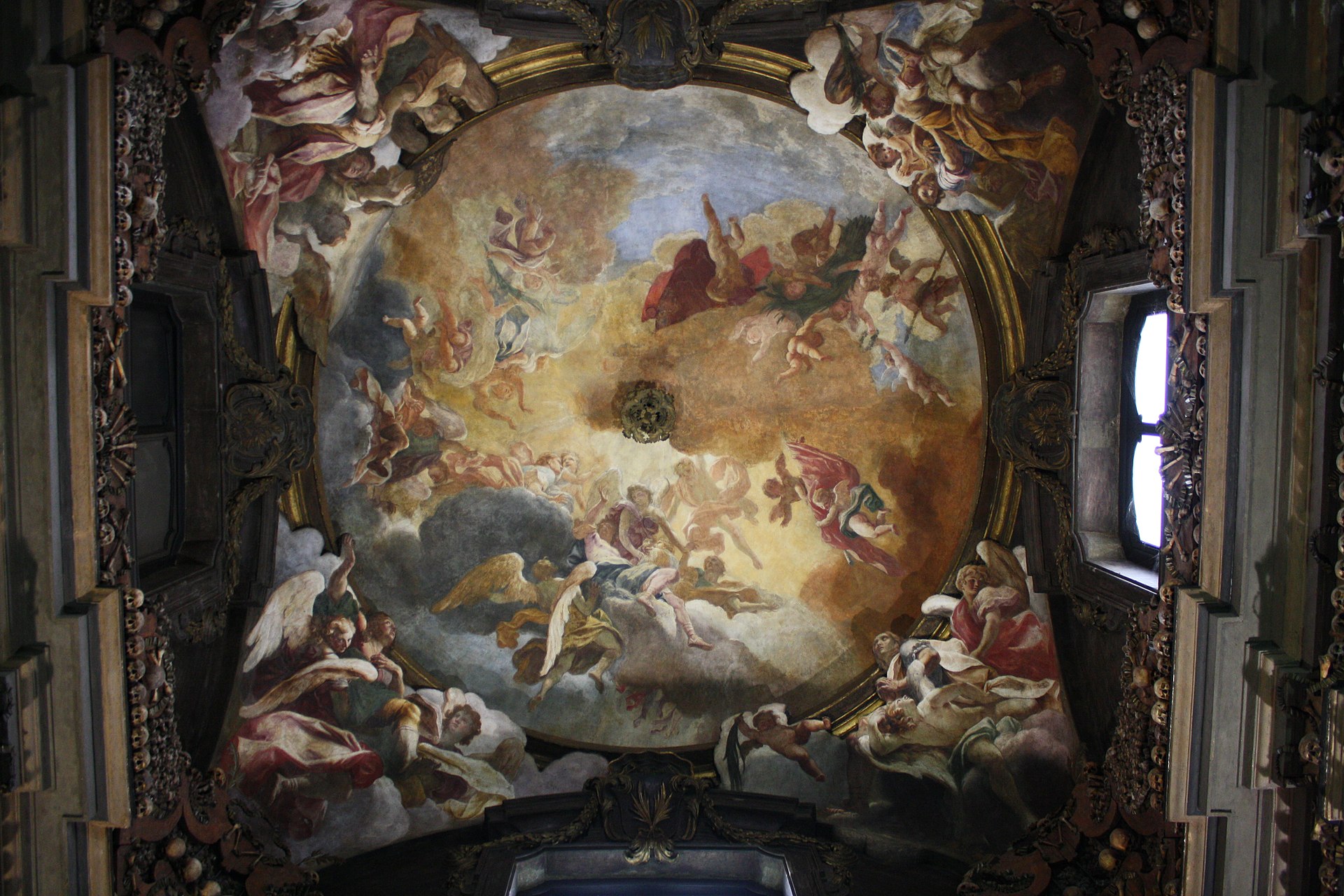
San Bernardino alle Ossa is Milan's bone church — a 17th-century chapel whose walls and ceiling are decorated with human skulls and bones arranged in geometric patterns, creating an interior that is equal parts macabre and beautiful. The ossuary, attached to the church of Santo Stefano Maggiore near the Duomo, was originally created to hold the overflow from a neighbouring cemetery that had run out of space in the 13th century. The chapel is small — a single room about the size of a large living room — but the impact is immediate. Skulls line the walls in neat rows, framed by columns made of human tibias and fibulas. Cross-shaped arrangements of bones punctuate the skull bands. The ceiling fresco, depicting the Triumph of Souls among angels and clouds, looks down on the ossuary with a serenity that contrasts starkly with the skeletal decoration below. The effect is simultaneously disturbing and oddly calming — the bones have been here so long that they've become decorative rather than morbid. The ossuary is free to enter (it's a chapel, not a museum), located a five-minute walk east of the Duomo, and is visited by a fraction of the tourists who crowd the cathedral. The juxtaposition of the bone chapel's medieval memento mori with the luxury shopping of San Babila a few blocks away captures something essential about Milan — a city that has always treated beauty and death as subjects worthy of equal aesthetic attention.
Chiesa di San Maurizio al Monastero Maggiore
15 Corso Magenta, Centro Storico, Milan, 20123, Italy
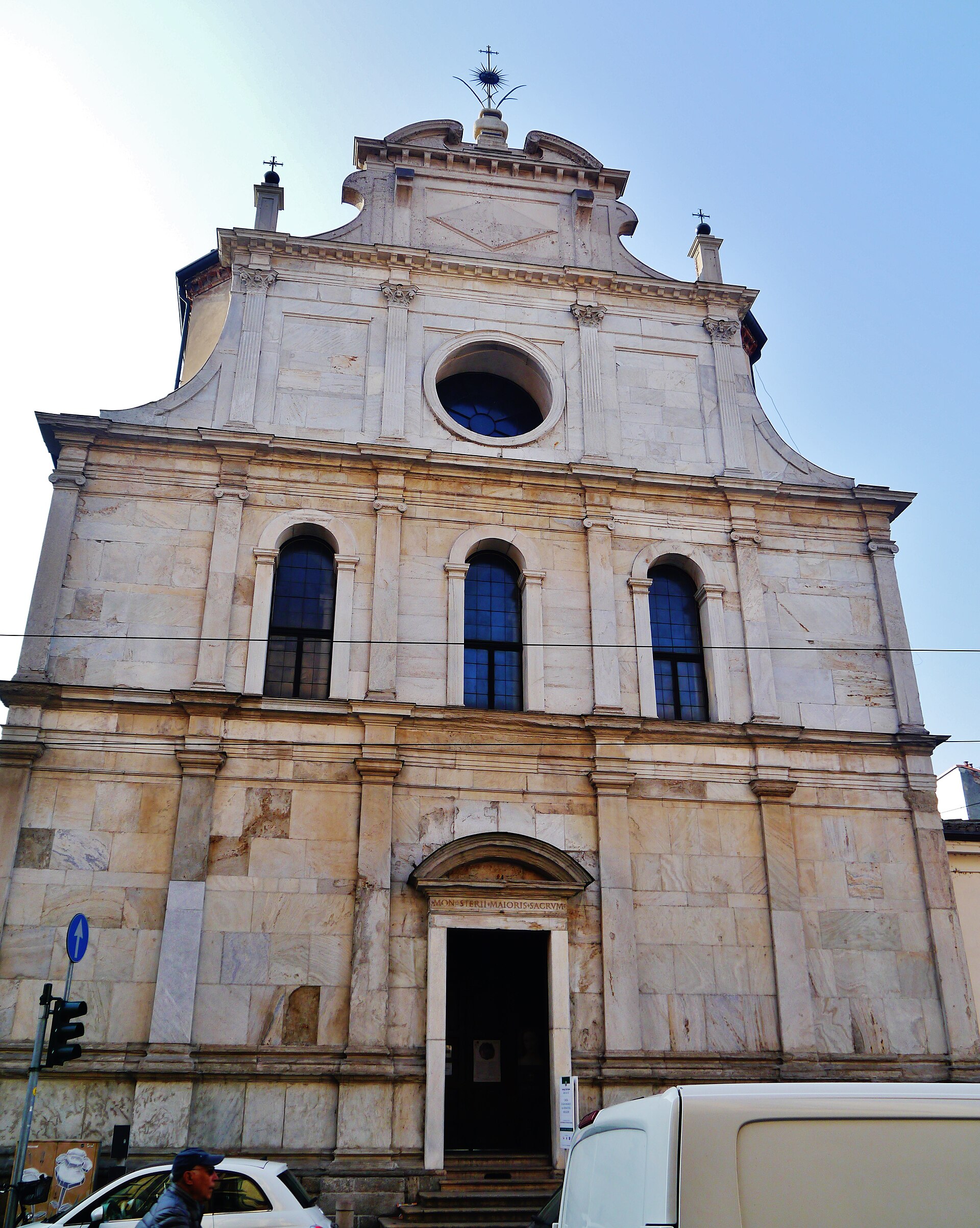
San Maurizio is the Sistine Chapel of Milan — a 16th-century church whose interior is entirely covered in Renaissance frescoes by Bernardino Luini (Leonardo's most talented follower) and his school, creating a visual experience so overwhelming that the church has been called the most beautiful in Milan despite being virtually unknown to tourists. The exterior is plain grey stone that gives no hint of what's inside, which makes the moment of entering and seeing the frescoed walls for the first time genuinely startling. The church is divided into two sections — the public nave and the nuns' choir, separated by a wall that originally allowed the cloistered Benedictine nuns to participate in services without being seen. Both sides are covered floor to ceiling in frescoes depicting biblical scenes, saints' lives, and decorative borders in vivid colour that has survived remarkably well. Luini's work combines Leonardo's sfumato softness with a Lombard clarity that gives his figures an accessibility that Leonardo's rarely achieve — the faces are tender, the landscapes are specific, and the colours are extraordinary. The church sits on Corso Magenta, a few blocks from the Last Supper, and the combination of the two — Leonardo's masterpiece in one building, his follower's in another — provides a morning's worth of Renaissance painting that contextualises both artists. San Maurizio is free to enter, rarely crowded, and the absence of audioguides and gift shops means the experience is closer to discovering a hidden treasure than visiting an attraction. Come when the sun is hitting the south-facing windows for the best light on the frescoes.
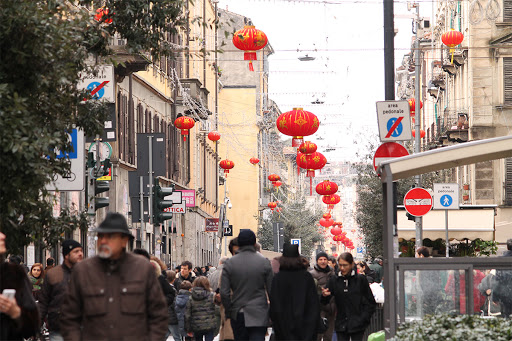
Chinatown (Via Paolo Sarpi)
Via Paolo Sarpi, Porta Volta-Fiera-Gallaratese-Quarto Oggiaro, Milan, 20154, Italy
Milan's Chinatown is the oldest and most established Chinese community in Italy — centred on the pedestrianised Via Paolo Sarpi between Porta Volta and Piazzale Cimitero Monumentale, where Chinese-Milanese families (many descended from immigrants who arrived from Wenzhou in the 1920s) have created a neighbourhood that blends Italian and Chinese commercial culture with a fluency that only a century of coexistence can produce. The food is the main attraction for non-residents. The restaurants along Via Sarpi and the surrounding side streets serve Wenzhounese, Sichuanese, Cantonese, and northern Chinese cuisine at prices that make the centro's trattorias look extravagant. Ravioli Zhonghua (famous for their handmade dumplings in dozens of fillings), the Sichuan hotpot restaurants, and the bakeries selling both Italian cornetti and Chinese steamed buns represent the culinary cross-pollination that makes this neighbourhood unique. The Chinese supermarkets stock ingredients that serious Asian cooks can't find elsewhere in Milan. Via Sarpi's pedestrianisation in 2011 transformed what had been a traffic-choked commercial street into one of Milan's most pleasant walking experiences. The Chinese New Year celebrations (usually late January or February) are the neighbourhood's annual spectacle — dragon dances, firecrackers, and food stalls draw tens of thousands of visitors to a neighbourhood that spends the rest of the year functioning as a quiet, working community. The Cimitero Monumentale at the street's northern end provides an architecturally dramatic bookend to the walk.
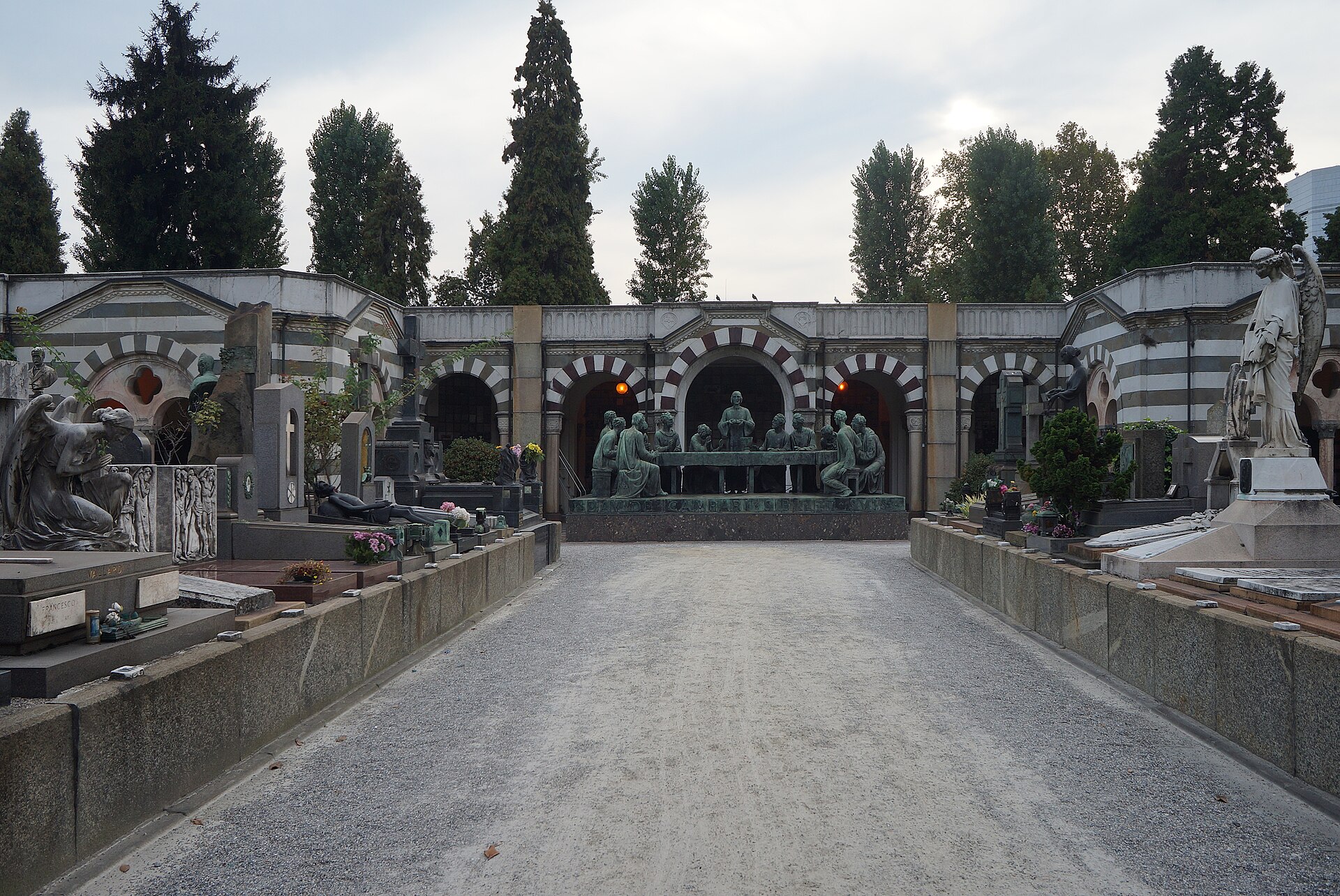
Cimitero Monumentale
Piazzale Cimitero Monumentale, Porta Volta-Fiera-Gallaratese-Quarto Oggiaro, Milan, 20154, Italy
The Cimitero Monumentale is Milan's outdoor sculpture museum — an enormous cemetery where the city's industrial dynasties, opera stars, and artists commissioned tombs so elaborate that walking the avenues feels more like visiting a gallery than a graveyard. The cemetery was opened in 1866 to consolidate Milan's scattered burial grounds, and the competition between wealthy families to build the most impressive monument created a collection of funerary art that spans Neoclassicism, Art Nouveau, Art Deco, and contemporary sculpture. The Famedio (Hall of Fame), the cemetery's entrance building, is a cathedral-like structure of red brick and marble that houses the tombs of Milan's most illustrious citizens — Alessandro Manzoni (author of 'I Promessi Sposi,' Italy's most important novel), conductor Arturo Toscanini, and other figures from Italian cultural history. Beyond the Famedio, the cemetery's main avenue and side paths are lined with monuments that range from weeping angels and broken columns to modernist abstracted forms and the occasional full-size bronze replica of the deceased. The Art Nouveau section is particularly remarkable — tombs designed by the same architects and sculptors who were building Liberty-style buildings in the city centre, with sinuous ironwork, mosaic decoration, and the kind of organic forms that make Italian Art Nouveau one of the most beautiful variants of the style. The cemetery is free, rarely crowded, and provides a morning's worth of art and architecture in a setting that is both melancholy and beautiful — the Milanese way of dealing with death, as with everything else, involves making it aesthetically excellent.
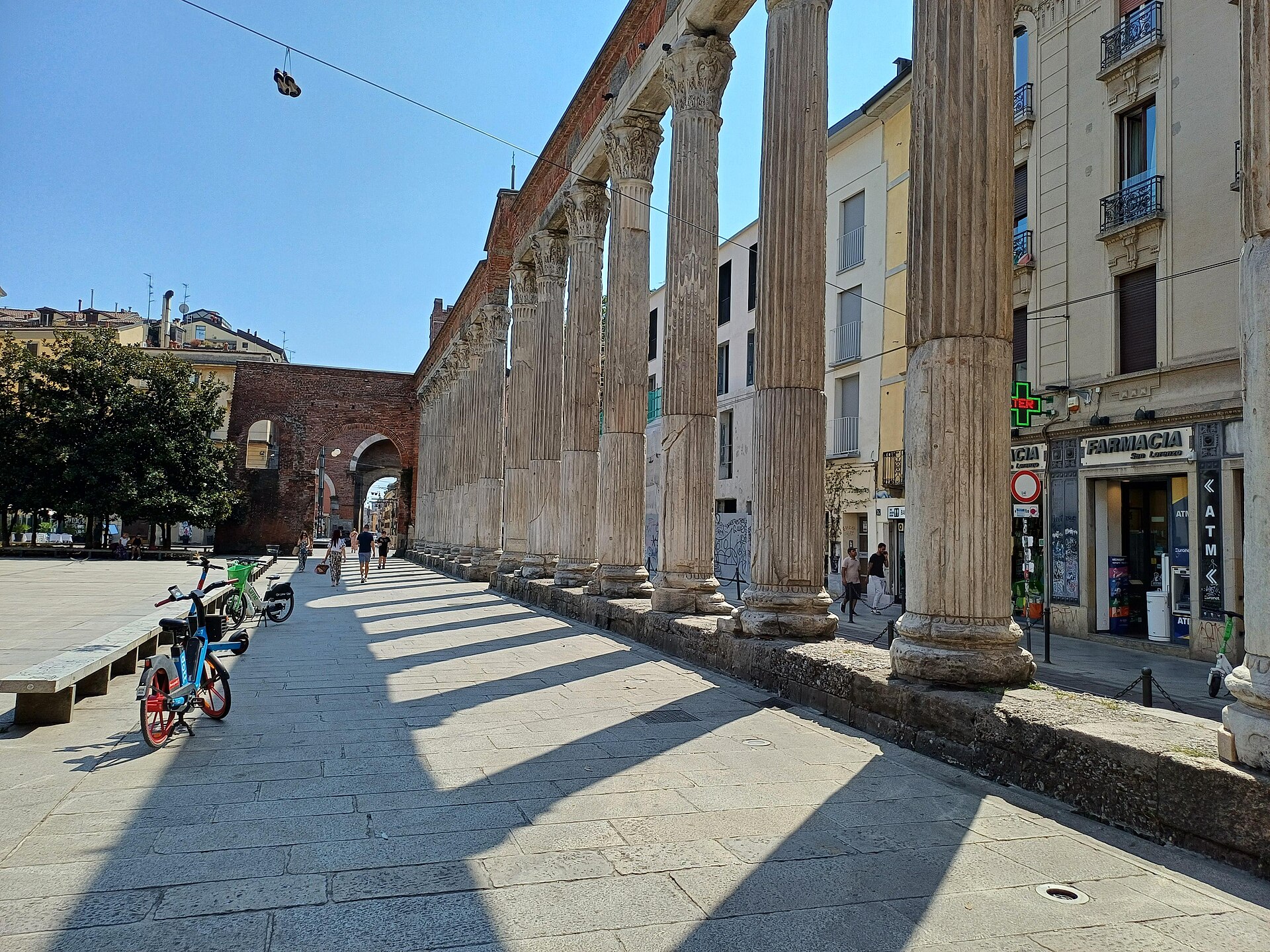
Colonne di San Lorenzo
Corso di Porta Ticinese 39, 20123 Milan
The Colonne di San Lorenzo are 16 Roman columns standing in a row in front of the Basilica di San Lorenzo — the most visible remnant of Roman Mediolanum (as Milan was known) and the unlikely centrepiece of one of Milan's most popular evening gathering spots. The columns, dating to the 2nd or 3rd century AD, were likely part of a Roman temple or bath complex and were moved to their current location in the 4th century to form a portico in front of the basilica. The columns are architecturally modest — they're not the Parthenon — but their presence in the middle of a modern city, standing on their original bases with Corinthian capitals intact, creates a powerful sense of historical depth. Milan's Roman past is largely invisible (unlike Rome, which wears its antiquity on every surface), and the Colonne are the place where that hidden history breaks through to the surface. The real life of the Colonne happens in the evening. The steps around the columns have become Milan's most democratic gathering place — university students, aperitivo crowds, musicians, and the general Thursday-through-Saturday nightlife of the Ticinese neighbourhood fill the space with the kind of energy that turns ancient ruins into a contemporary stage. The Basilica di San Lorenzo behind the columns, with its 4th-century octagonal plan and Byzantine mosaics, is one of Milan's most important early Christian buildings and is free to enter.
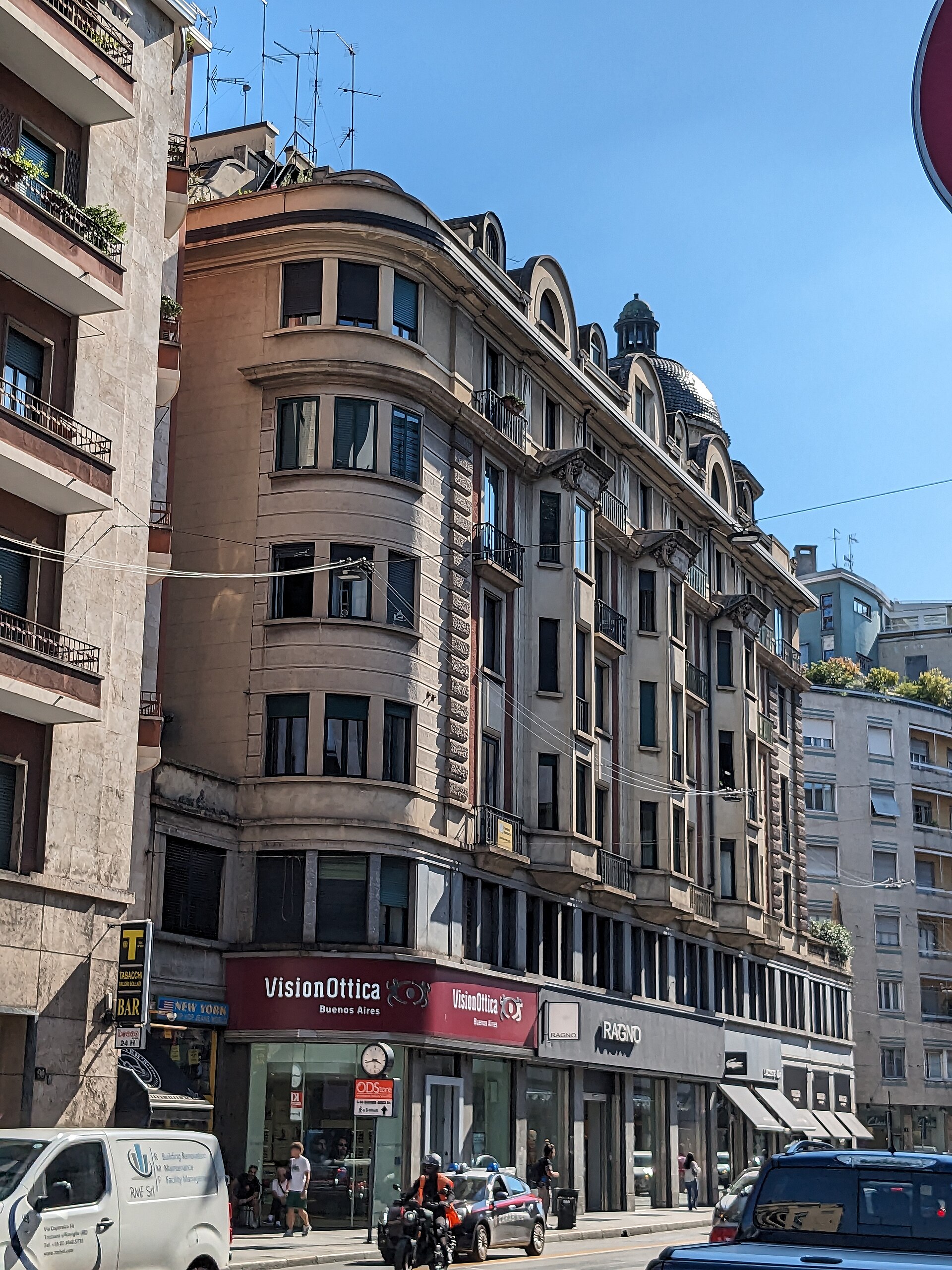
Corso Buenos Aires
Corso Buenos Aires, Porta Venezia-Lambrate-Città Studi, Milan, 20124, Italy
Corso Buenos Aires is one of the longest and busiest shopping streets in Europe — a 1.6-kilometre corridor running northeast from Porta Venezia to Piazzale Loreto that contains over 350 shops and is said to have the highest density of retail per metre of any street in Europe. Unlike the luxury boutiques of the Quadrilatero della Moda, Corso Buenos Aires is democratic shopping — high street brands, independent shoe shops, sportswear stores, and the kind of mid-range retail that actual Milanese use for actual purchases. The street's name reflects Milan's deep connection to Argentina — the large Italian emigration to Buenos Aires in the late 19th and early 20th centuries created cultural ties that persist in street names, restaurants, and the tango clubs that are more popular in Milan than in any other Italian city. The Porta Venezia neighbourhood at the street's southern end has become Milan's most diverse district — home to the city's Eritrean, Ethiopian, Filipino, and Chinese communities, whose restaurants, groceries, and cultural spaces add a cosmopolitan energy that the fashion district lacks. The street is best experienced on a Saturday afternoon, when the pedestrian traffic reaches a density that rivals Tokyo's Shibuya crossing, and the combination of shopping, people-watching, and the occasional street performer creates an atmosphere that is pure Milanese Saturday. The aperitivo bars along the side streets — particularly around Via Lecco and Via Tadino — fill from 6pm, and the transition from shopping street to drinking street happens organically.
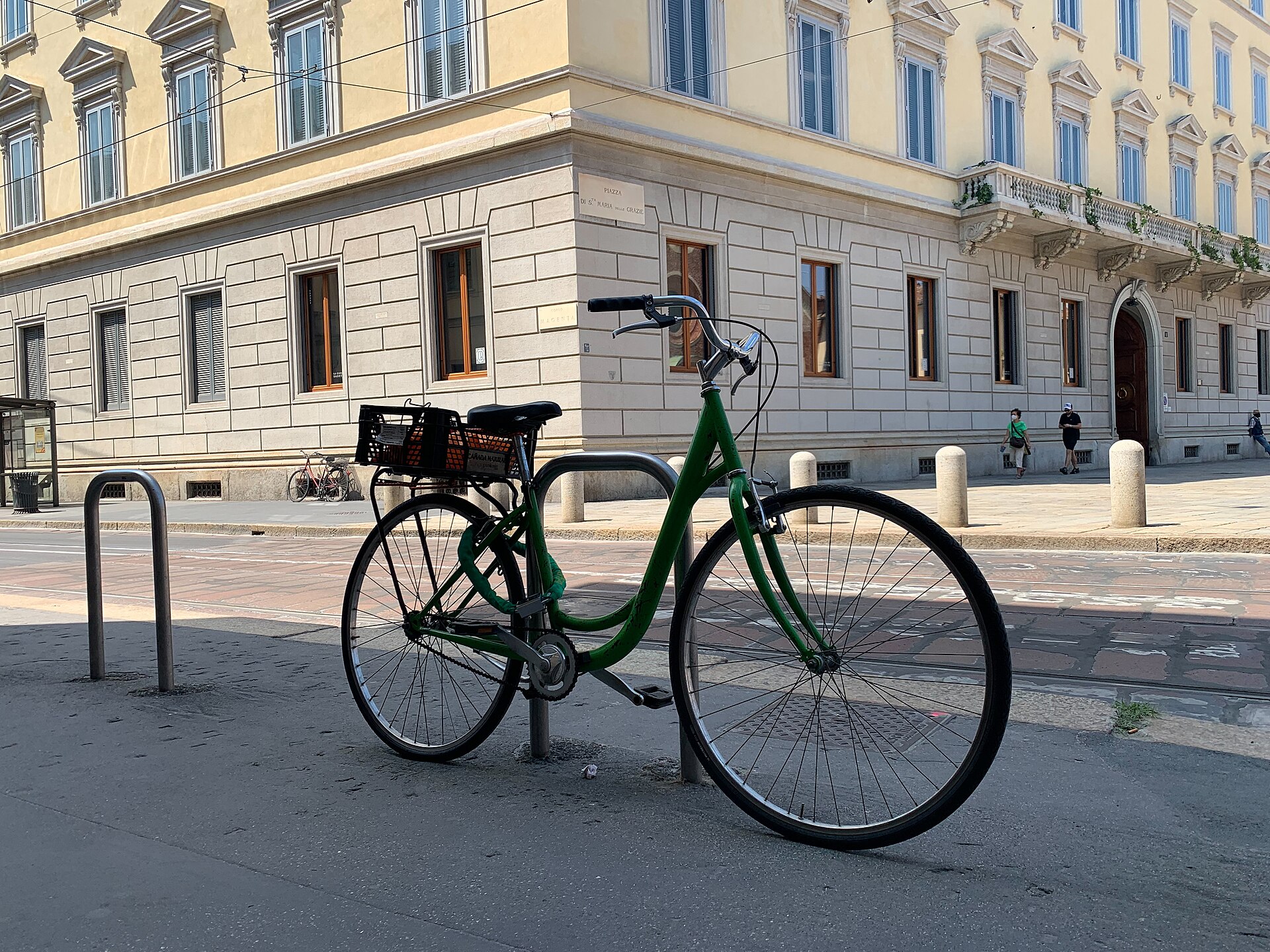
Corso Magenta & Santa Maria delle Grazie Quarter
Corso Magenta, Centro Storico, Milan, 20123, Italy
Corso Magenta is Milan's most elegant residential street — a tree-lined boulevard of aristocratic palazzi and Liberty-style (Italian Art Nouveau) apartment buildings that connects the Castello Sforzesco to the western suburbs and passes through the neighbourhood that contains both the Last Supper and some of the finest domestic architecture in the city. The street's architectural highlights include the Palazzo delle Stelline (a converted 15th-century orphanage now housing a hotel and Leonardo da Vinci conference centre), the Palazzo Litta (a Baroque palace with one of Milan's most theatrical facades), and the Museo Archeologico (housed in a former Benedictine convent, with a section of the Roman city wall visible in the garden). The Liberty-style buildings along the western stretch — with their ceramic decoration, wrought-iron balconies, and the organic forms that Italian Art Nouveau borrowed from Vienna and Barcelona — are among the finest examples of the style in Milan. The neighbourhood around Santa Maria delle Grazie has a residential calm that the centro lacks — the streets south of Corso Magenta contain neighbourhood trattorias, bakeries, and the kind of small-scale commercial life that makes Italian residential quarters liveable. The combination of the Last Supper, San Maurizio, the archaeological museum, and the Corso Magenta architecture creates one of the richest cultural walking routes in the city.
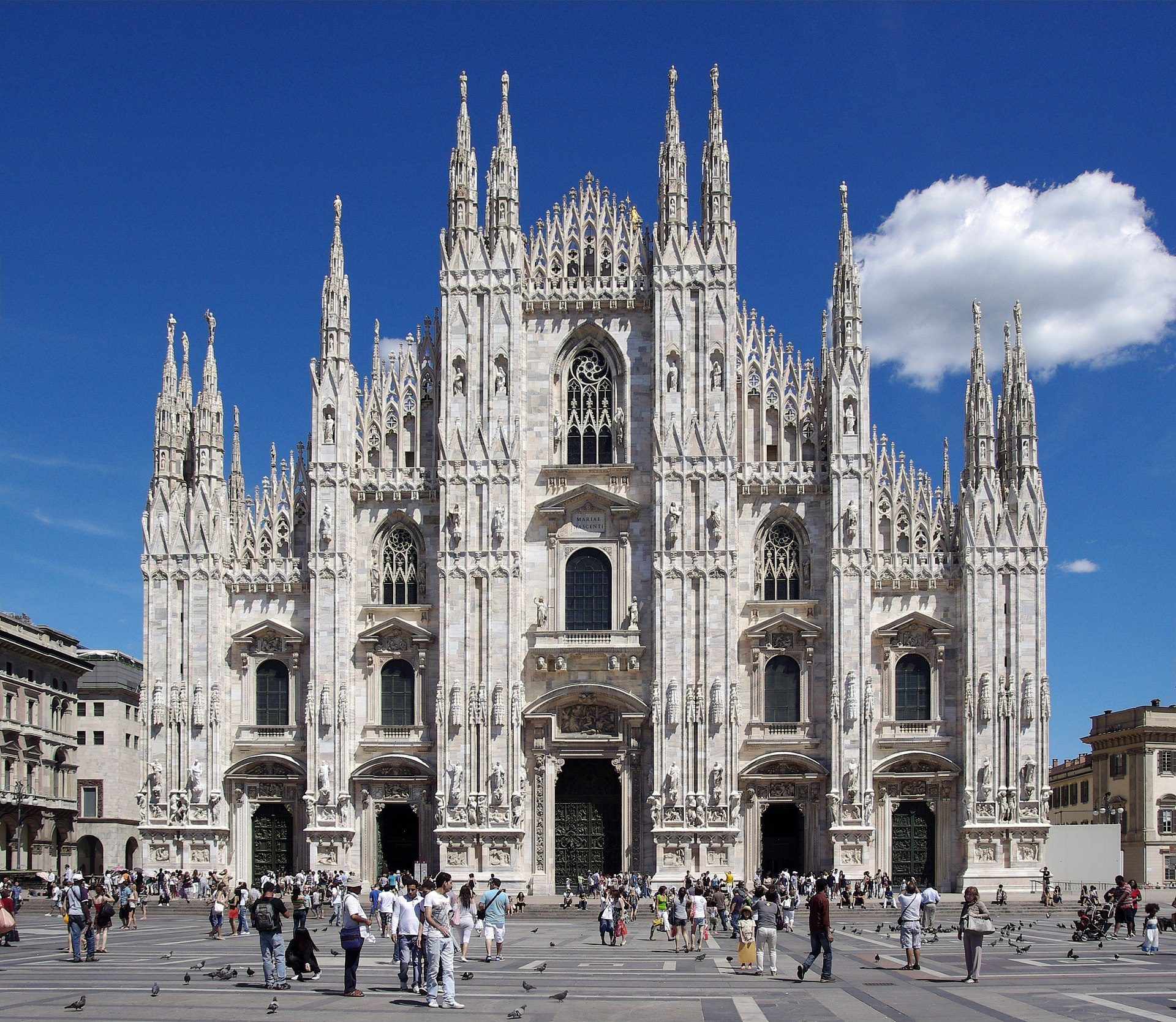
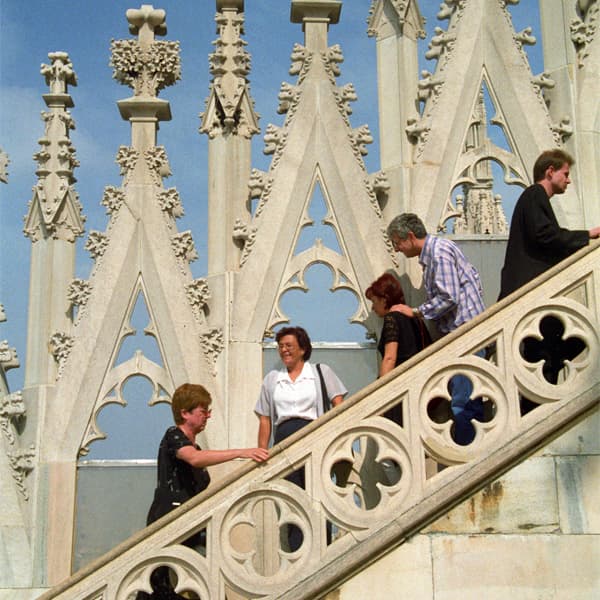
Duomo di Milano
Piazza del Duomo, Centro Storico, Milan, 20123, Italy
The Duomo di Milano is the largest Gothic cathedral in Italy and the third largest church in the world — a forest of 135 marble spires, 3,400 statues, and a rooftop terrace that lets you walk among the pinnacles 70 metres above the piazza. Construction began in 1386 and wasn't completed until 1965 (Napoleon had to intervene in 1805 to get the facade finished), making it one of the longest building projects in architectural history and a structure that contains nearly 600 years of European artistic ambition. The exterior is the show. The Candoglia marble — a pink-white stone quarried exclusively for the Duomo from a site near Lake Maggiore — gives the cathedral its distinctive luminous quality, and the density of sculptural detail is staggering: saints, prophets, gargoyles, and decorative tracery cover every available surface. The Madonnina, a gilded copper statue of the Virgin Mary standing atop the highest spire at 108.5 metres, has been Milan's tallest point by law since 1774 — no building in the city was permitted to exceed her height until the Pirelli Tower negotiated an exception in 1958 by placing a copy of the Madonnina on its own roof. The rooftop terraces are the must-do experience. You ascend by stairs (251 steps) or lift to a marble landscape of pinnacles, buttresses, and carved saints where you can walk among the Gothic architecture at close range and look out across the city to the Alps on a clear day. The interior, with its five naves divided by 52 pillars and stained glass windows that filter coloured light into the dim nave, is vast and atmospheric — the floor alone covers 11,700 square metres, enough to hold 40,000 people.
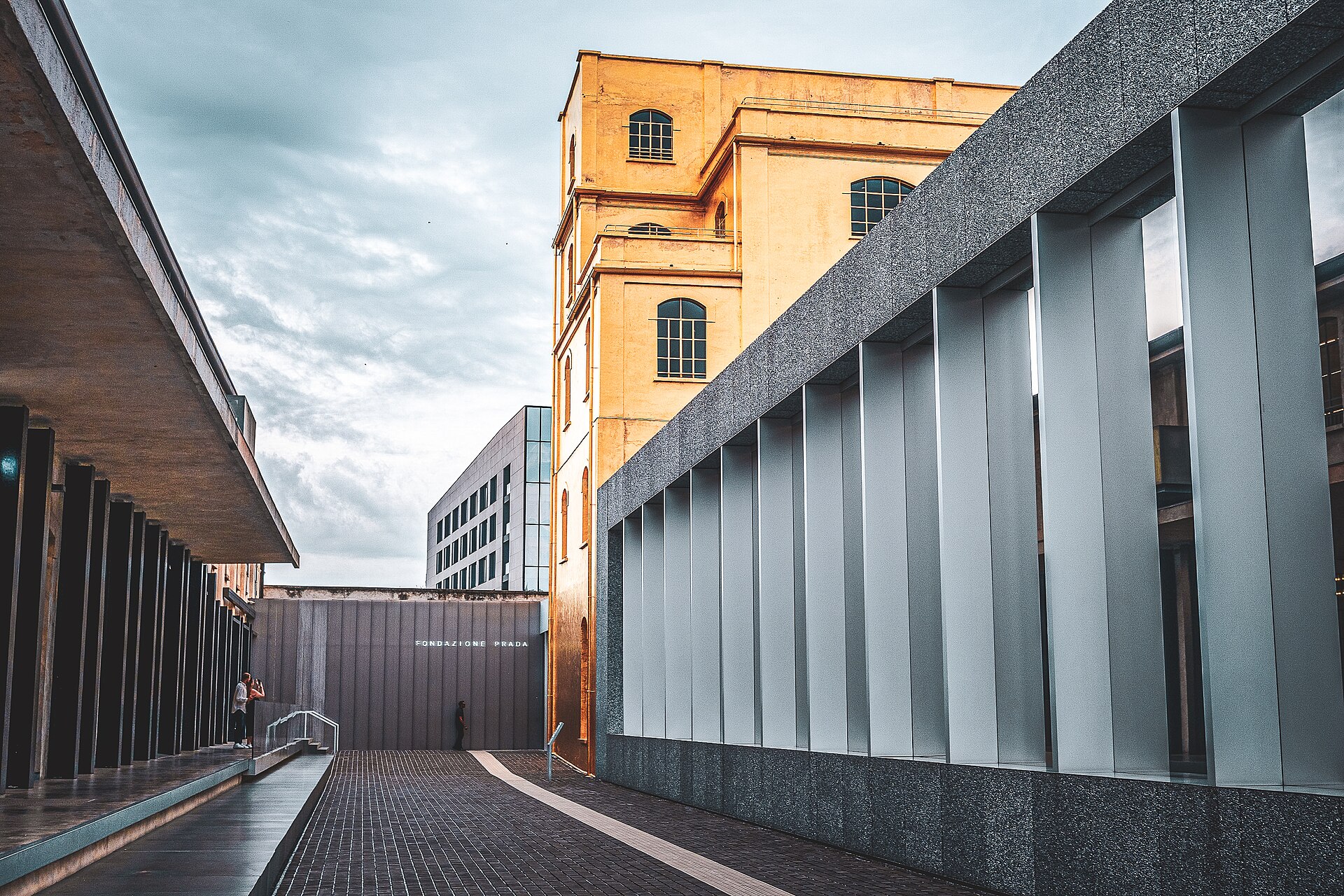
Fondazione Prada
Largo Isarco 2, 20139 Milan
Fondazione Prada is one of the most ambitious contemporary art institutions in Europe — a 19,000-square-metre campus designed by Rem Koolhaas' OMA that combines seven existing industrial buildings (a former gin distillery from the 1910s) with three new structures clad in aluminium foam, mirror-finish gold leaf, and white concrete. The complex, opened in 2015, has become an architectural destination as much as an art one, and the interplay between the weathered industrial buildings and Koolhaas' sci-fi additions is the most visually exciting thing in Milan since the Duomo. The art programme is curated by Miuccia Prada and Patrizio Bertelli (the couple behind the fashion house) and consistently features major international exhibitions — retrospectives, new commissions, and the kind of large-scale installations that only a fashion-industry budget can support. The permanent collection includes works by Jeff Koons, Damien Hirst, and Carsten Höller (whose slide sculpture — a functional slide from the third floor to the ground — became the institution's most photographed feature). Bar Luce, designed by Wes Anderson in the style of a 1950s Italian café — pastel colours, Formica tables, a jukebox, pinball machine — occupies the campus's ground floor and is open without museum admission. The bar is simultaneously a functional café, a film set, and a commentary on the relationship between design, nostalgia, and commerce that is so perfectly Milanese it could only exist here.
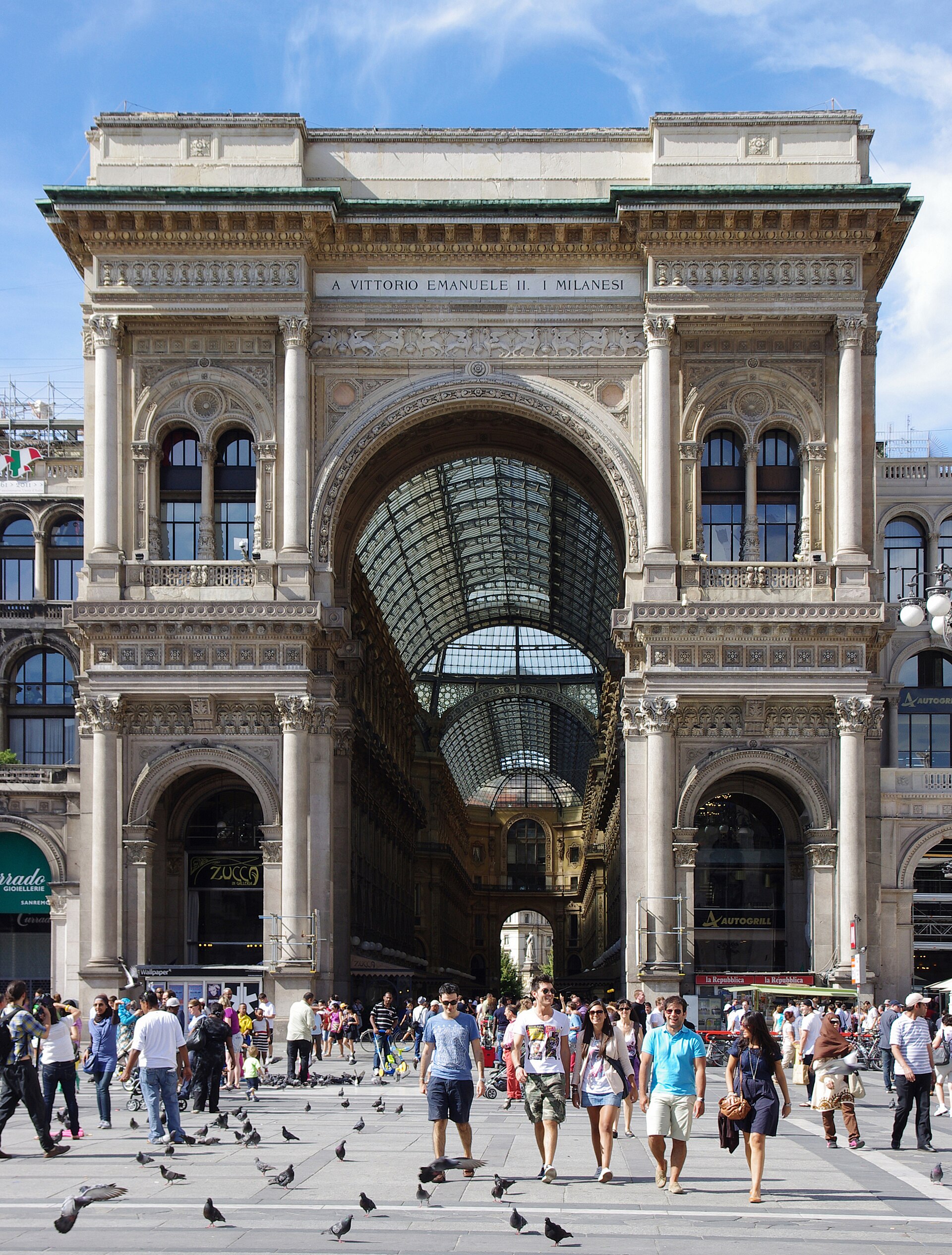
Galleria Vittorio Emanuele II
Piazza del Duomo, Centro Storico, Milan, 20123, Italy
The Galleria Vittorio Emanuele II is the world's oldest active shopping mall — a cruciform glass-and-iron arcade completed in 1877 that connects Piazza del Duomo to Piazza della Scala and houses some of the most expensive retail real estate in Europe. The Milanese call it 'il salotto di Milano' (Milan's living room), and the evening passeggiata (stroll) through the Galleria — past Prada's flagship store, the Campari Bar, and the mosaic floors depicting the coats of arms of Italy's four capital cities — is the city's most civilised daily ritual. The architecture is pure 19th-century confidence — a glass barrel vault soaring 47 metres above the marble floor, with iron ribs and lunettes that let natural light flood the arcade. Giuseppe Mengoni designed the structure as a symbol of Italian unification (the arcade is named after Italy's first king), and the scale was deliberately intended to rival the passages of Paris while surpassing them in ambition. Mengoni fell from the roof and died the day before the arcade opened, a tragedy that has never been satisfactorily explained as either accident or suicide. The floor mosaic of the bull of Turin, one of four city coat-of-arms designs at the central octagon, has spawned a tradition: spinning three times on the bull's testicles with your right heel is said to bring good luck. The resulting wear has required the mosaic to be restored multiple times, and the indentation created by millions of spinning tourists is visible in the marble. The tradition is silly, the Galleria is sublime, and the combination of absurd folklore and architectural grandeur is perfectly Milanese.
Mercato Centrale Milano
Via Sammartini 2, 20125 Milan
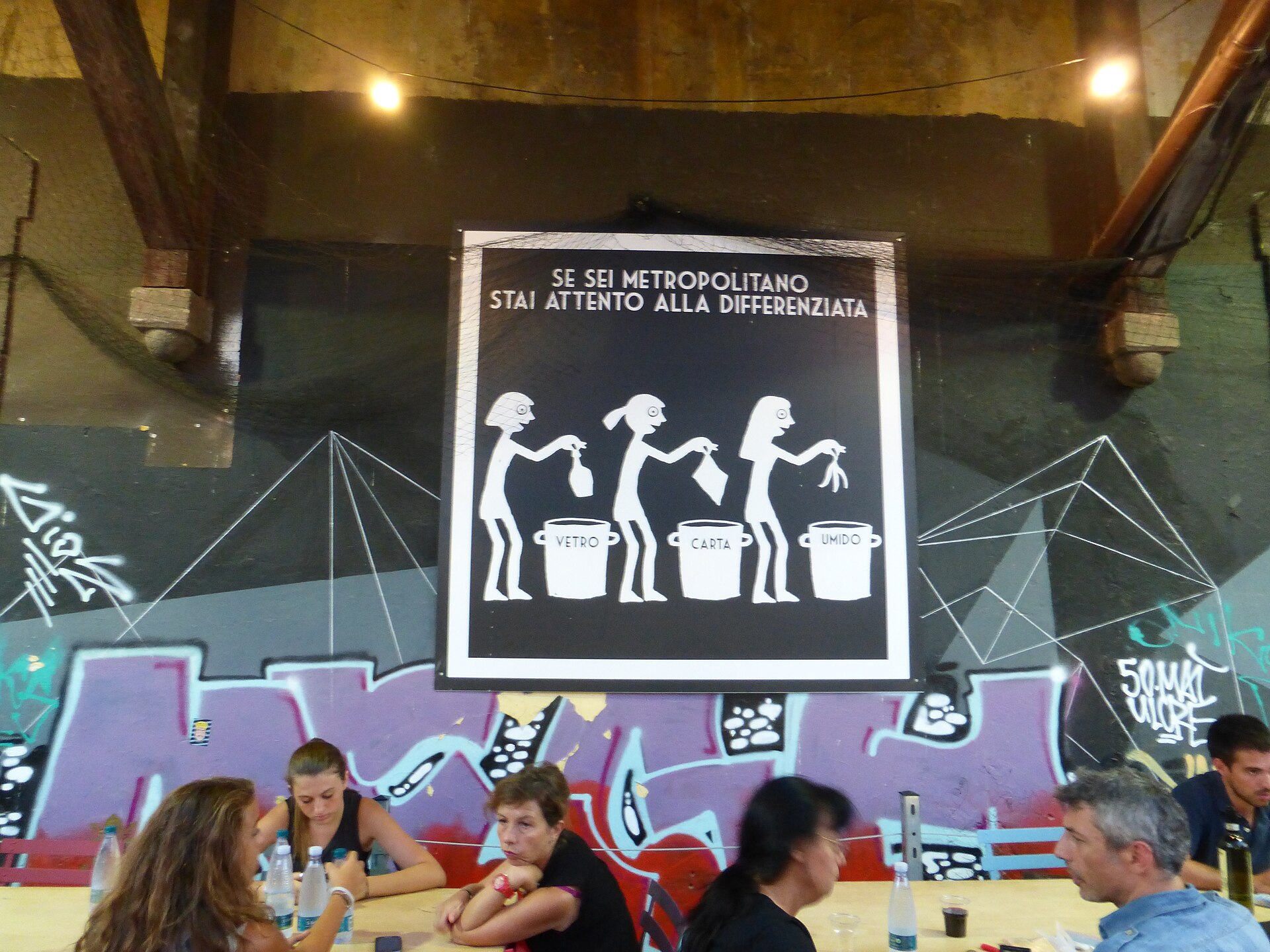
Mercato Centrale Milano is Milan's grandest food hall — a 4,500-square-metre market inside the Centrale railway station that brings together some of Italy's finest artisan food producers under the vaulted ceilings of one of Europe's most spectacular train stations. The market, opened in 2021, follows the model established by the Florence and Rome Mercato Centrales: curated stalls run by named producers rather than anonymous vendors, with quality that sits between street food and restaurant dining. The stalls cover the full range of Italian gastronomy — fresh pasta made to order, Neapolitan pizza from a wood-fired oven, Piedmontese raw meat preparations, Sicilian arancini, Roman supplì, and the panettone from Pavé (one of Milan's most celebrated bakeries). The meat counter, the fish bar, and the cheese selection would each justify a dedicated shop in any other city, and the wine bar pours by the glass from a selection that spans Italy's wine regions with the kind of breadth that only a market format allows. Milano Centrale station itself, designed in a bombastic Lombard Art Deco style by Ulisse Stacchini and completed in 1931 under Mussolini, is one of the most architecturally impressive railway stations in Europe — the vaulted steel-and-glass train shed, the monumental entrance hall with its carved stone eagles and fasces, and the sheer scale of the building (it covers 66,000 square metres) make the station worth visiting even if you're not catching a train. The market gives you a reason to linger.
Museo Bagatti Valsecchi
Via Gesù 5, 20121 Milan
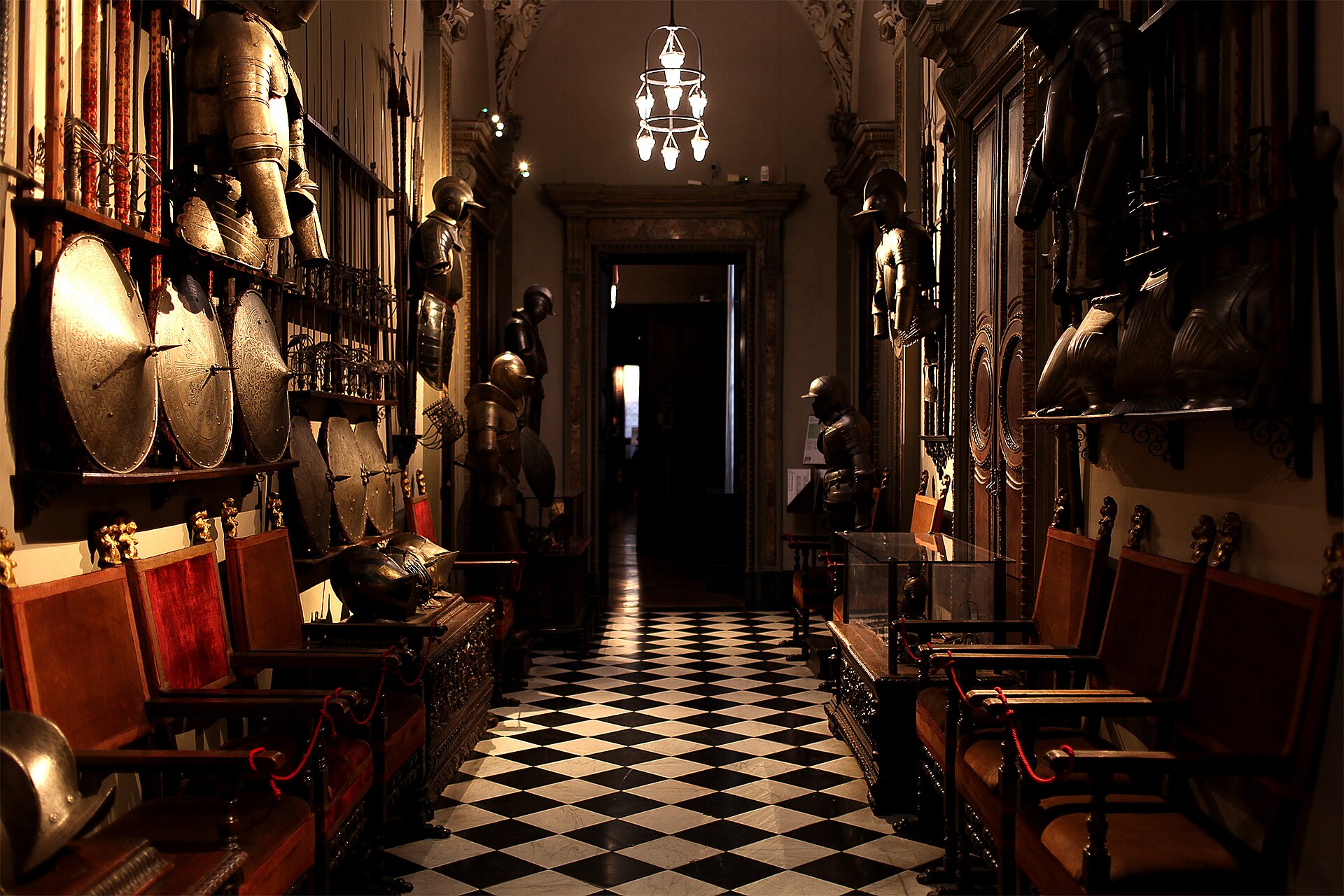
The Museo Bagatti Valsecchi is a private house museum in the Fashion District — a 19th-century palazzo created by two brothers, Fausto and Giuseppe Bagatti Valsecchi, who spent 40 years collecting Renaissance furniture, paintings, armour, and decorative arts to furnish their home in the style of a 15th-century Lombard nobleman's residence. The result is a museum that is less a collection of objects than a complete domestic environment, meticulously recreated down to the light fixtures, door handles, and bathroom fittings. The brothers' obsession was total. They commissioned copies of Renaissance furniture when originals weren't available. They had Renaissance-style ironwork made by contemporary artisans. They installed 15th-century ceilings and doorframes salvaged from demolished palazzi. The bedrooms, dining rooms, drawing rooms, and chapel are furnished with such consistency that walking through the house feels like time-travelling to a Renaissance home that happened to have 19th-century plumbing. The museum is on Via Gesù, in the heart of the Quadrilatero della Moda, which means you can walk from a Prada store to a Renaissance bedroom in two minutes — a transition that captures something essential about Milan's relationship with beauty, craft, and the willingness to spend absurd amounts of money on domestic perfection. The museum is small (10 rooms), rarely crowded, and provides a counterpoint to the Brera's gallery experience — here, art is not on walls but embedded in the fabric of daily life.
Museo del Novecento
Via Marconi 1, 20122 Milan
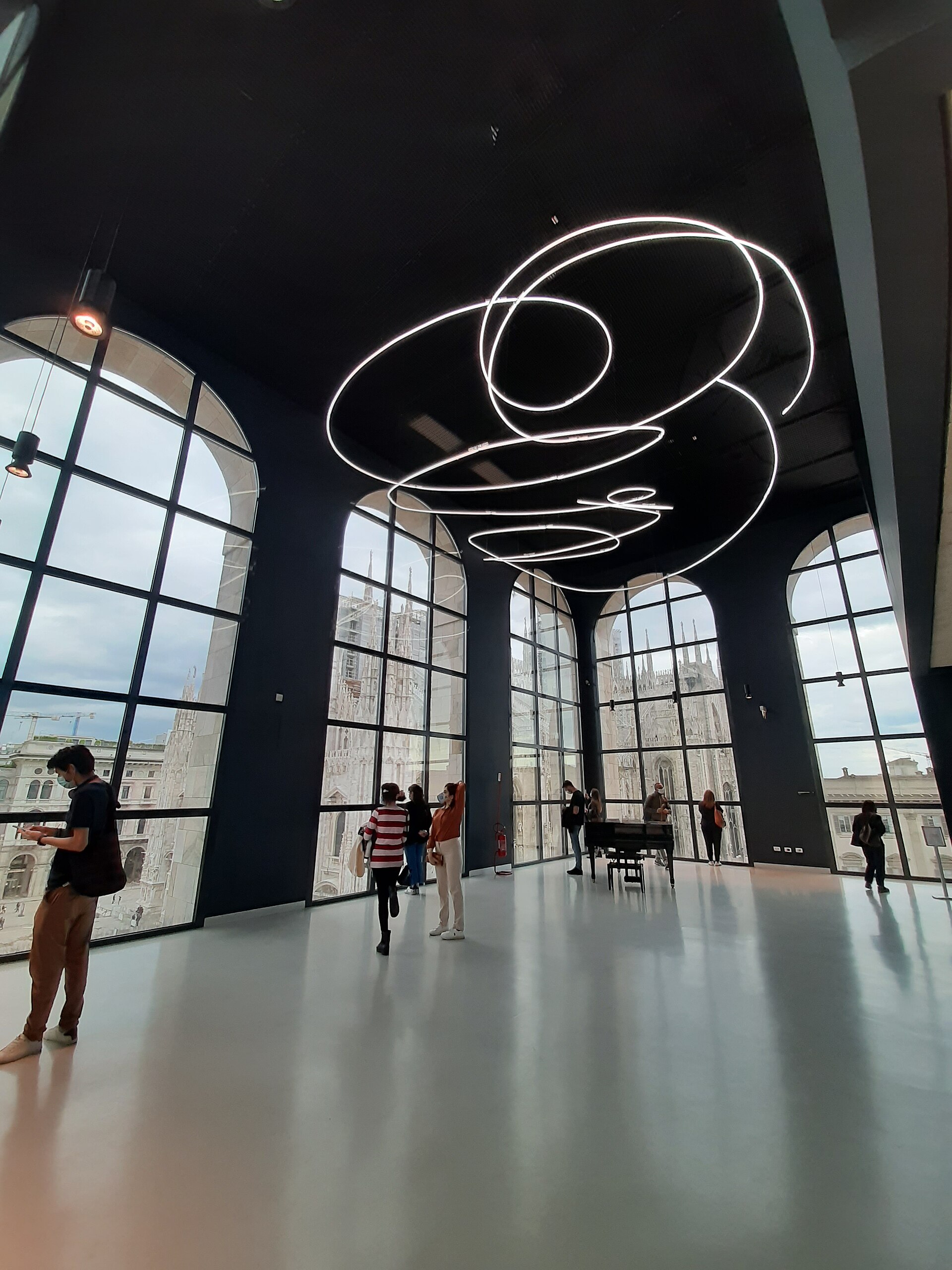
The Museo del Novecento is Milan's museum of 20th-century art — housed in the Arengario, a Fascist-era building on Piazza del Duomo that was converted into a museum in 2010 by architect Italo Rota. The museum's most dramatic feature is the spiral ramp that ascends through the building, offering views of the Duomo through floor-to-ceiling windows at every turn — seeing Pellizza da Volpedo's 'The Fourth Estate' (a monumental painting of striking workers) with the cathedral visible behind it is one of those curated moments that makes the museum feel like a designed experience rather than a collection of rooms. The permanent collection traces Italian art from the Futurists (Boccioni, Balla, Severini) through Metaphysical painting (de Chirico, Morandi) to post-war Arte Povera and contemporary practice. The Futurist gallery is particularly strong — Milan was the birthplace of Futurism, and the movement's obsession with speed, machinery, and modernity was directly inspired by the industrial energy of the city. Boccioni's sculptures, with their dynamic forms and fractured surfaces, look like they're trying to escape the gallery and merge with the traffic on the corso below. The museum's location — literally on Piazza del Duomo, in a building that most visitors walk past without noticing — makes it one of the most accessible major museums in Italy. The café on the top floor, with its Duomo-level views, is worth visiting independently. The permanent collection is free in the last two hours before closing, and the temporary exhibitions are consistently excellent.
Navigli District
Alzaia Naviglio Grande, Porta Genova-Giambellino-Lorenteggio, Milan, 20144, Italy
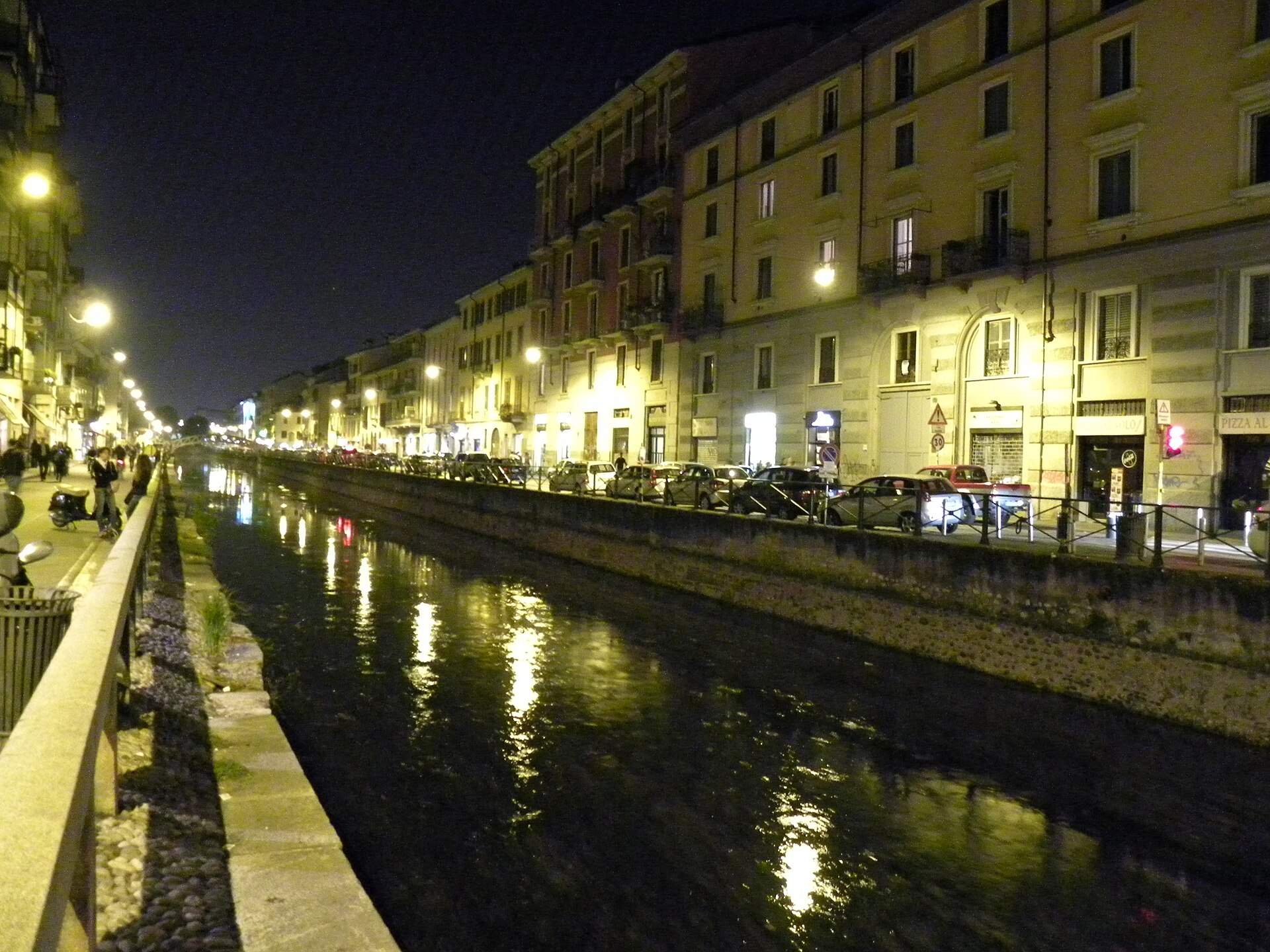
The Navigli is Milan's canal district — a neighbourhood of two surviving canals (Naviglio Grande and Naviglio Pavese) lined with bars, restaurants, vintage shops, and artist studios that becomes the city's aperitivo headquarters every evening. The canals, originally built in the 12th century for irrigation and expanded by Leonardo da Vinci in the 15th century for transport, once formed a network of waterways that connected Milan to Lake Maggiore, Lake Como, and the Po River. Most were filled in during the 1930s, and the two that survive give a glimpse of a Milan that looked more like Amsterdam than the concrete metropolis it is today. The aperitivo tradition reaches its peak in the Navigli — the bars along the canal banks offer drinks accompanied by elaborate buffets of pasta, focaccia, salumi, and olives from about 6pm, and the custom of eating dinner-quantities of free food with a €10 cocktail is one of Milan's most civilised economies. The canal-side terraces fill up fast, and the evening light on the water — with the old workshop buildings and their wrought-iron balconies reflected in the surface — creates an atmosphere that makes the Navigli feel like a different city from the business district a few kilometres north. The last Sunday of each month, the Naviglio Grande hosts a large antiques market (Mercatone dell'Antiquariato) that draws dealers and browsers from across Lombardy. The surrounding streets contain some of Milan's best independent galleries, design studios, and the kind of neighbourhood restaurants that serve risotto alla milanese with the quiet confidence of people who have been making the same dish for generations.
Parco Sempione
Piazza Sempione, Centro Storico, Milan, 20154, Italy
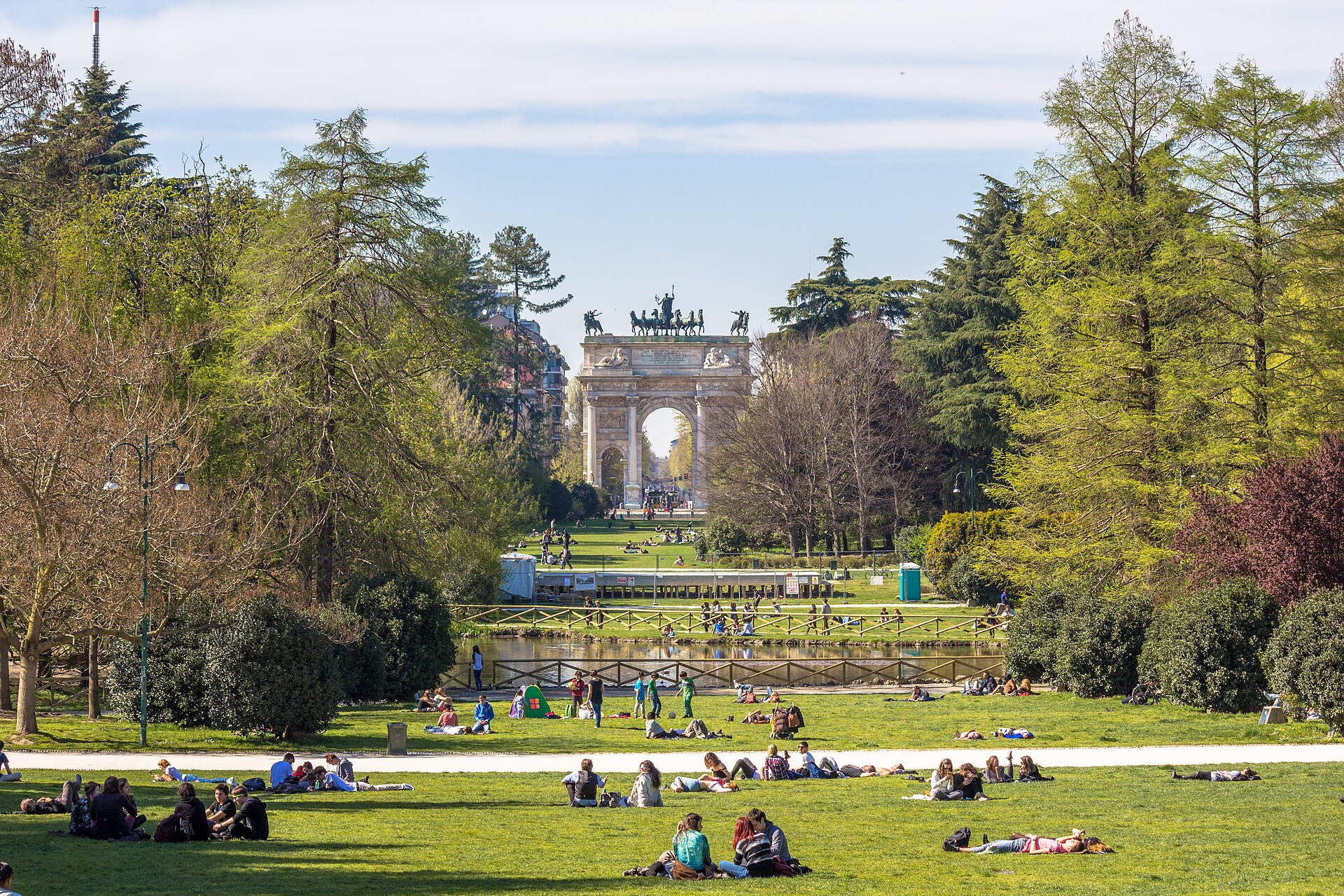
Parco Sempione is Milan's Central Park — a 38.6-hectare English landscape garden stretching from the Castello Sforzesco to the Arco della Pace that provides the green lungs for a city that is otherwise notoriously short on open space. The park was designed by Emilio Alemagna in 1888 on the grounds of the former castle parade ground, and its mix of winding paths, open lawns, a small lake, and mature trees creates a pastoral landscape that feels surprisingly rural for the centre of Italy's most commercial city. The Arco della Pace (Arch of Peace) at the park's northwest end is Milan's triumphal arch — a neoclassical gate designed by Luigi Cagnola and completed in 1838, originally intended to celebrate Napoleon's victories but rededicated to peace after his defeat. The arch frames the view back through the park to the Castello Sforzesco's tower, creating one of Milan's most photogenic perspectives. The Triennale di Milano design museum, housed in the Palazzo dell'Arte at the park's edge, hosts exhibitions on Italian design, architecture, and decorative arts. The park is at its best in early evening during spring and summer, when Milanese office workers descend for the post-work aperitivo at the park's bars and the lawns fill with picnickers, joggers, and the ubiquitous couples on benches. The Torre Branca — a 108-metre steel observation tower designed by Gio Ponti in 1933 — offers panoramic views from its summit, though it operates on a limited schedule. On clear days, the Alps are visible to the north, a reminder that Milan sits in a plain that was carved by glaciers.
Piazza dei Mercanti
Via dei Mercanti, Centro Storico, Milan, 20123, Italy
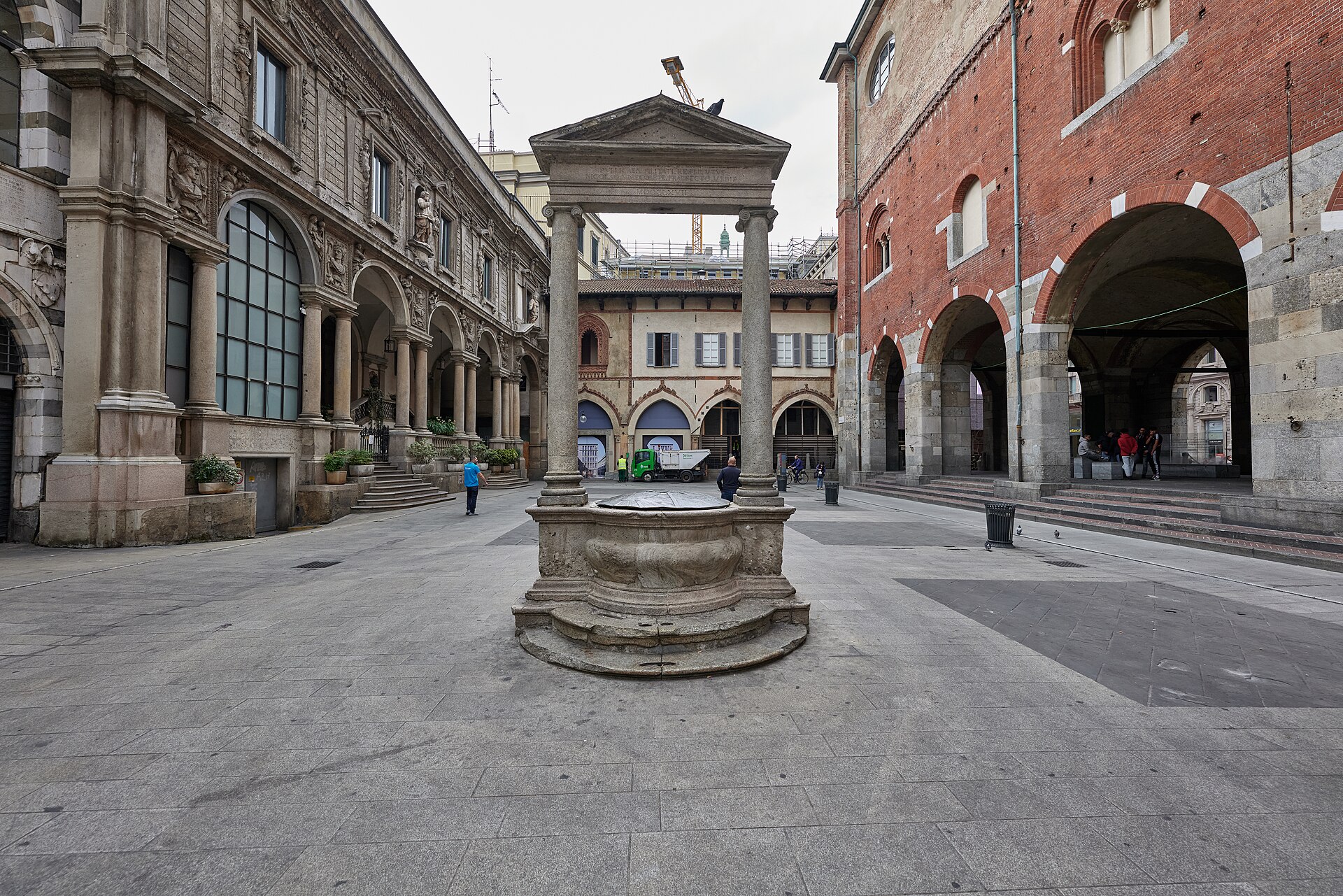
Piazza dei Mercanti is medieval Milan's surviving heart — a small, enclosed square one block north of the Duomo that served as the city's commercial and political centre from the 13th to the 18th century. The square is easy to miss (it's not on the main tourist axis, and the Duomo's gravitational pull draws visitors south rather than north), but it contains some of the oldest surviving buildings in central Milan and provides the only tangible sense of what the city looked like before the modern era erased most of its medieval fabric. The Palazzo della Ragione, built in 1233 as the city's broletto (communal government building), is the square's centrepiece — a red-brick structure raised on arched porticoes that created a covered marketplace on the ground floor and a courtroom above. The building's balcony (the parlera, from the Italian 'to speak') was where government decrees were announced, and the carved relief of a sow (the scrofa semilanuta, a half-woolly pig that is one of Milan's oldest symbols) decorates one of the columns. The Loggia degli Osii (1316), the Casa dei Panigarola (15th century), and the Scuole Palatine (1644) complete the square's ensemble, creating a miniature architectural history from Romanesque to Baroque in a space you can cross in 30 seconds. The square's acoustics have an unusual property — if two people stand in opposite corners and whisper into the wall, they can hear each other clearly across the diagonal. Whether this was designed (some claim it was created for merchants to conduct private transactions) or accidental, it's one of Milan's most delightful party tricks.
Piazza Gae Aulenti & Porta Nuova
Piazza Gae Aulenti, 20124 Milan
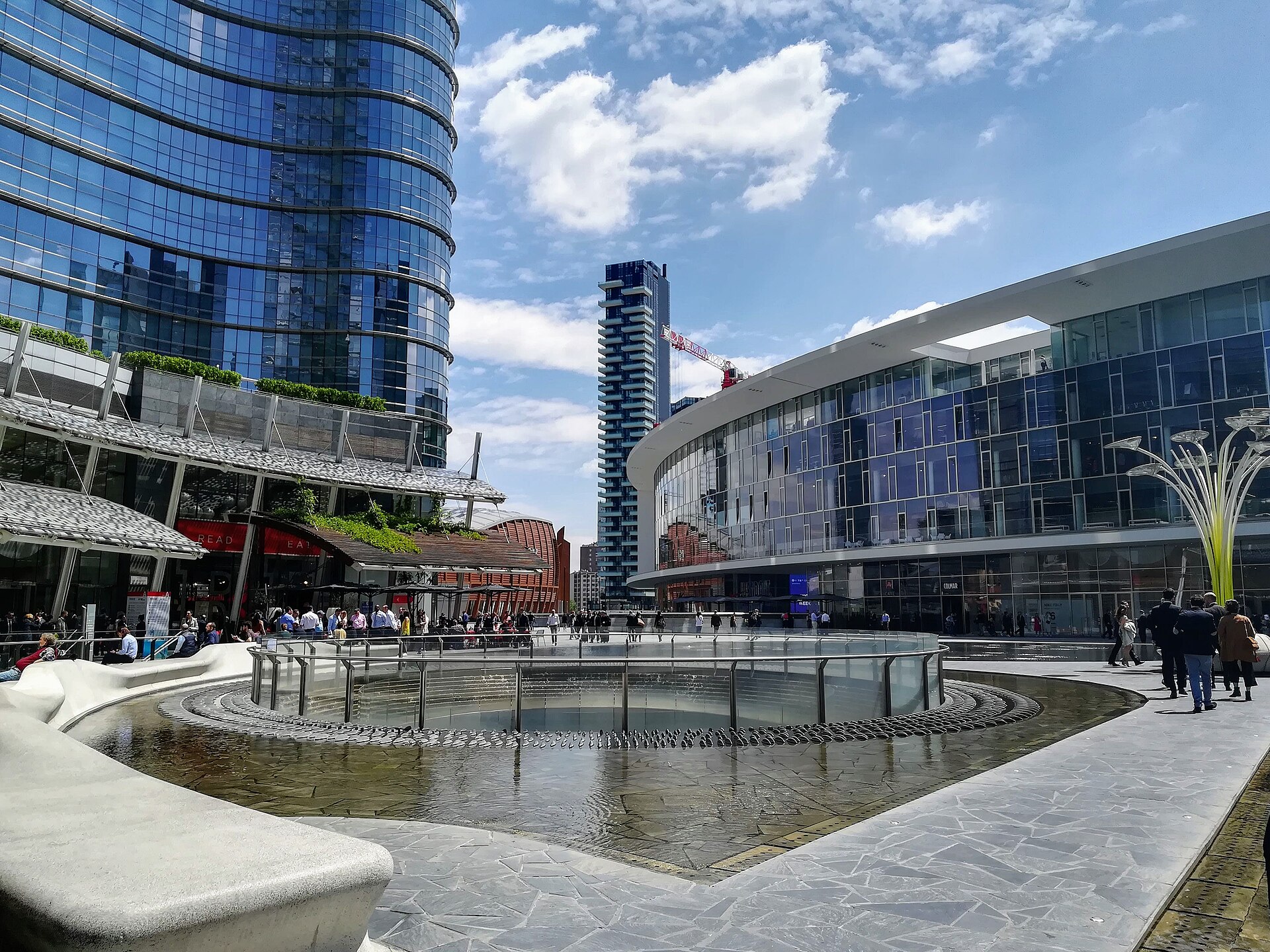
Piazza Gae Aulenti is the centrepiece of Milan's most dramatic modern urban development — Porta Nuova, a district of glass skyscrapers and public spaces that transformed a neglected railway area north of the city centre into Milan's financial and architectural showpiece. The circular elevated piazza, designed by César Pelli and named after Italian architect Gae Aulenti, is ringed by the UniCredit Tower (Italy's tallest building at 231 metres), residential towers, and a cascading fountain that drops from the plaza level to the street below. The Bosco Verticale (Vertical Forest) — two residential towers designed by Stefano Boeri and completed in 2014, whose balconies hold 900 trees and 20,000 plants — is the most photographed building in the district and one of the most innovative residential designs in the world. The trees filter pollution, provide shade, and create a facade that changes colour with the seasons, and the building has won the International Highrise Award and inspired vertical forest projects in cities from Nanjing to Eindhoven. The district represents Milan's 21st-century identity — a city that has always been about commerce, design, and forward-thinking urbanism, and that has invested in contemporary architecture with a conviction that few European cities match. The walk from the Duomo through the Galleria, past La Scala, and up to Porta Nuova takes about 20 minutes and covers 800 years of Milanese architectural ambition in a single stroll.
Pinacoteca Ambrosiana
2 Piazza Pio XI, Centro Storico, Milan, 20123, Italy
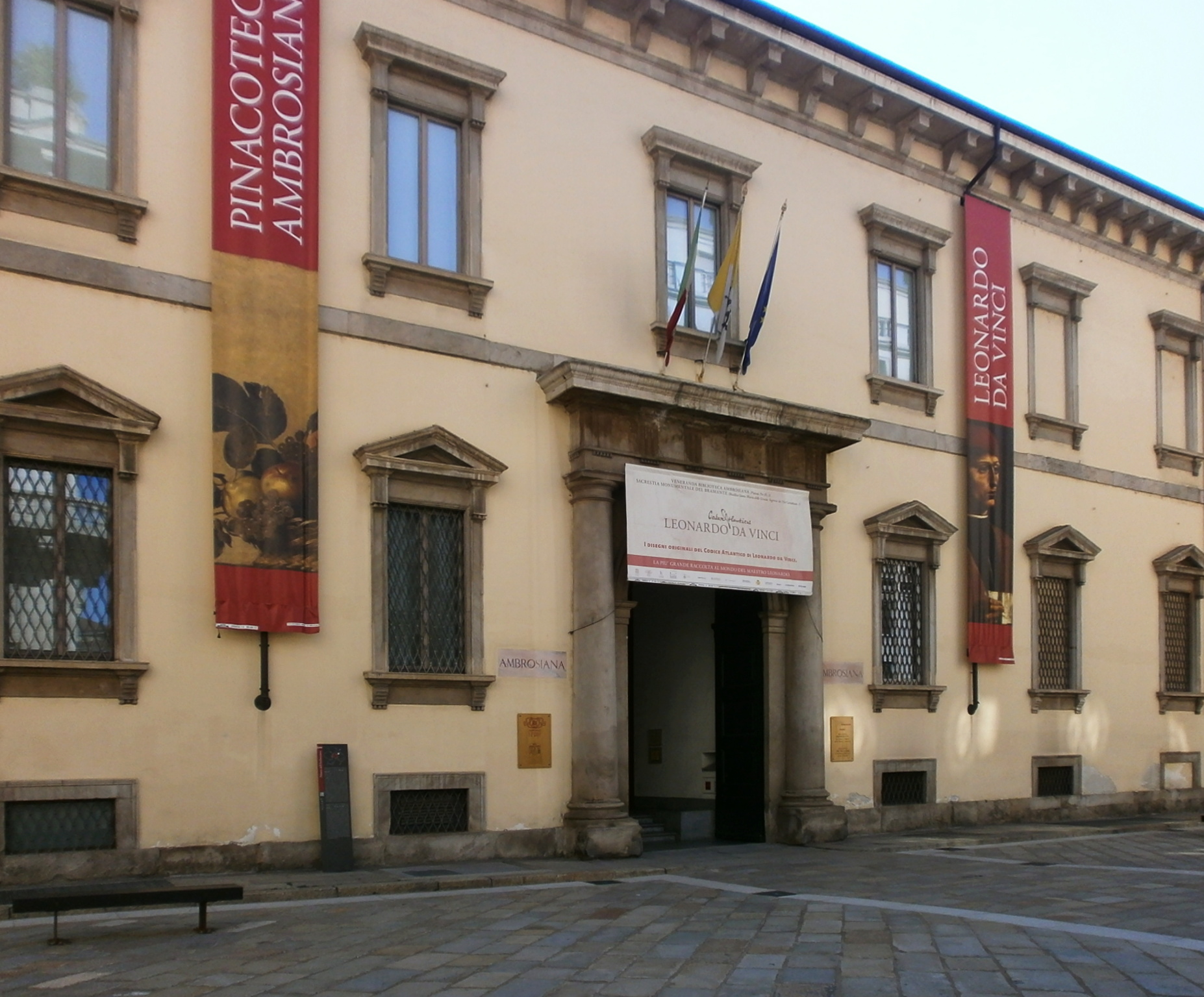
The Pinacoteca Ambrosiana is one of the oldest public art galleries in Europe — founded in 1618 by Cardinal Federico Borromeo, who donated his personal collection to the Biblioteca Ambrosiana to create a study collection for the art academy he had established. The gallery houses Leonardo da Vinci's 'Portrait of a Musician,' Caravaggio's 'Basket of Fruit' (the first still life in Italian art history), Raphael's preparatory cartoon for 'The School of Athens,' and Botticelli's 'Madonna of the Pavilion.' The Biblioteca Ambrosiana, sharing the same building, contains one of the most important manuscript collections in the world — including Leonardo's Codex Atlanticus, a 1,119-page collection of drawings, notes, and scientific observations that represents the largest single gathering of Leonardo's work. Pages from the Codex are displayed in rotating exhibitions, and seeing Leonardo's handwriting — his famous mirror script, accompanied by mechanical drawings, anatomical studies, and marginalia — is an encounter with genius that no reproduction can replicate. The gallery is small enough to see in 90 minutes but dense enough to reward multiple visits. Cardinal Borromeo's vision — a collection assembled not for private pleasure but for public education — was revolutionary in the early 17th century, and the gallery still feels more like a scholar's study collection than a tourist destination. The location, a five-minute walk from the Duomo through quiet backstreets, means it catches less traffic than the Brera, which works entirely in its favour.
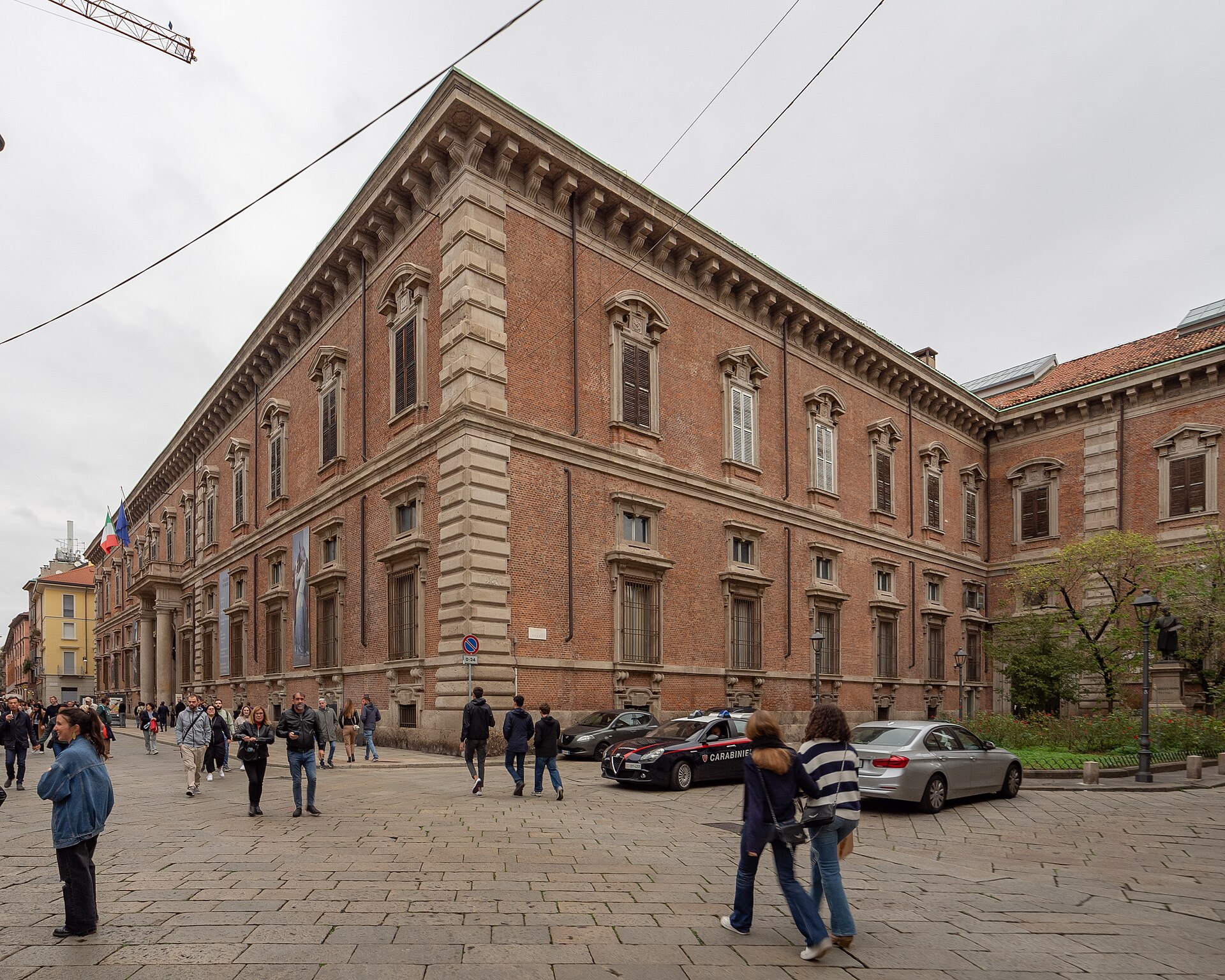
Pinacoteca di Brera
Via Brera 28, 20121 Milan
The Pinacoteca di Brera is Milan's most important art gallery — a collection of Italian Renaissance and Baroque painting that rivals the Uffizi in Florence and contains some of the most reproduced images in Italian art. Raphael's 'Marriage of the Virgin,' Mantegna's devastating 'Lamentation over the Dead Christ' (with its radical foreshortening), Caravaggio's 'Supper at Emmaus,' and Piero della Francesca's 'Brera Madonna' are among the masterpieces in a collection that represents the peak of Italian painting. The gallery occupies the first floor of the Palazzo di Brera, a 17th-century Jesuit college that also houses the Brera Academy of Fine Art, the Braidense National Library, and the Brera Botanical Garden. The courtyard, with its bronze statue of Napoleon as a classical nude (Napoleon founded the gallery in 1809, filling it with works confiscated from churches and monasteries across northern Italy), provides the entrance to both the gallery and the surrounding Brera neighbourhood. The Brera district — a grid of narrow streets around Via Brera and Via Fiori Chiari — is Milan's art quarter, with galleries, design studios, and the kind of independent shops that survive in a neighbourhood where cultural institutions keep the rents just below the level that would push them out. The Brera Botanical Garden, a small walled garden behind the palazzo, is a peaceful retreat that most gallery visitors miss entirely — a green room of medicinal plants, ancient trees, and the quiet that only walled gardens in the middle of cities can produce.
Porta Nuova & Isola District
Via Borsieri, Isola, 20159 Milan
Isola is Milan's most interesting neighbourhood — a former working-class district north of the railway tracks that was physically isolated from the city centre (isola means 'island' in Italian) until the Porta Nuova development bridged the gap, and which has used that isolation to develop a character distinct from the rest of Milan. The streets around Via Borsieri, Via Pepe, and Via Pollaiuolo are lined with the independent shops, natural wine bars, and neighbourhood restaurants that gentrification hasn't yet homogenised. The neighbourhood sits directly behind the Bosco Verticale and the Porta Nuova skyscrapers, and the contrast between the futuristic glass towers on one side and the low-rise, graffiti-covered, village-feel streets of Isola on the other is one of Milan's most striking visual juxtapositions. The residents — a mix of longtime working-class families, young professionals priced out of the centro, and the creative-class businesses that follow cheap rent — give Isola an energy that is more Brooklyn than Brera. The food scene is excellent and unpretentious — Frida, a Milanese institution for brunch, draws weekend queues. The trattorias on Via Pollaiuolo serve risotto and cotoletta at prices that the Navigli restaurants have left behind. The Stecca degli Artigiani, a community-managed space in a former factory, hosts workshops, exhibitions, and the kind of neighbourhood events that create community rather than just selling to consumers. Isola is best explored on foot, following the street art and letting the neighbourhood reveal itself — every block has something unexpected.
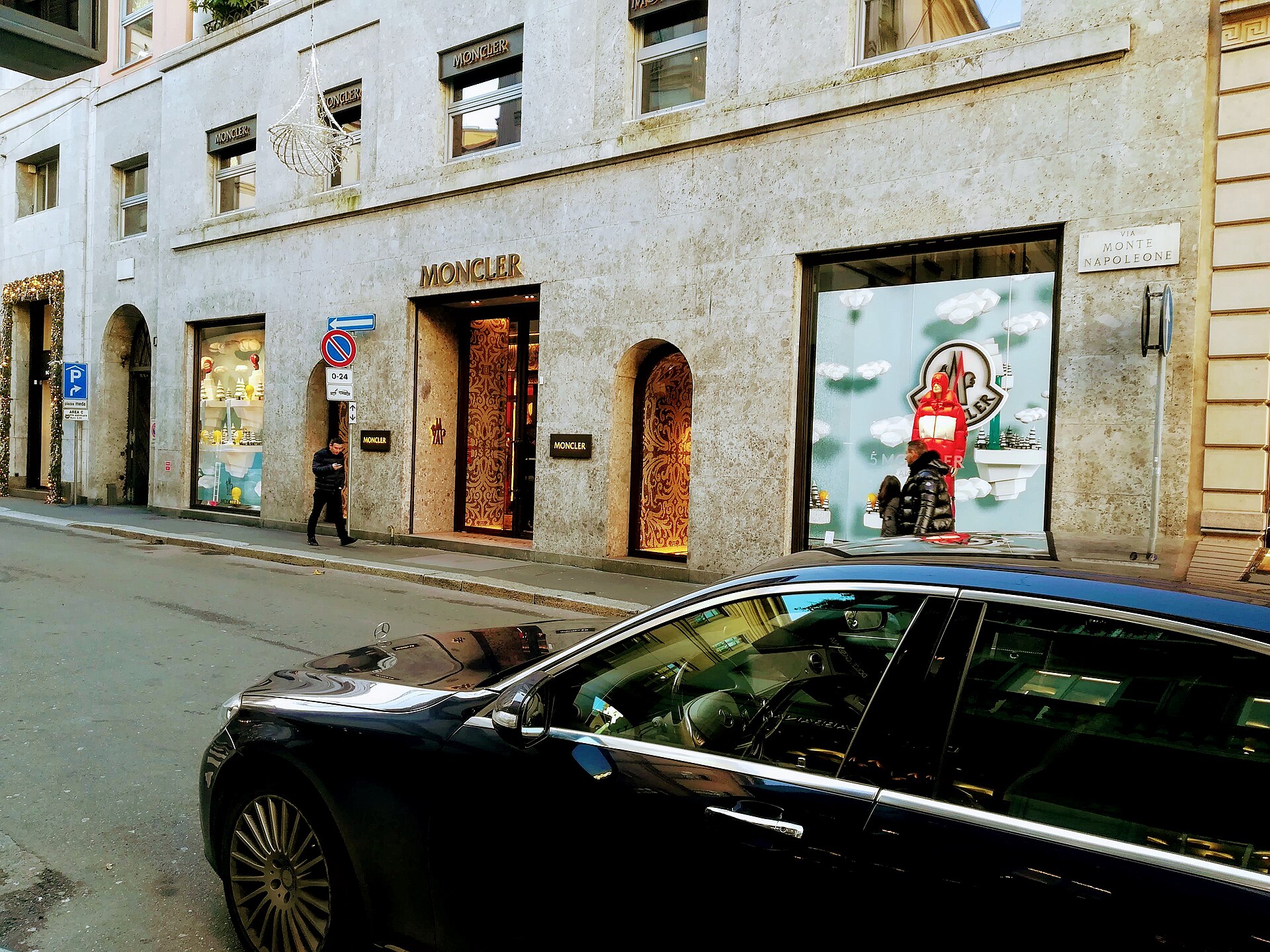
Quadrilatero della Moda (Fashion District)
Via Monte Napoleone, Centro Storico, Milan, 20121, Italy
The Quadrilatero della Moda is the fashion capital of the world compressed into four streets — Via Montenapoleone, Via della Spiga, Via Manzoni, and Corso Venezia form a rectangle of luxury boutiques that houses every major Italian fashion house (Prada, Versace, Armani, Dolce & Gabbana, Valentino) alongside international brands in 18th-century palazzi that were designed for aristocrats and now serve fashionistas. Via Montenapoleone is the spine — Milan's equivalent of Rodeo Drive or Bond Street, consistently ranked among the most expensive shopping streets in the world. The boutiques occupy the ground floors of neoclassical and Liberty-style (Italian Art Nouveau) buildings, and the window displays — changed seasonally and designed by teams of visual merchandisers — are works of art in themselves. Even if you have no intention of buying anything, the street is worth walking for the architecture and the people-watching: Milan Fashion Week (held twice yearly, in February and September) transforms the Quadrilatero into a continuous fashion show, with photographers, models, and editors creating a street scene that is as much a part of the fashion industry as the runway shows. Via della Spiga, the pedestrianised parallel street, is more intimate and slightly less intimidating — the boutiques here tend to be smaller and more curated, and the cobblestone lane with its palazzo facades feels more like a residential street that happens to sell €3,000 handbags. The Armani Silos museum, in a converted grain silo nearby, displays 40 years of Giorgio Armani's designs and is worth visiting even for people who think fashion is frivolous.
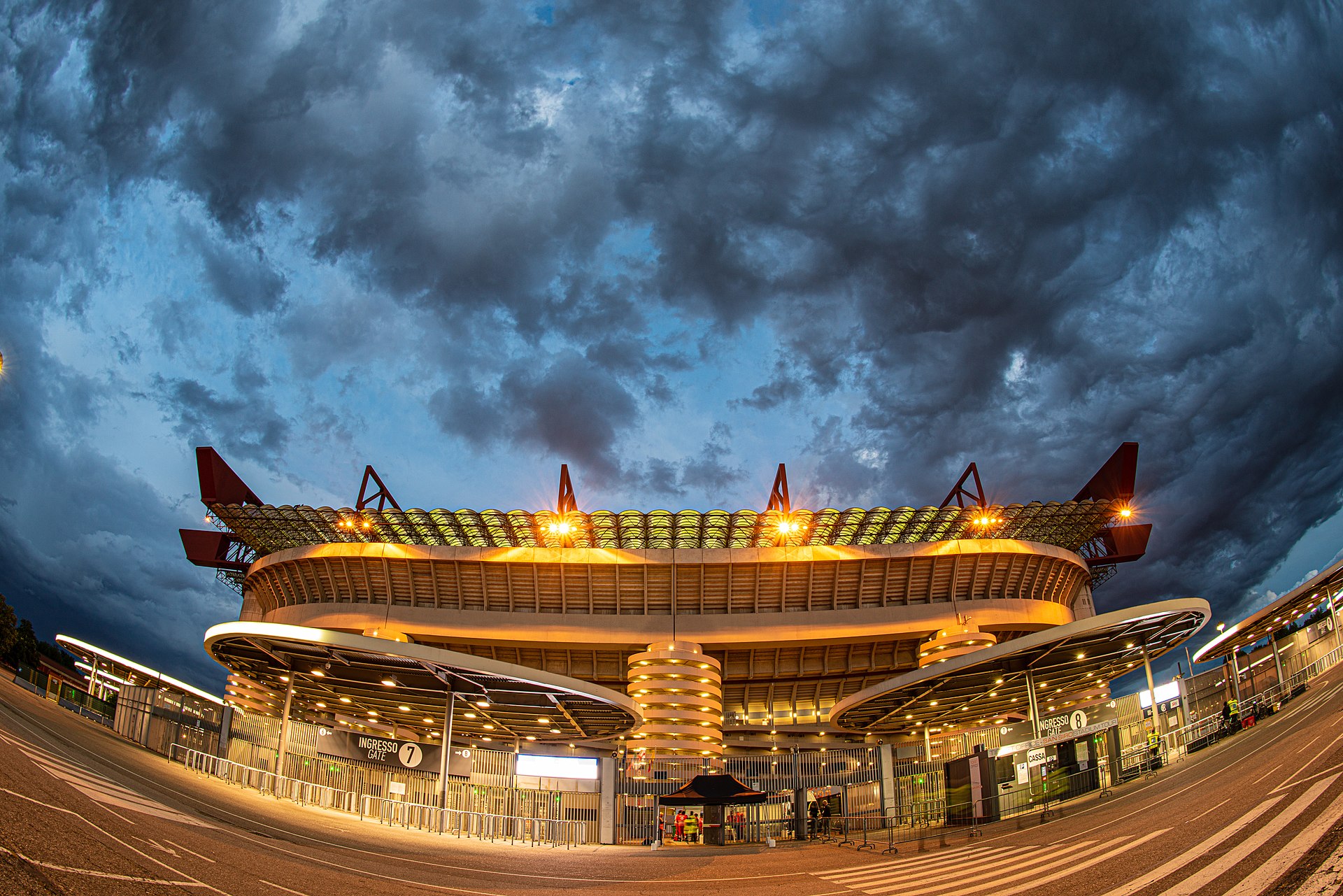
San Siro Stadium (Giuseppe Meazza)
Via Angelo Moratti, Somma Lombardo, 21019, Italy
San Siro is the most famous football stadium in Italy — an 80,018-seat colosseum shared by AC Milan and Inter Milan, two of the most successful clubs in European football, who play their home games on the same pitch in alternate weeks. The stadium, officially named after the legendary Italian footballer Giuseppe Meazza, has hosted Champions League finals, World Cup matches, and some of the most dramatic moments in football history, and the atmosphere on derby night (when Milan plays Inter) is one of the most intense sporting experiences on Earth. The stadium was built in 1926 and has been expanded and redesigned several times, most dramatically for the 1990 World Cup when the third tier and the distinctive cylindrical towers were added, giving San Siro its current industrial-Gothic appearance. The towers — four concrete cylinders at the corners, supporting spiralling external ramps that carry 80,000 fans to their seats — have become architectural icons, and the view of the stadium from outside on a match night, when the towers are lit and the crowd's roar is audible from blocks away, is genuinely cinematic. The San Siro Museum and Tour takes visitors through the changing rooms, the tunnel, and onto the pitch — standing on the same grass where Maldini, Ronaldo, Zanetti, and Kaká played is a pilgrimage for football fans. The stadium's future is uncertain — both clubs have plans for new stadiums, and San Siro may be demolished, which has generated passionate debate in a city that treats its football cathedrals with the same reverence it gives its actual cathedrals.
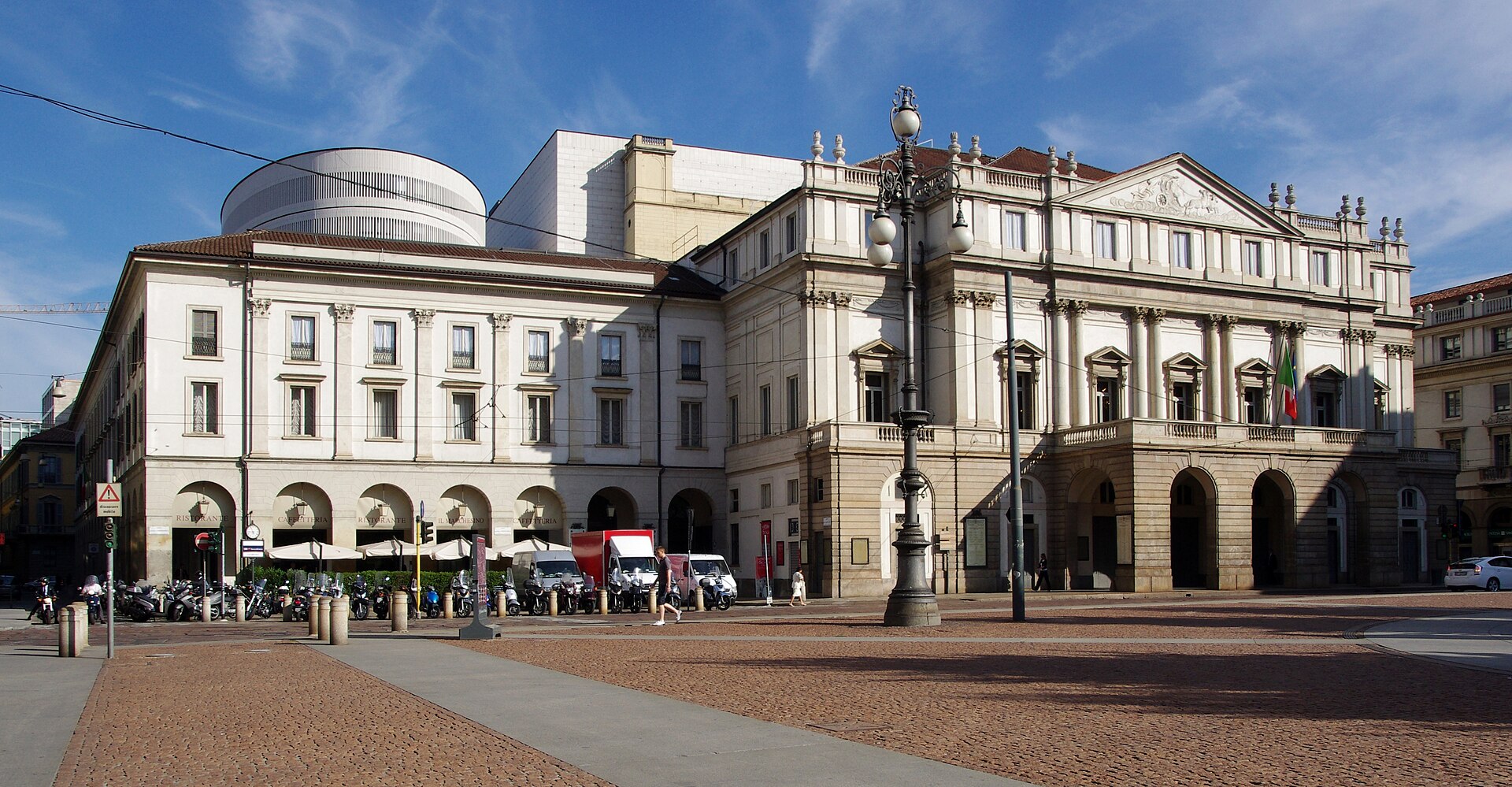
Teatro alla Scala
Via Filodrammatici 2, 20121 Milan
La Scala is the most famous opera house in the world — a neoclassical theatre that has premiered operas by Verdi, Puccini, Bellini, Donizetti, and Rossini, and whose opening night on December 7 (the feast of Sant'Ambrogio, Milan's patron saint) is the most important date in the international opera calendar. The theatre seats 2,030 in a horseshoe auditorium of red velvet, gold leaf, and six tiers of boxes that have hosted every major operatic voice since the building opened in 1778. The interior is intimate by modern standards — the stage is relatively small, and the boxes bring the audience close to the performers, creating an acoustic and visual relationship between singer and listener that larger opera houses can't replicate. The acoustics, refined over centuries of performance and reconstruction (the theatre was heavily damaged by Allied bombing in 1943 and rebuilt by 1946), are considered among the finest in the world, and the 'La Scala sound' — warm, immediate, and unforgiving of vocal imperfection — has been the standard against which opera singing is measured for two centuries. The La Scala Museum, in an adjacent building, displays opera costumes, set designs, portraits of composers and singers, and a collection of musical instruments that includes Liszt's piano. The museum provides access to the auditorium (from a box) when rehearsals aren't in progress, letting you see the theatre without attending a performance. But attending a performance — even standing-room in the gallery — is one of the essential experiences of European culture, and last-minute tickets are sometimes available at the box office on performance day.
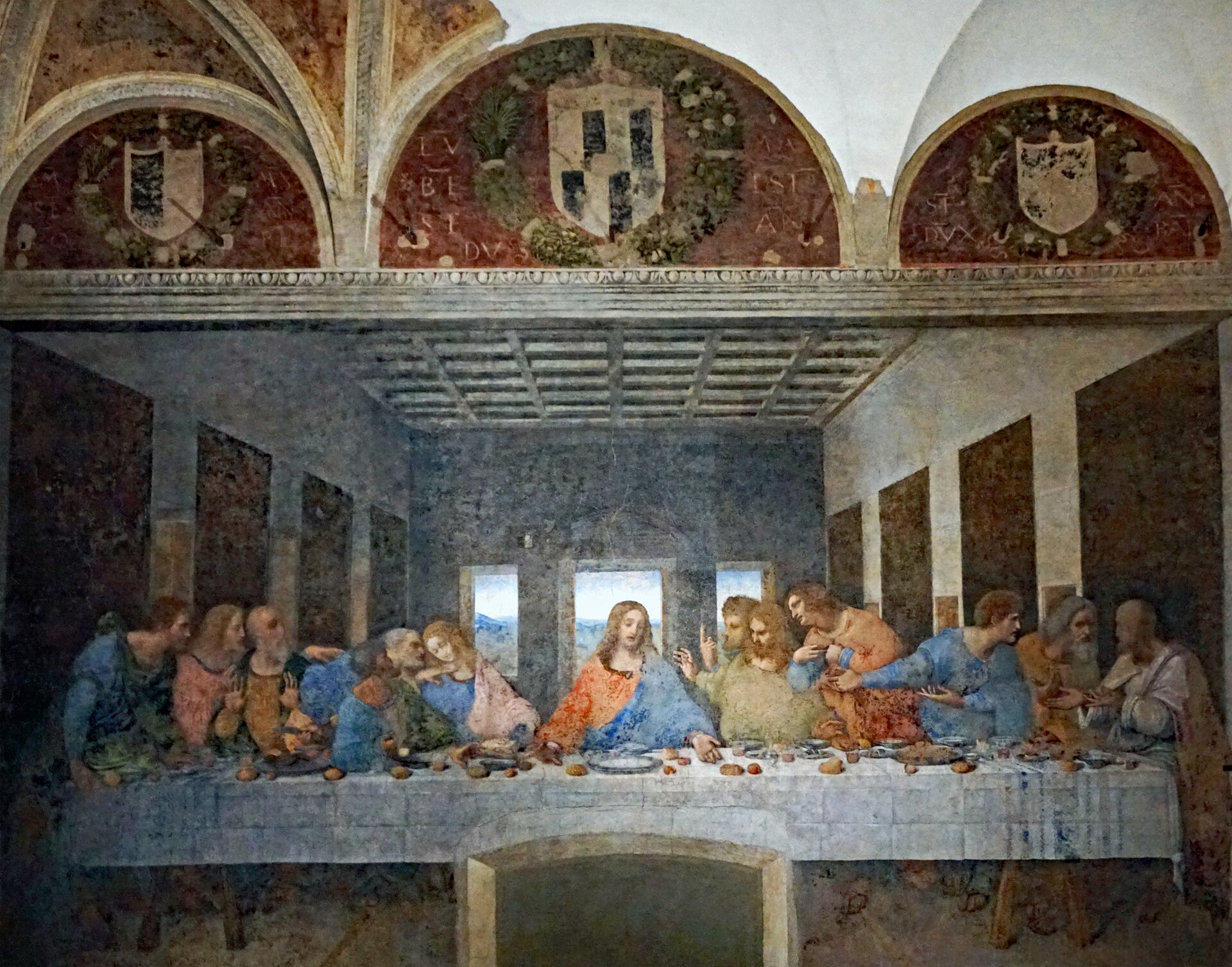
The Last Supper (Santa Maria delle Grazie)
Piazza di Santa Maria delle Grazie, 20123 Milan
Leonardo da Vinci's 'The Last Supper' is the most famous painting in Milan and one of the most important works of art in the world — a 4.6 by 8.8 metre mural covering the end wall of the refectory of the Dominican convent of Santa Maria delle Grazie. Painted between 1495 and 1498, it depicts the moment when Christ announces that one of his disciples will betray him, and the reactions of the twelve apostles — shock, denial, anger, grief — create a drama that has been studied, copied, and argued over for five centuries. The painting's survival is itself remarkable. Leonardo experimented with a tempera-oil technique on dry plaster rather than the traditional fresco technique of painting on wet plaster, which meant the painting began deteriorating almost immediately. It has been through botched restorations, Napoleonic soldiers using the refectory as a stable, and a World War II bombing that destroyed the refectory's roof and three walls while the wall bearing the painting survived (protected by sandbags). A 21-year restoration completed in 1999 removed centuries of overpainting and grime, revealing colours and details that hadn't been visible for centuries. Visiting requires advance booking — tickets sell out weeks ahead, and each group of 25 visitors gets exactly 15 minutes in the refectory. The time limit, which initially feels restrictive, actually works in the painting's favour: the small group, the silence, and the intensity of 15 minutes of focused looking create an encounter with art that is more powerful than hours of casual museum browsing. Book at least a month in advance, especially for summer visits.
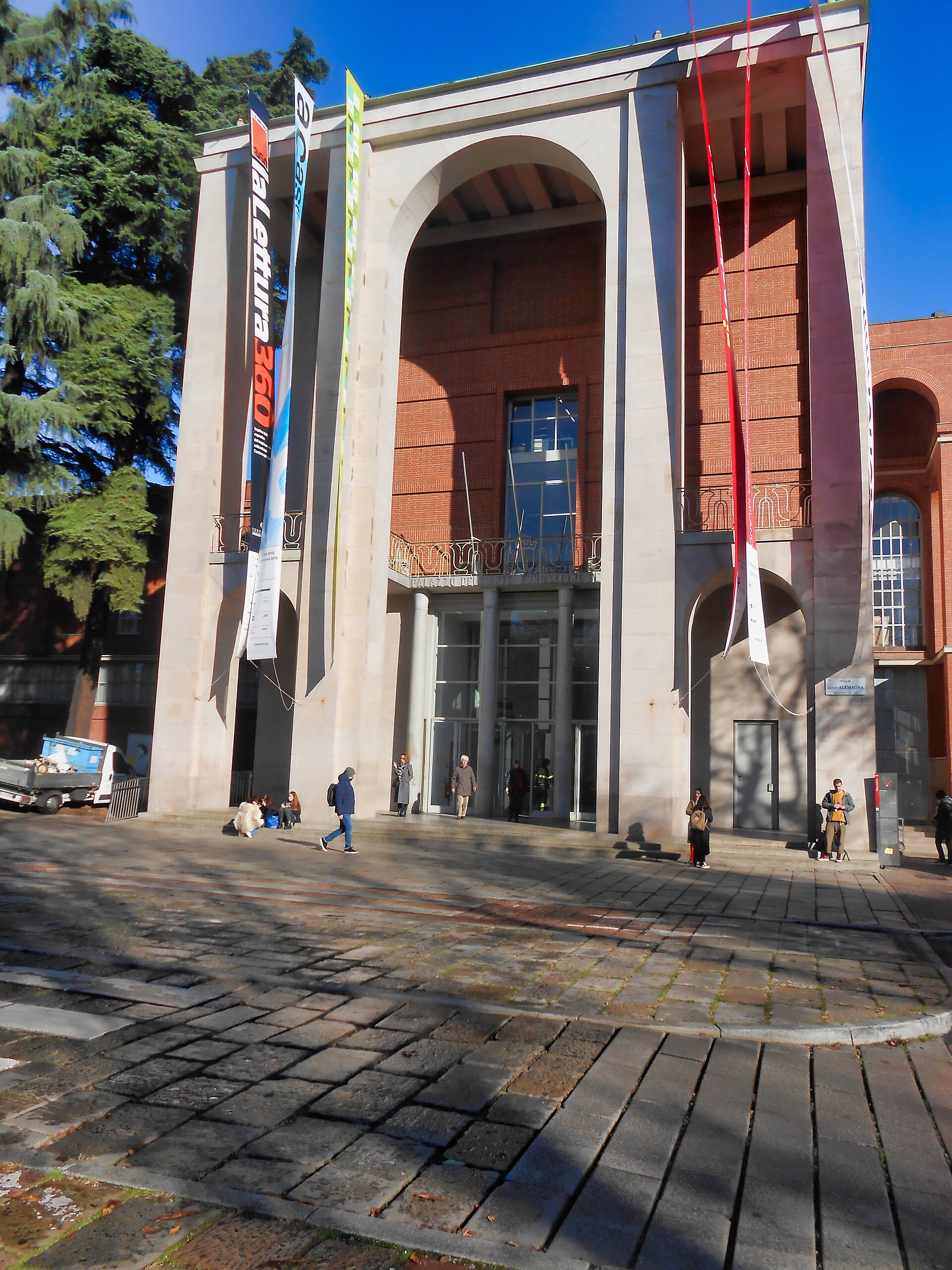
Triennale di Milano
Viale Alemagna 6, 20121 Milan
The Triennale is Milan's design museum — an institution dedicated to Italian design, architecture, fashion, and the applied arts that has been the intellectual engine of the city's design industry since 1933. The museum occupies the Palazzo dell'Arte, a rationalist building by Giovanni Muzio at the edge of Parco Sempione, and its exhibitions consistently set the agenda for international design discourse. The permanent collection, Museo del Design Italiano, traces the history of Italian design from the post-war economic miracle (when companies like Olivetti, Alessi, and Kartell established Italy as the world capital of industrial design) through the radical design movements of the 1960s and 70s to contemporary practice. The objects — chairs, lamps, espresso makers, typewriters — are displayed as art, which in Italy they essentially are. A Castiglioni lamp or a Sottsass shelf is taken as seriously here as a painting in the Brera. The Triennale's temporary exhibitions are where Milan's design conversation happens — major retrospectives of designers (Gio Ponti, Achille Castiglioni, Ettore Sottsass), themed exhibitions on urbanism, sustainability, and the future of making, and the International Exposition (held every three years) that gives the institution its name. During Salone del Mobile (the annual furniture fair in April), the Triennale becomes the intellectual centre of a citywide design festival that transforms Milan into a showroom.