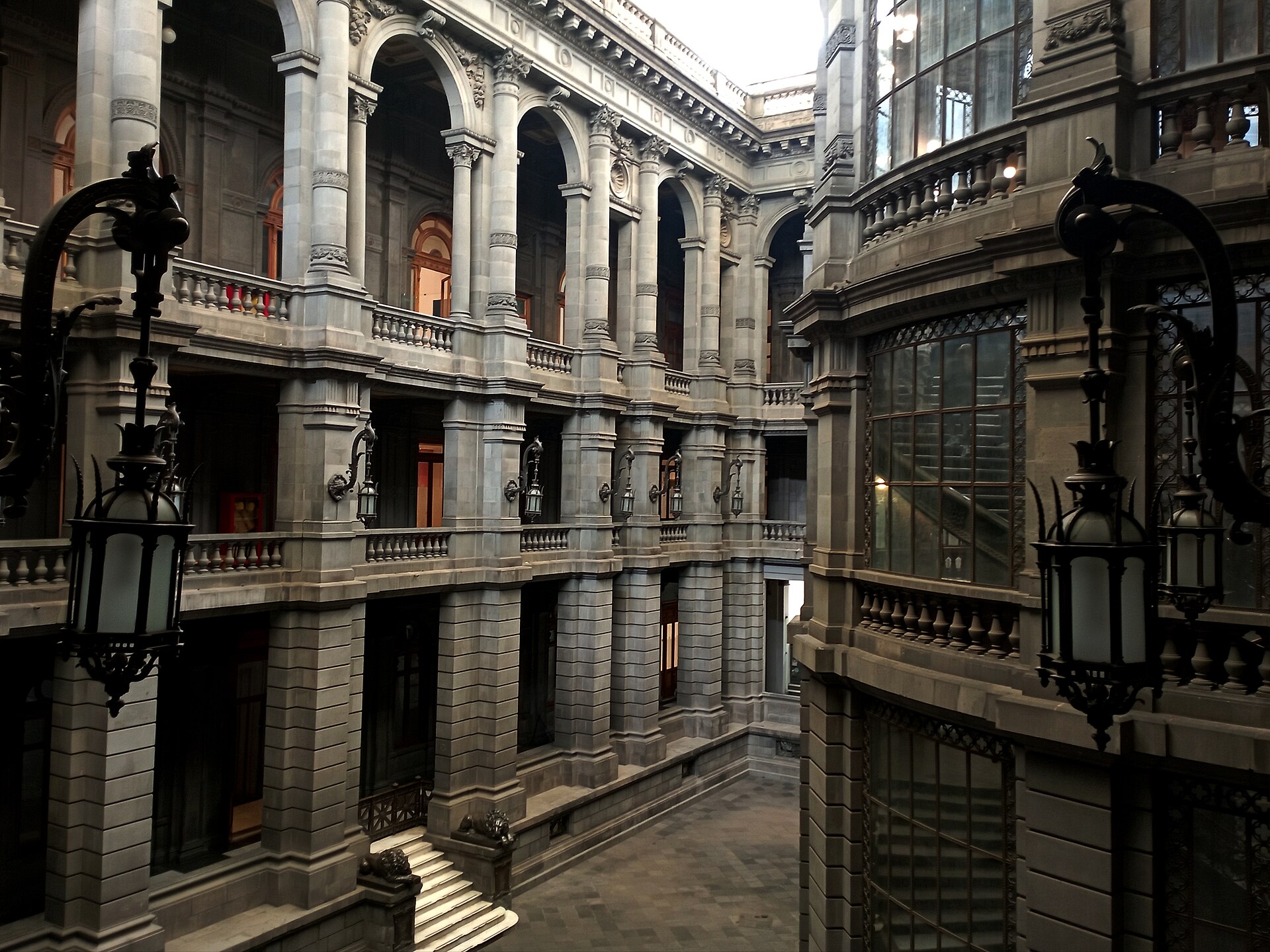
MUNAL (Museo Nacional de Arte) is Mexico's national art museum — housed in a sumptuous neoclassical building designed by Italian architect Silvio Contri and completed in 1911, with a collection spanning 500 years of Mexican art from the colonial period to the mid-20th century. The building itself, with its grand marble staircase, cast-iron elevator, and elaborately decorated halls, is as much an exhibit as the art it contains.
The collection traces the development of Mexican visual culture from 16th-century colonial religious paintings through the 19th-century Academy (when Mexican painters emulated European styles) to the early 20th-century modernists who broke with European conventions to create something distinctly Mexican. The landscape paintings of José María Velasco — panoramic views of the Valley of Mexico that captured the volcanic landscape with scientific precision and romantic grandeur — are a highlight, and the transition from colonial art to Mexican modernism in the galleries mirrors the country's transition from colony to nation.
The museum sits on Plaza Manuel Tolsá, named after the sculptor whose equestrian statue of Charles IV of Spain — known as 'El Caballito' — stands outside. The plaza, with MUNAL on one side and the Palacio de Minería (a neoclassical masterpiece by Tolsá himself) on the other, is one of the most architecturally harmonious spaces in the Centro Histórico. The museum is significantly less crowded than the Anthropology Museum or the Frida Kahlo Museum, which means you can often have entire galleries to yourself — a luxury in a city of 22 million.
Verified Facts
MUNAL is housed in a building designed by Silvio Contri, completed in 1911
The collection spans approximately 500 years of Mexican art
The museum sits on Plaza Manuel Tolsá
José María Velasco's landscape paintings are a highlight of the collection
Get walking directions
Tacuba 8, Centro Histórico, Mexico City