Museo Rufino Tamayo
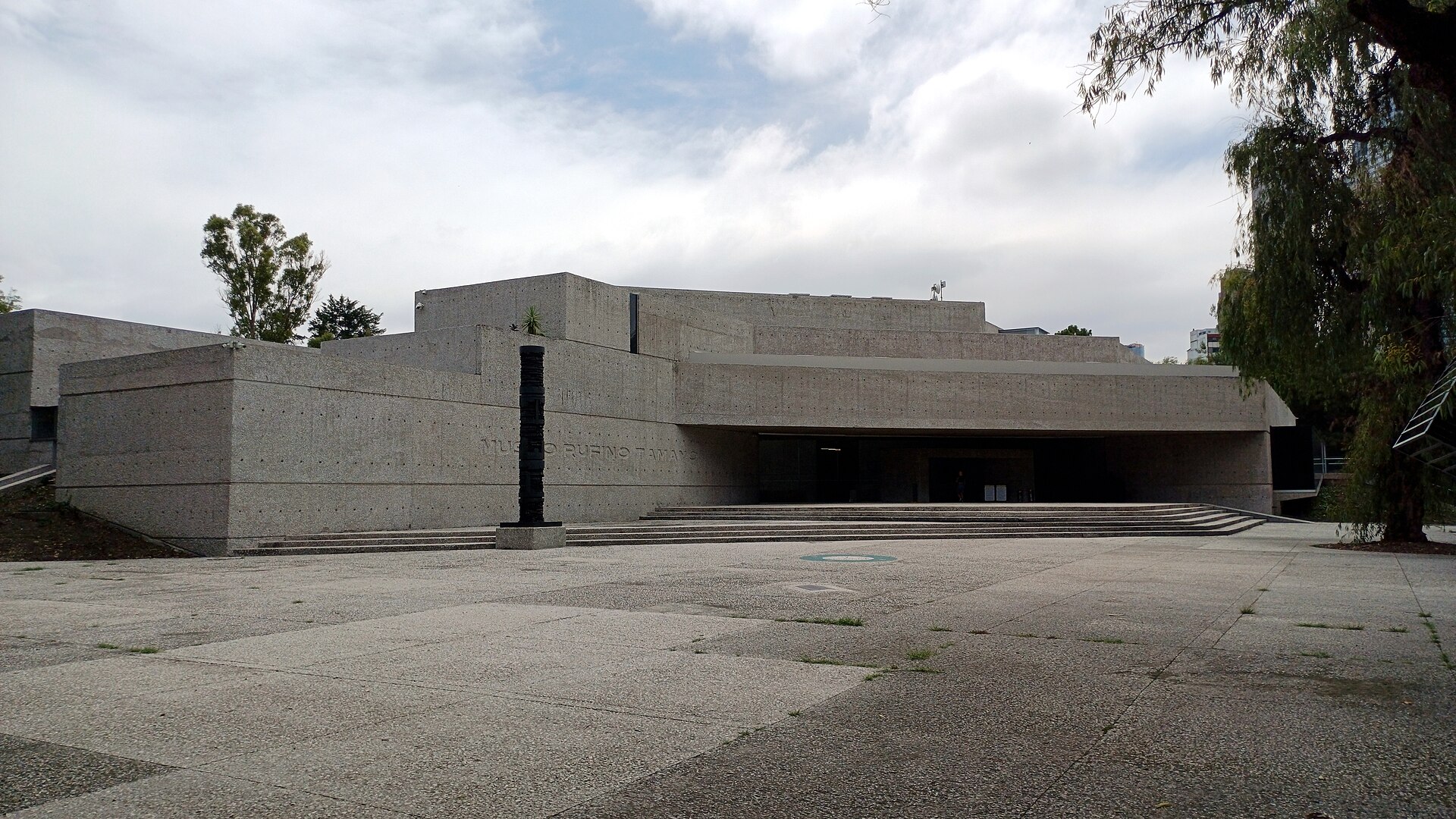
The Rufino Tamayo Museum is one of the finest contemporary art museums in Latin America — a brutalist concrete building set among the trees of Chapultepec Park that houses the personal collection of Oaxacan painter Rufino Tamayo alongside rotating exhibitions of international contemporary art. Tamayo, who lived from 1899 to 1991, was the bridge between the Mexican muralists and the contemporary art world, and his museum — designed by Abraham Zabludovsky and Teodoro González de León in 1981 — reflects his conviction that Mexican art should engage with the global conversation rather than remaining isolated in nationalism.
The building is a masterwork of Mexican brutalism — raw concrete walls that slope inward, skylights that filter natural light through the tree canopy above, and gallery spaces that transition from intimate rooms to soaring double-height halls. The architecture avoids the white-cube anonymity of most contemporary art spaces in favour of a material presence that gives the building its own character. The concrete interior, marked by the imprints of wooden formwork, has a warmth that contradicts the usual coldness of the brutalist palette.
Tamayo's personal collection — works by Picasso, Miró, de Kooning, Warhol, and Francis Bacon, among others — is supplemented by a rotating programme of temporary exhibitions that brings major international contemporary art to Mexico City. The museum's location in Chapultepec, a short walk from the Anthropology Museum and the Museum of Modern Art, makes it part of a museum circuit that could fill an entire day without leaving the park.
Verified Facts
The museum was designed by Zabludovsky and González de León and opened in 1981
Rufino Tamayo lived from 1899 to 1991
The museum houses Tamayo's personal collection of international art
The building is an example of Mexican brutalist architecture
Get walking directions
51 Paseo de La Reforma, Bosque de Chapultepec I, Miguel Hidalgo, 11580, Mexico