Torre Latinoamericana
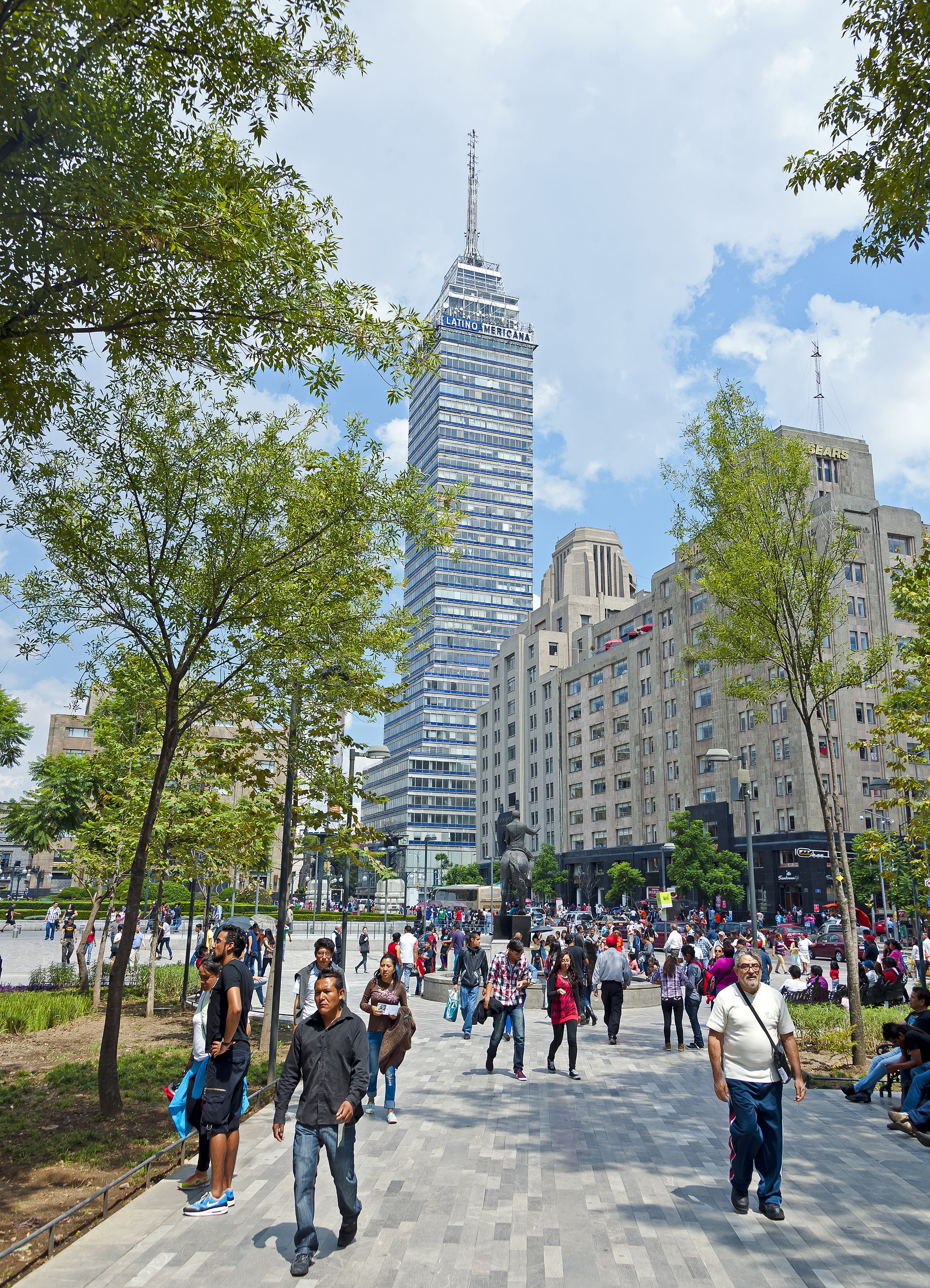
The Torre Latinoamericana was the tallest building in Latin America when it was completed in 1956, and while it's long since been surpassed in height, its observation deck on the 44th floor remains the best place to understand Mexico City's geography — the volcanic valley, the ring of mountains, the endless urban sprawl, and the historic centre laid out directly below like a map of the last 500 years.
The tower's most impressive achievement isn't its height but its survival. Mexico City sits on one of the most seismically active zones in the world, and the soft lake bed beneath the city amplifies earthquake vibrations like a bowl of jelly. The Torre Latinoamericana was engineered with a deep piling system and flexible steel frame that allowed it to survive the catastrophic earthquakes of 1957, 1985, and 2017 without structural damage — a record that earned it an award from the American Society of Civil Engineers and made it a symbol of resilience in a city where every building lives on borrowed geological time.
The observation deck offers a 360-degree view that on a clear day (becoming more common as air quality improves) extends to the snow-capped volcanoes Popocatépetl and Iztaccíhuatl to the southeast. Looking straight down, you see the Centro Histórico's colonial grid, the green lung of the Alameda Central park, and Bellas Artes' white marble roof — the entire colonial and modern core of the city in a single view. Visit in the late afternoon for the best light and the possibility of watching the sun set behind the western mountains.
Verified Facts
The tower was the tallest in Latin America when completed in 1956
It survived the major earthquakes of 1957, 1985, and 2017 without structural damage
The observation deck is on the 44th floor
The tower won an award from the American Society of Civil Engineers for earthquake resilience
Get walking directions
Calle Torre Latinoamericana, Palmitas, Iztapalapa, 09700, Mexico