The UNAM campus (Ciudad Universitaria) is a UNESCO World Heritage Site and one of the most important examples of 20th-century architecture in the Americas — a planned university city built in the early 1950s that integrated modernist architecture with Mexican muralism in a way that no other campus has matched. Over 60 architects, engineers, and artists collaborated on the project, and the result is a campus where every major building features murals, mosaics, or sculptural reliefs that tell the story of Mexico.
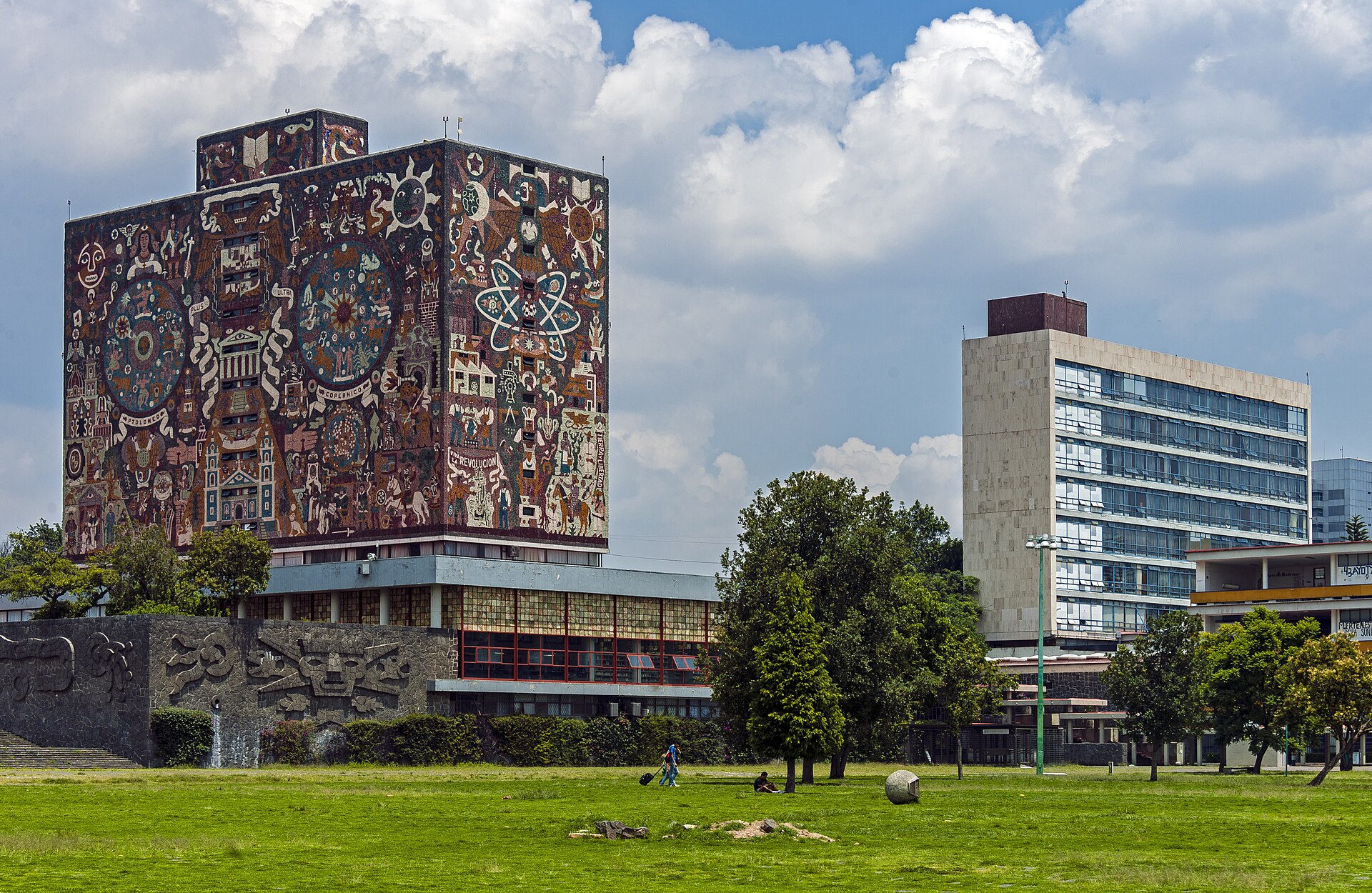
The Biblioteca Central (Central Library) is the icon — a ten-storey rectangular box whose four facades are entirely covered in stone mosaics by Juan O'Gorman depicting pre-Hispanic, colonial, and modern Mexican history. The mosaics, made from naturally coloured stones collected from across Mexico, are visible from kilometres away and are one of the most ambitious works of public art in the 20th century. The Rectoría (administration building) features a three-dimensional mural by Siqueiros, and the Olympic Stadium (built for the 1968 Games) has a Rivera mosaic on its exterior.
UNAM is the largest university in Latin America (350,000 students), and the campus buzzes with the energy of a small city — bookshops, cafés, museums, cinemas, and the Espacio Escultórico (a massive outdoor sculpture installation of geometric concrete forms on a lava field). The campus is free to enter and walk through, and the architecture tour — from the Central Library through the Sciences Faculty to the cultural zone — takes about two hours and provides a compressed education in Mexican modernism.
Verified Facts
The UNAM campus is a UNESCO World Heritage Site
The Central Library mosaics were created by Juan O'Gorman
UNAM is the largest university in Latin America with approximately 350,000 students
The Olympic Stadium was built for the 1968 Olympics
Get walking directions
Ciudad Universitaria, Coyoacán, Mexico