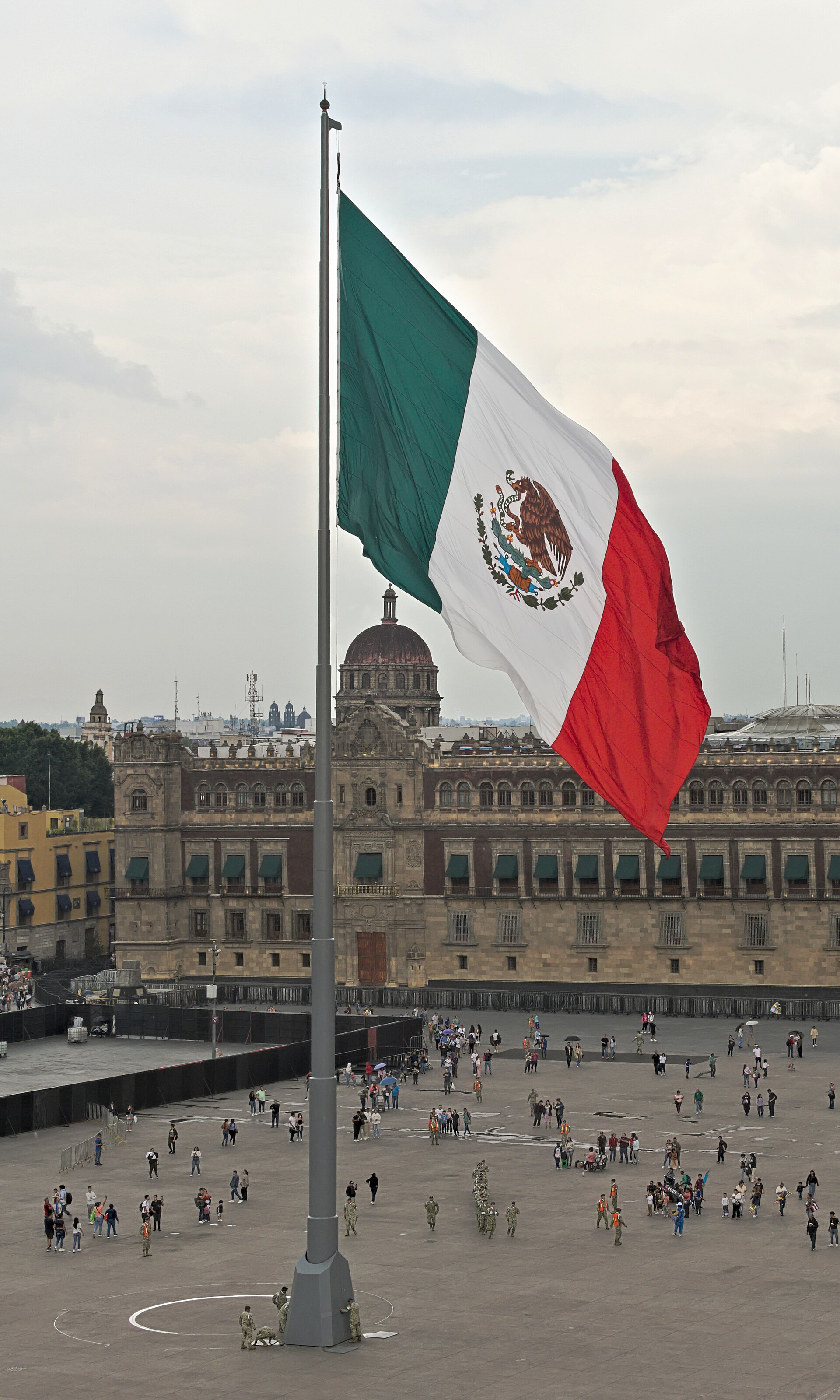
The Zócalo is the beating heart of Mexico City and one of the largest public squares in the world — a vast expanse of grey stone flanked by the Metropolitan Cathedral, the Palacio Nacional, and the remains of the Aztec Templo Mayor, layering three civilisations in a single view. The square has been the centre of power in the Valley of Mexico for over 700 years, from the Aztec empire through Spanish colonialism to the modern Mexican republic.
The name 'Zócalo' technically means 'plinth' or 'base' — it refers to a pedestal that was installed in the 19th century for a monument that was never built. The pedestal was eventually removed, but the name stuck, and now every main square in Mexico is called a zócalo in homage to this one. The enormous Mexican flag at the centre is raised and lowered in a daily ceremony by soldiers in dress uniform, and the scale of the flag against the colonial architecture and the mountain-ringed sky is one of those images that makes Mexico City feel like a capital in a way that few other cities achieve.
The square is the site of virtually every major Mexican celebration — Independence Day (September 15-16), Day of the Dead (November 1-2), political rallies, concerts, and the annual construction of an ice skating rink that fills the entire plaza in winter. On a normal day, the Zócalo is a gathering place for street performers, Aztec dancers in feathered headdresses, vendors selling elotes and esquites, and the steady stream of pedestrians crossing between the cathedral, the government buildings, and the metro station beneath the square.
Verified Facts
The Zócalo is one of the largest public squares in the world
The name comes from a pedestal (zócalo) for an unbuilt monument
The square has been a centre of power for over 700 years
The Mexican flag in the centre is raised and lowered daily by soldiers
Get walking directions
Mexico