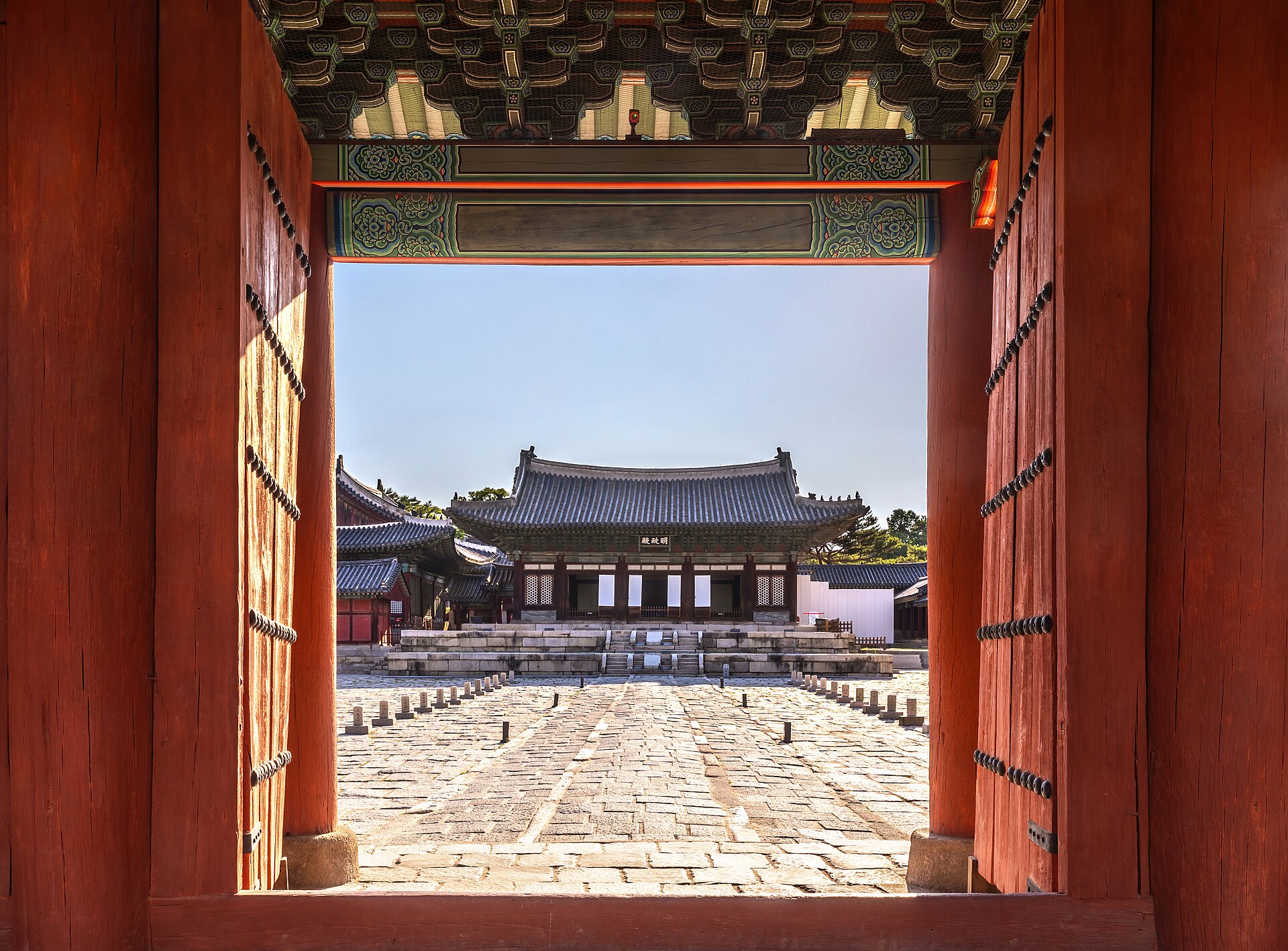
Changgyeonggung is the overlooked palace — the fourth of Seoul's five Joseon palaces and the one most visitors skip in favour of Gyeongbokgung or Changdeokgung, which makes it the most peaceful and least crowded. Built in 1484 as a residential palace for the queens and concubines, it was converted by the Japanese colonial government into a zoo and botanical garden in 1909 — a deliberate humiliation of Korean royal heritage that wasn't reversed until the zoo was removed in 1983.
The palace has been quietly restored since then, and the result is a compound that feels more like a garden than a fortress. The Chundangji Pond, surrounded by cherry trees that bloom spectacularly in April, is the most photographed spot, and the palace's night openings (held seasonally) — when the buildings are lit with traditional lanterns and the grounds are accessible after dark — are one of Seoul's most atmospheric experiences.
Changgyeonggung connects directly to Changdeokgung through a gate in the eastern wall, and visiting both palaces in sequence lets you compare two different approaches to Korean royal architecture: Changdeokgung's famous adaptation to natural topography versus Changgyeonggung's more formal south-facing orientation. The palace also connects to the grounds of Jongmyo Shrine, meaning you can walk from palace to palace to shrine through a continuous historical landscape that covers over 500 years of Joseon history without crossing a modern street.
Verified Facts
Changgyeonggung was built in 1484 as a residential palace for queens
The Japanese converted it into a zoo and botanical garden in 1909
The zoo was removed in 1983 and restoration began
The palace connects directly to Changdeokgung and Jongmyo Shrine
Get walking directions
Changgyeonggung-ro, Seoul, South Korea