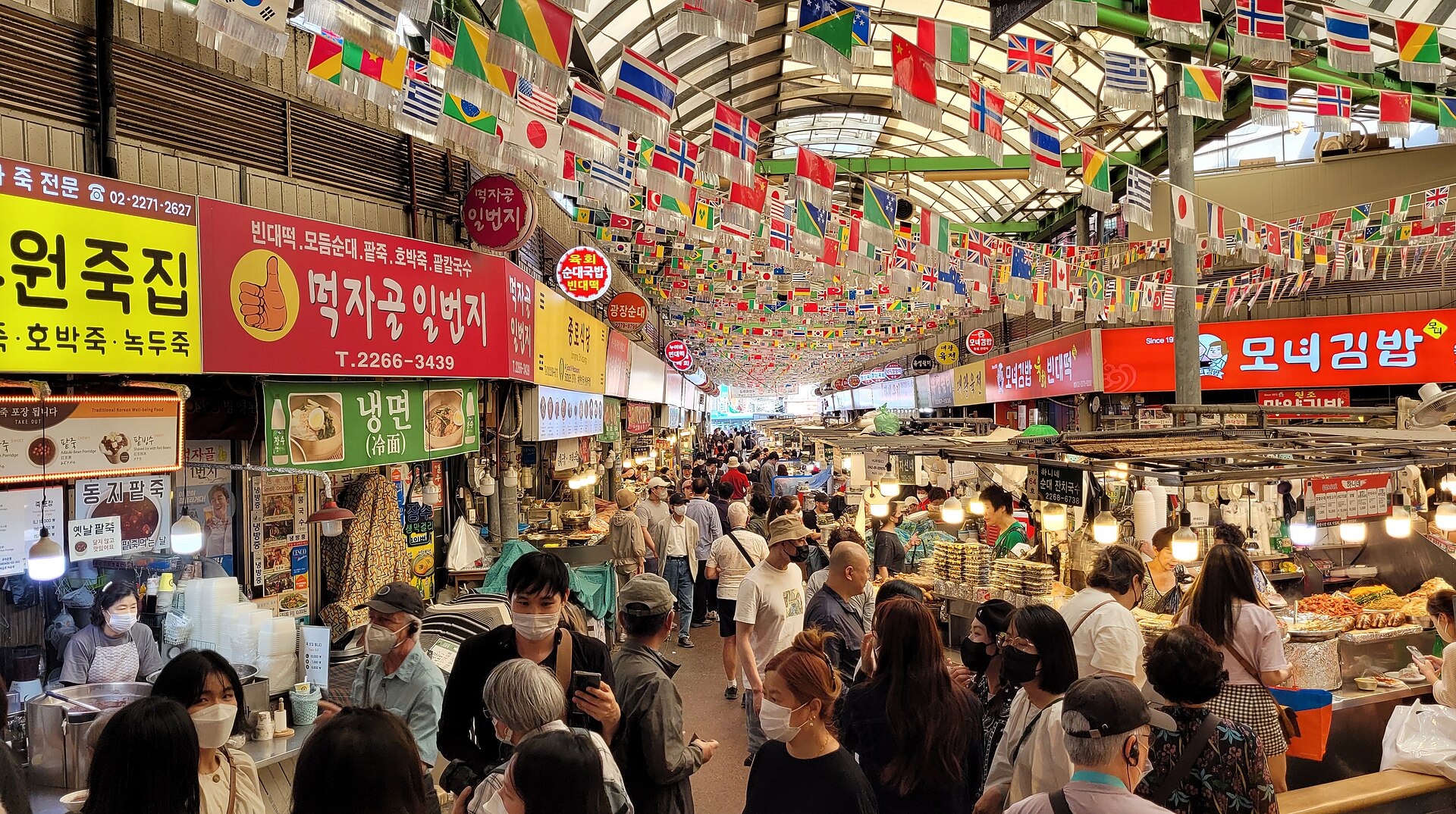
Gwangjang Market is Korea's first permanent market — established in 1905, and now a sprawling, chaotic, magnificent food hall where the stall vendors have been perfecting the same dishes for generations and the communal seating puts you elbow-to-elbow with Korean grandmothers, office workers on lunch break, and tourists who've seen the market on Netflix and are trying to figure out what to order.
The food hall, concentrated in the covered alleys on the market's eastern side, is the main attraction. Bindaetteok (mung bean pancakes, fried to a crisp on enormous griddles by women who've been making them for 30 years), mayak gimbap ('addictive' mini rice rolls dipped in mustard sauce), tteokbokki (chewy rice cakes in fiery gochujang sauce), and yukhoe (Korean beef tartare, served raw with a quail egg on top) are the signature dishes. Each stall specialises in one or two items, and the vendors will make sure you order correctly even if you don't speak Korean — pointing and nodding are an adequate ordering system.
The market also houses an enormous textile section — bolts of silk, cotton, and synthetic fabric stacked floor to ceiling in hundreds of stalls, along with tailors who can produce a custom hanbok or suit overnight. The vintage clothing section, the dried goods alleys, and the secondhand shops round out a market that covers about 42,000 square metres and has been operating continuously since the Japanese colonial period. Come hungry, bring cash (many stalls are cash-only), and budget at least an hour for eating and wandering.
Verified Facts
Gwangjang Market was established in 1905 as Korea's first permanent market
The market covers approximately 42,000 square metres
Mayak gimbap means 'addictive' gimbap
The market gained global attention through Netflix food shows
Get walking directions
Changgyeonggung-ro, Seoul, South Korea