Gyeongbokgung is the largest and grandest of Seoul's five Joseon dynasty palaces — built in 1395 as the main royal residence and the seat of government for a dynasty that would rule Korea for over 500 years. The palace was systematically destroyed by the Japanese during their occupation of Korea (1910-1945), and its ongoing restoration — which has been reclaiming the compound building by building since the 1990s — is both an architectural project and an act of national reclamation.
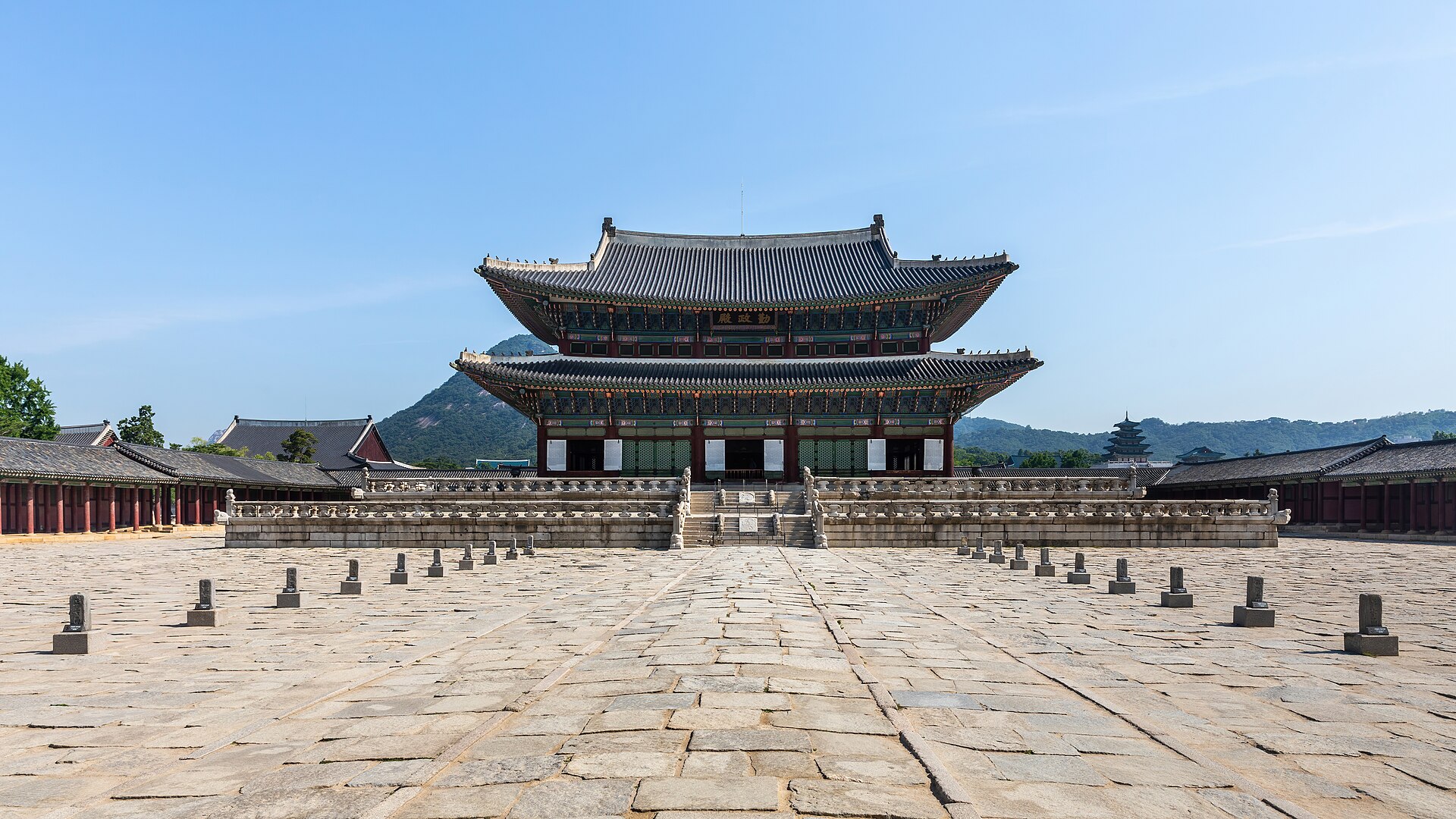
The palace sits on a north-south axis aligned with Bugaksan mountain behind it, and the approach through the massive Gwanghwamun Gate — flanked by stone haetae (mythical lion-dogs) and overlooked by the mountain — is one of the most impressive entrances to any palace complex in Asia. The Changing of the Guard ceremony at Gwanghwamun, performed in full Joseon-era costume three times daily, draws crowds that line the plaza. Inside, the Geunjeongjeon (throne hall), set on a two-tier stone platform and surrounded by stone markers indicating where officials stood by rank, is the centrepiece — a wooden hall of extraordinary scale that was used for coronations, audiences, and state ceremonies.
The Gyeonghoeru Pavilion — a two-storey banquet hall sitting on 48 stone pillars above an artificial lake — is the most photographed building on the compound, and the reflection of the pavilion in the water with the mountains behind is the defining image of historic Seoul. The National Palace Museum and National Folk Museum of Korea are both within the palace grounds, and renting a hanbok (traditional Korean dress) gets you free admission to the palace — a deal that fills the courtyards with visitors in silk robes, creating a time-travel atmosphere that's equal parts historical and theatrical.
Verified Facts
Gyeongbokgung was built in 1395 as the main palace of the Joseon dynasty
The palace was largely destroyed during the Japanese occupation (1910-1945)
The Gyeonghoeru Pavilion sits on 48 stone pillars above an artificial lake
Wearing hanbok grants free admission to the palace
Get walking directions
Sajik-ro, Seoul, South Korea