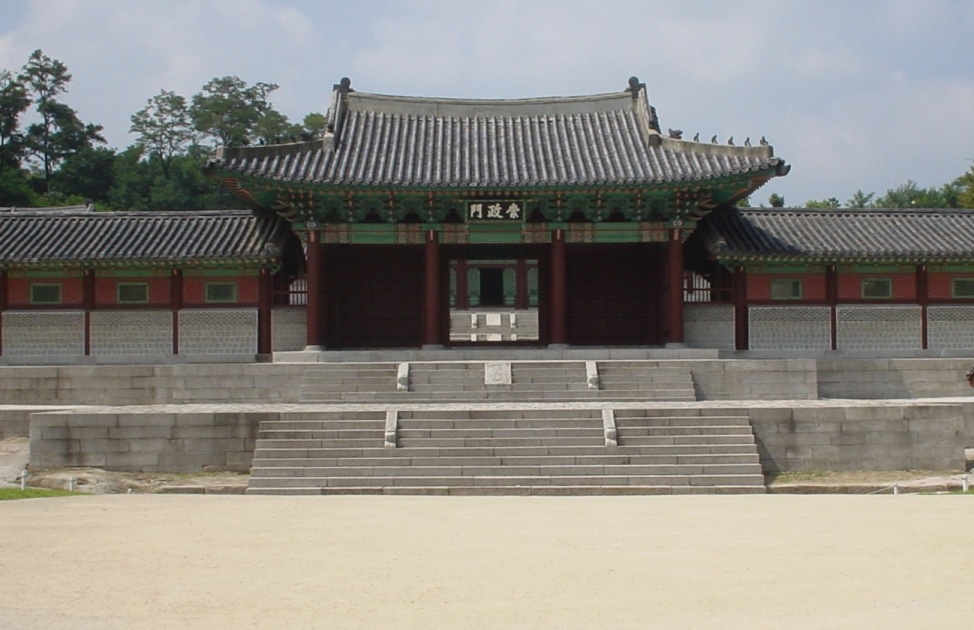
Gyeonghuigung is the secret palace — the fifth and least known of Seoul's Joseon-era palaces, hidden behind a modern government building and visited by a fraction of the tourists who crowd the other four. The palace was built in 1617 as a secondary residence and refuge (in case the main palaces were attacked or burned), and at its peak it contained over 100 buildings. The Japanese colonial government demolished nearly all of them, and only about a dozen structures have been reconstructed.
The small scale is actually Gyeonghuigung's strength. Where the other palaces can feel like heritage theme parks — full of tour groups, hanbok rental shops, and selfie sticks — Gyeonghuigung is quiet, contemplative, and almost eerily empty. The main hall, Sungjeongjeon, was the secondary throne room of the Joseon dynasty, and standing inside it alone (which is common on weekday mornings) feels more like a genuine encounter with Korean history than any crowded palace experience.
The palace is free to enter — one of the few palaces that doesn't charge admission — and it sits adjacent to the Seoul Museum of History, which provides excellent context for understanding how the city has changed over the past 600 years. The combination of a free palace, a free museum, and virtually no crowds makes Gyeonghuigung the best value heritage experience in Seoul, and the fact that so few visitors know about it is both its curse (the palace receives less funding and attention) and its blessing (you can have a Joseon-era palace largely to yourself).
Verified Facts
Gyeonghuigung was built in 1617 as a secondary palace
The palace originally contained over 100 buildings
Most structures were demolished during the Japanese colonial period
Admission is free
Get walking directions
Saemunan-ro, Seoul, South Korea