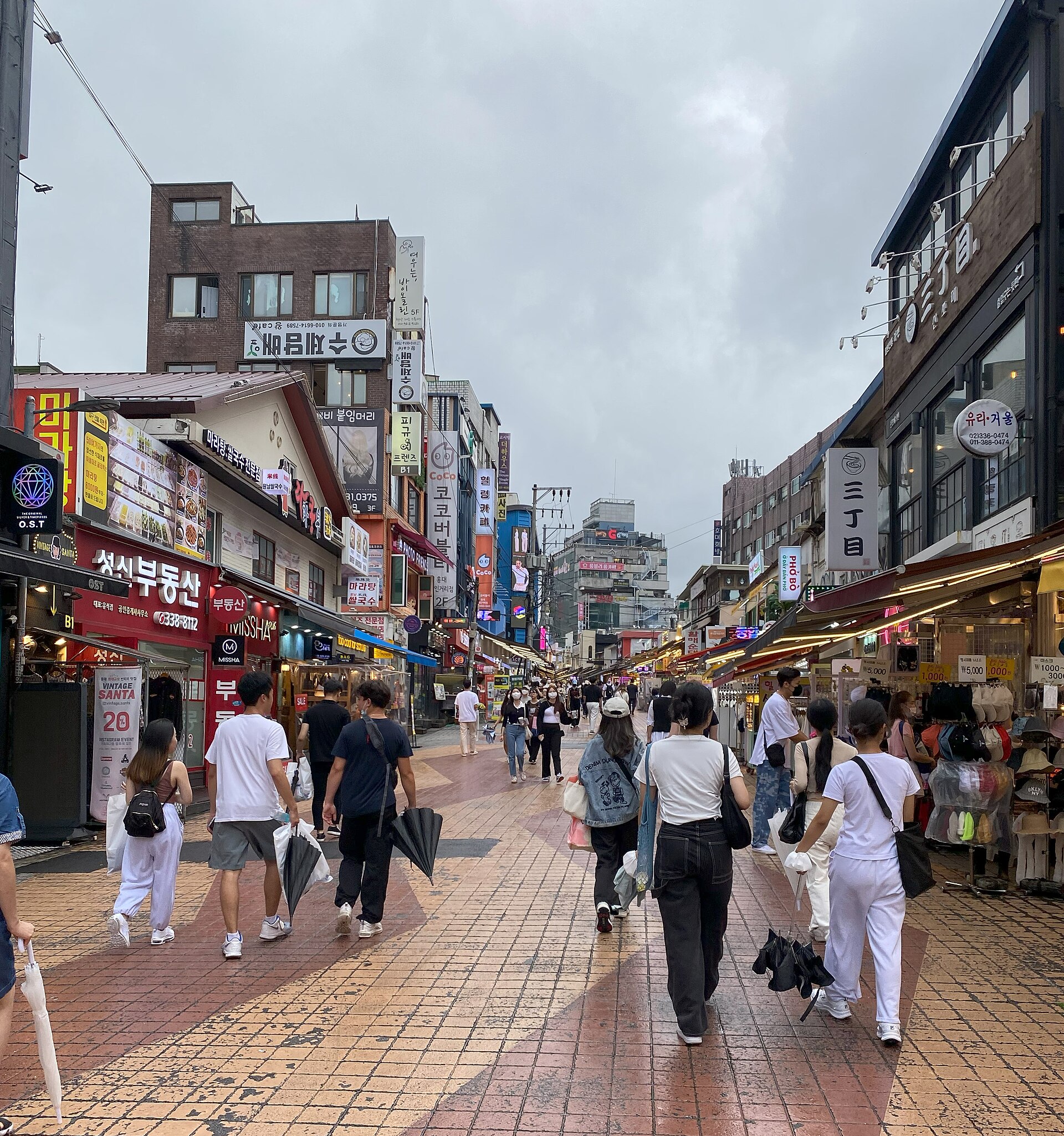
Hongdae is Seoul's youth culture capital — a neighbourhood surrounding Hongik University (Korea's top art school) that has been the centre of indie music, street art, and underground culture since the 1990s. The streets closest to the university are lined with live music clubs, vintage clothing shops, and independent galleries, and on weekend evenings the area becomes an open-air performance space where buskers, dance crews, and street musicians compete for the attention of the thousands of young Koreans and visitors who pour into the neighbourhood after dark.
The Hongdae busking scene is genuinely impressive. The Hongdae Playground, a small park at the neighbourhood's centre, fills with performers on Friday and Saturday nights — dance groups rehearsing K-pop choreography, singer-songwriters with portable amplifiers, beatboxers, and the occasional full band. The quality ranges from amateur to professional (several K-pop stars were discovered busking in Hongdae), and the crowd — seated on the ground, standing, filming on phones — creates an atmosphere that's half concert, half block party.
The neighbourhood's commercial character has shifted over the past decade — rising rents have pushed some indie culture toward neighbouring Yeonnam-dong and Mangwon — but Hongdae remains the default nightlife destination for anyone under 35 in Seoul. The clubs on Eoulmadang-ro host everything from K-indie to electronic to hip-hop, and the late-night food options (24-hour Korean fried chicken, tteokbokki stalls, ramen shops that open at midnight) sustain a scene that runs until sunrise.
Verified Facts
Hongdae is named after Hongik University, Korea's top art school
The neighbourhood has been a centre of indie culture since the 1990s
Several K-pop stars were discovered busking in Hongdae
Rising rents have pushed some culture toward Yeonnam-dong and Mangwon
Get walking directions
Hongik-ro, Mapo-gu, Seoul, South Korea