Cimitero Monumentale
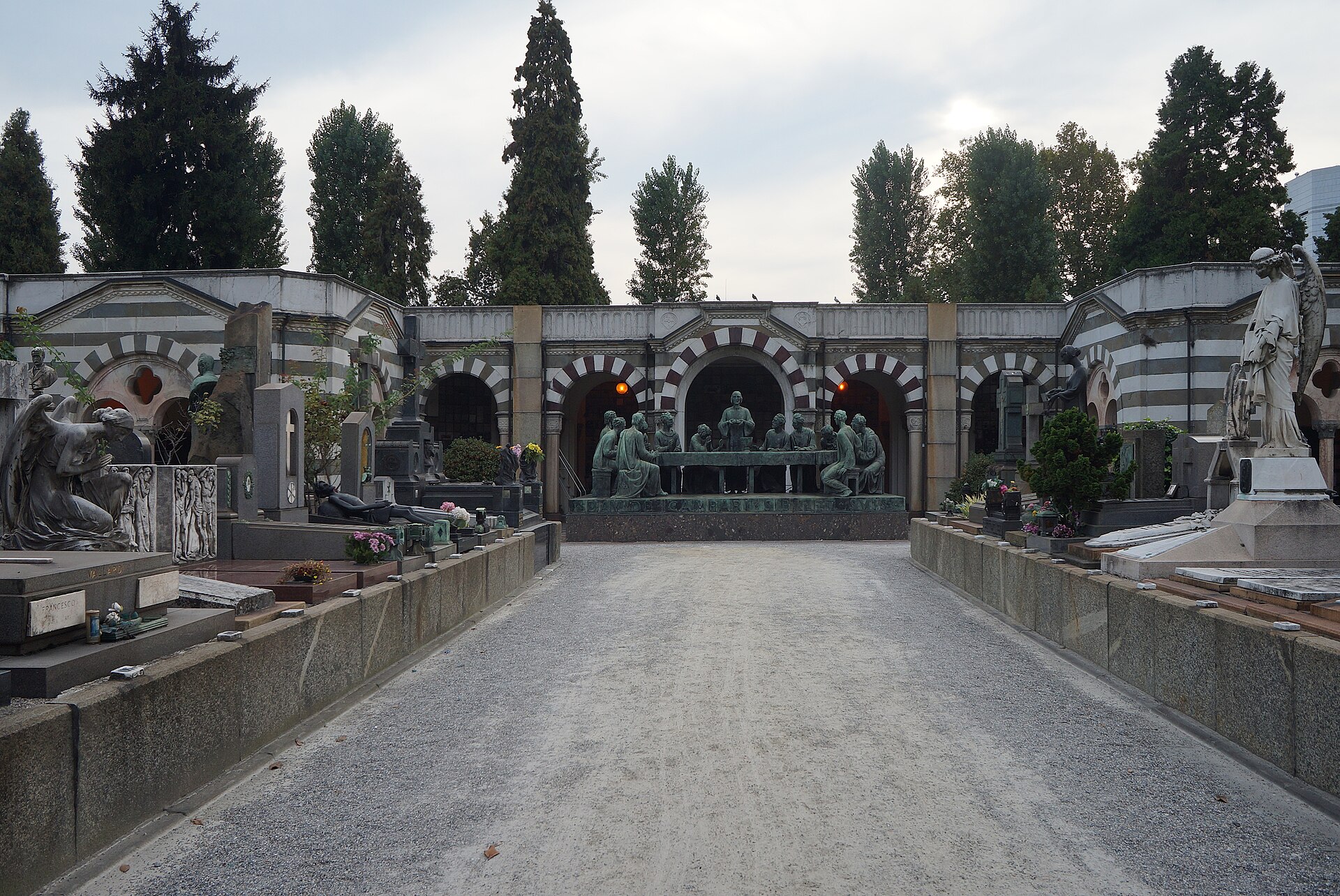
The Cimitero Monumentale is Milan's outdoor sculpture museum — an enormous cemetery where the city's industrial dynasties, opera stars, and artists commissioned tombs so elaborate that walking the avenues feels more like visiting a gallery than a graveyard. The cemetery was opened in 1866 to consolidate Milan's scattered burial grounds, and the competition between wealthy families to build the most impressive monument created a collection of funerary art that spans Neoclassicism, Art Nouveau, Art Deco, and contemporary sculpture.
The Famedio (Hall of Fame), the cemetery's entrance building, is a cathedral-like structure of red brick and marble that houses the tombs of Milan's most illustrious citizens — Alessandro Manzoni (author of 'I Promessi Sposi,' Italy's most important novel), conductor Arturo Toscanini, and other figures from Italian cultural history. Beyond the Famedio, the cemetery's main avenue and side paths are lined with monuments that range from weeping angels and broken columns to modernist abstracted forms and the occasional full-size bronze replica of the deceased.
The Art Nouveau section is particularly remarkable — tombs designed by the same architects and sculptors who were building Liberty-style buildings in the city centre, with sinuous ironwork, mosaic decoration, and the kind of organic forms that make Italian Art Nouveau one of the most beautiful variants of the style. The cemetery is free, rarely crowded, and provides a morning's worth of art and architecture in a setting that is both melancholy and beautiful — the Milanese way of dealing with death, as with everything else, involves making it aesthetically excellent.
Verified Facts
The cemetery is free to enter
The Cimitero Monumentale opened in 1866
Alessandro Manzoni and Arturo Toscanini are buried in the Famedio
The cemetery features Art Nouveau, Art Deco, and contemporary funerary sculpture
Get walking directions
Piazzale Cimitero Monumentale, Porta Volta-Fiera-Gallaratese-Quarto Oggiaro, Milan, 20154, Italy