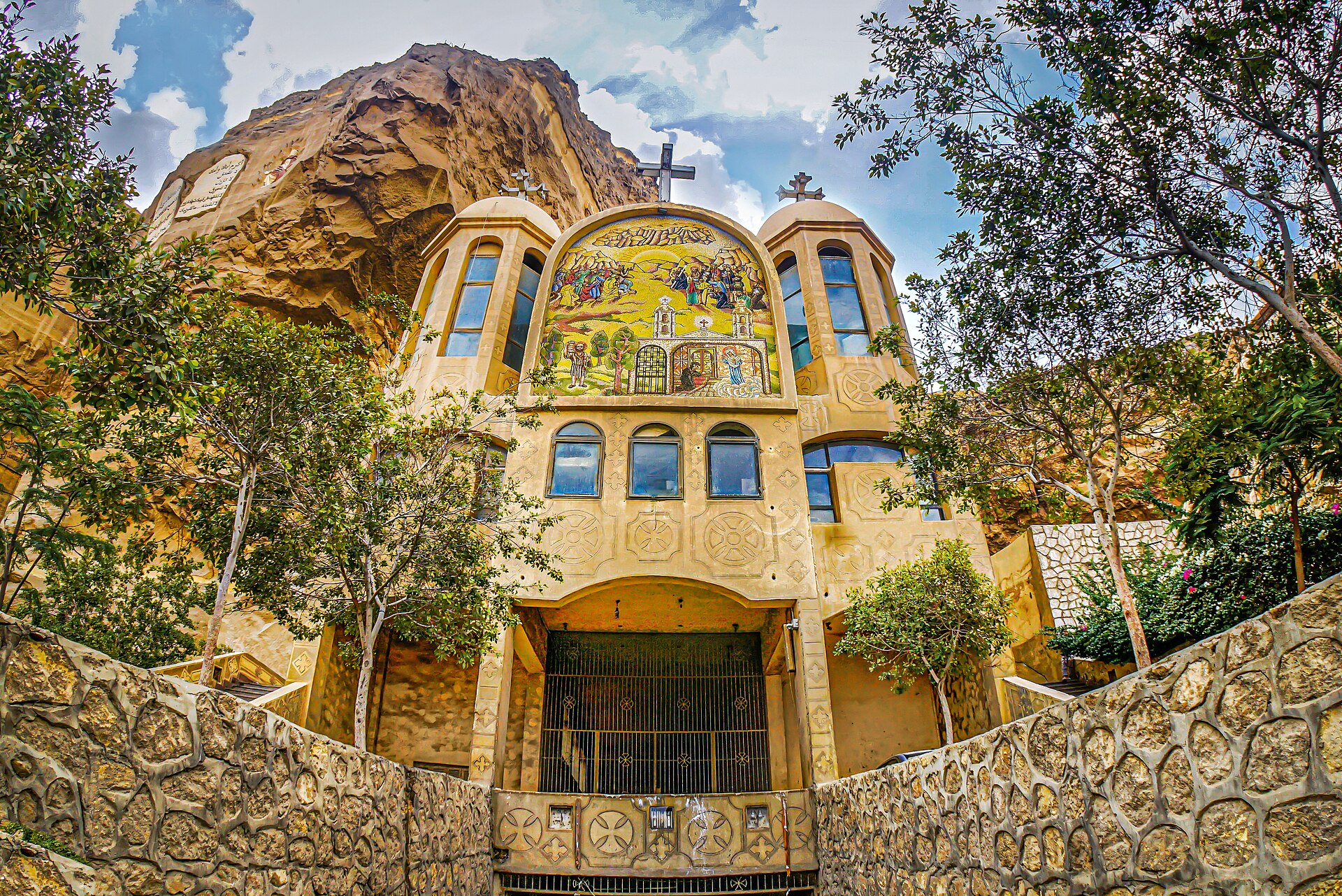
The Monastery of Saint Simon, better known as the Cave Church, is one of the most extraordinary religious spaces in the Middle East — a church carved into the cliffs of the Mokattam Hills that seats 20,000 people, making it the largest church in the Middle East and one of the largest in the world. The church was built by the Zabbaleen (Cairo's garbage collectors, a Coptic Christian community) in the 1970s within the caves of the Mokattam limestone quarries, and the combination of carved rock, religious art, and the faith community that built it creates an experience unlike any other church in Egypt.
The Zabbaleen community, who settle in the area known as Garbage City (Manshiyat Naser), have been Cairo's informal waste management system for decades — collecting, sorting, and recycling the city's garbage with an efficiency that formal waste management companies have struggled to match. The community is predominantly Coptic Christian, and the churches they've built in the Mokattam caves — there are seven, the largest seating 20,000 — express both their faith and their determination to create sacred space in the most marginalised part of the city.
Visiting the Cave Church requires a degree of open-mindedness about the surrounding neighbourhood — Garbage City is a working waste-processing area, and the streets are lined with sorted recyclables. But the church itself, with its carved rock walls, its biblical scenes etched into the limestone cliffs, and its vast seating carved into the mountain, is a testament to human faith and ingenuity that the more polished churches of Cairo's city centre can't match.
Verified Facts
The Cave Church seats approximately 20,000 people
The church was built by the Zabbaleen community in the 1970s
The Zabbaleen are Cairo's informal garbage collection community
There are seven churches carved into the Mokattam caves
Get walking directions
Mokattam, Cairo