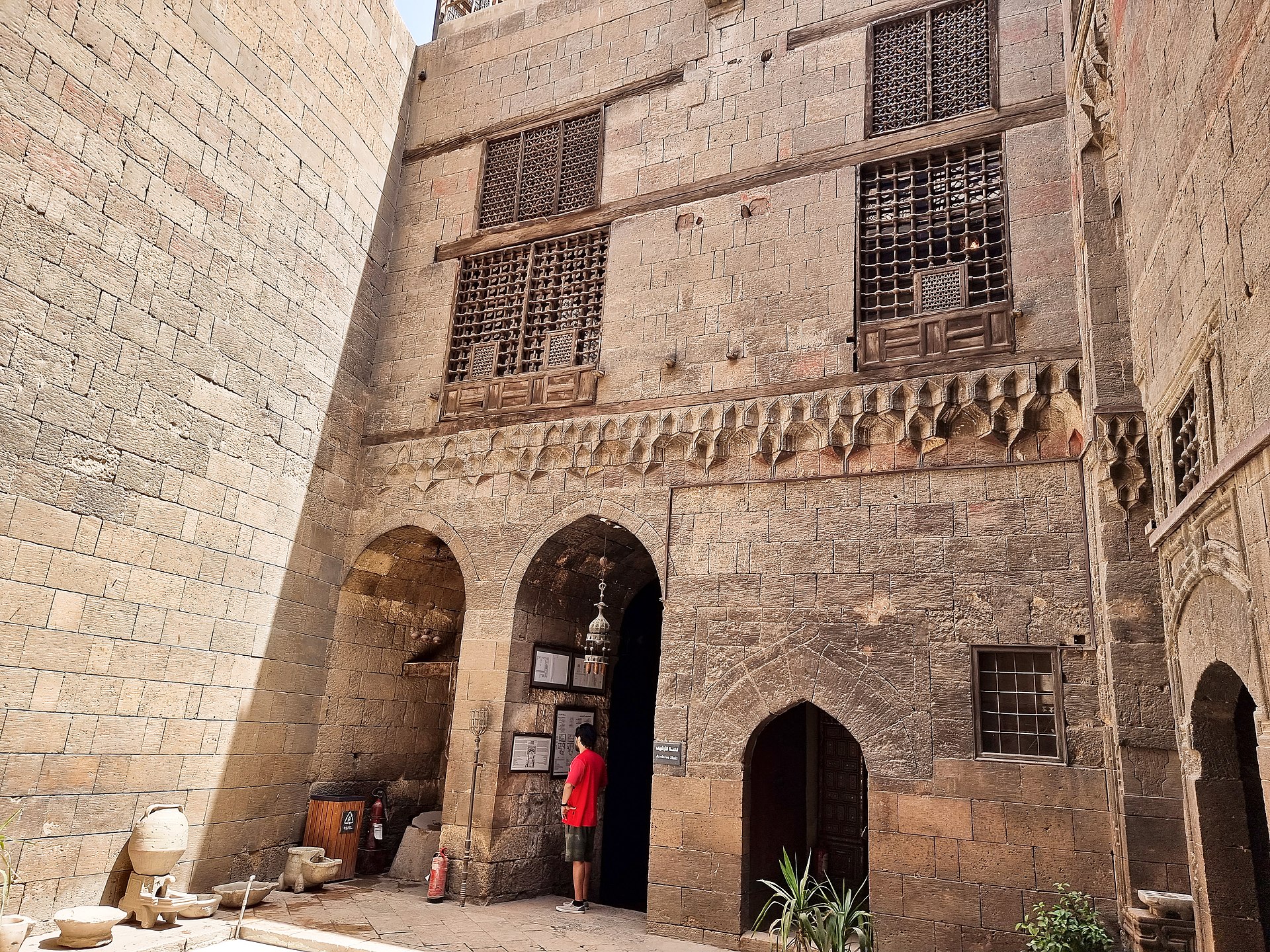
The Gayer-Anderson Museum is one of Cairo's most charming hidden treasures — two 17th-century Ottoman houses connected by a bridge and filled with the eclectic collection of Major Robert Gayer-Anderson, a British army officer who lived in the houses from 1935 to 1942 and filled them with Islamic art, Chinese porcelain, Persian carpets, pharaonic antiquities, and the accumulated curiosities of a life spent collecting in Egypt and the Middle East.
The houses themselves — with their mashrabiya (wooden lattice) windows, marble fountains, painted ceilings, and the rooftop terrace overlooking the Ibn Tulun Mosque — are the most complete surviving examples of Ottoman domestic architecture in Cairo. Gayer-Anderson restored and furnished the houses as a living museum of Egyptian domestic art, and the rooms — a Persian room, a Damascus room, a Chinese room — reflect the taste of a collector who treated interior design as a form of cultural ethnography.
The museum is adjacent to the Mosque of Ibn Tulun (and is accessed through the mosque's courtyard), and the combination of the two — the 9th-century mosque and the 17th-century houses — creates a pairing that covers eight centuries of Egyptian Islamic architecture in a single visit. The museum appeared in the James Bond film 'The Spy Who Loved Me' (1977), though the Bond connection is the least interesting thing about a museum that rewards the kind of slow, room-by-room exploration that most visitors to Cairo's major monuments don't have time for.
Verified Facts
Major Gayer-Anderson lived in the houses from 1935 to 1942
The houses date to the 17th century Ottoman period
The museum appeared in 'The Spy Who Loved Me' (1977)
The museum is adjacent to the Mosque of Ibn Tulun
Get walking directions
Ahmad Ibn Tulun Street, El-Sayeda Zeinab, Cairo