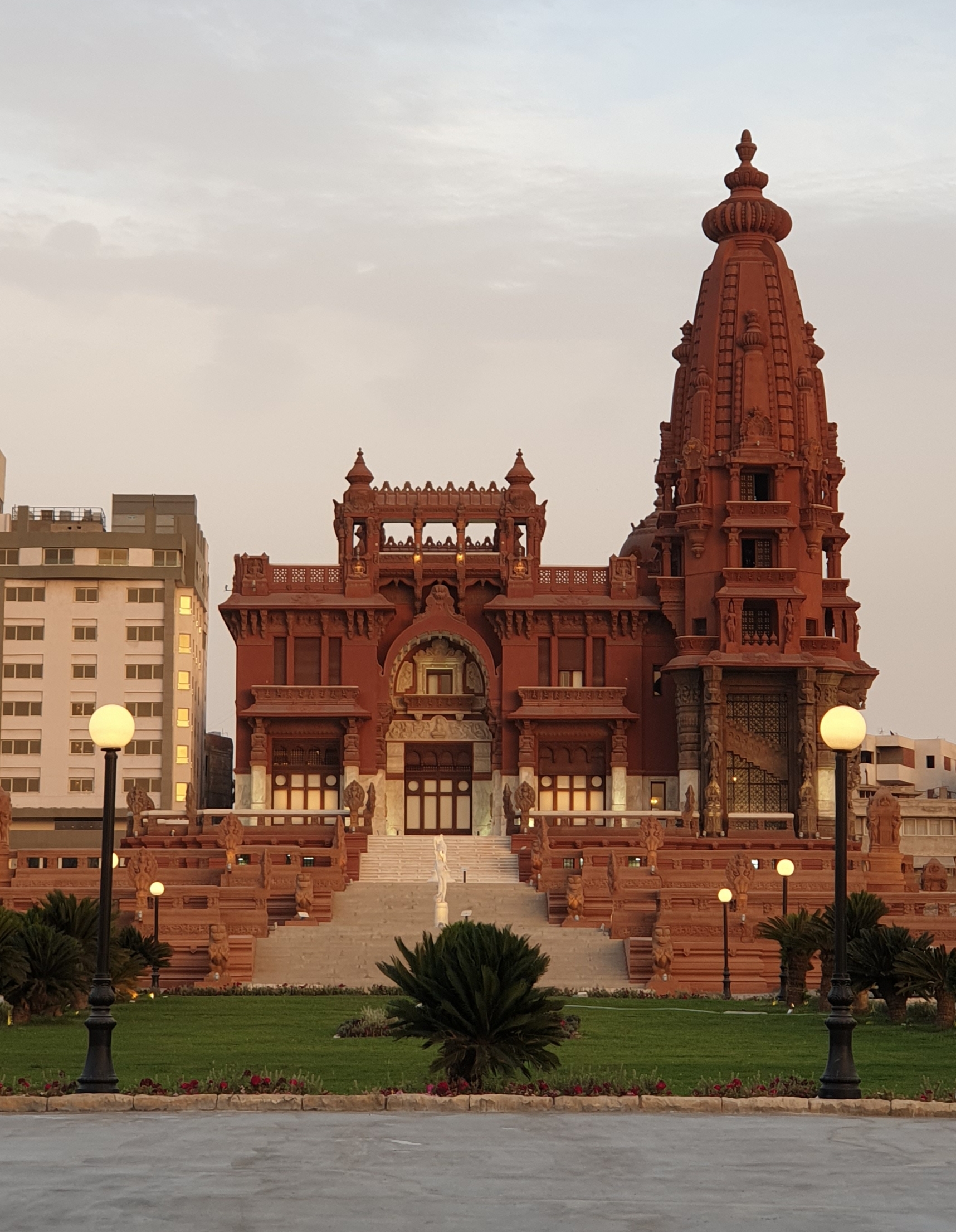
Heliopolis is Cairo's most architecturally distinctive suburb — a planned city built in the early 20th century by Belgian industrialist Baron Édouard Empain in an extraordinary mix of Moorish, Hindu, and Art Nouveau styles that created a satellite city in the desert northeast of Cairo. The Baron Empain Palace, the suburb's centrepiece, is a reinforced-concrete Hindu temple-palace inspired by the Angkor Wat temples of Cambodia — a building so bizarre and beautiful that it has been the subject of ghost stories, urban legends, and the kind of awestruck disbelief that only a Hindu palace in the Egyptian desert can produce.
The palace, built between 1907 and 1911 and designed by French architect Alexandre Marcel (who also designed the Cambodian pavilion at the 1900 Paris Exposition), was Baron Empain's personal residence and a statement of his architectural ambitions for Heliopolis. The building sat empty and deteriorating for decades after Empain's death but was restored by the Egyptian government and reopened as a museum in 2020. The interior, with its marble floors, carved columns, and the rotating tower that allowed the baron to follow the sun throughout the day, has been restored to its original grandeur.
Heliopolis's other architectural treasures — the Basilica, a Byzantine-Romanesque church; the Heliopolis Palace Hotel (now a presidential palace); and the residential streets of Moorish-revival villas and apartment buildings — create a suburb that looks like it belongs in Marrakech or Mumbai rather than Cairo. The metro extends to Heliopolis, making it accessible from central Cairo in about 30 minutes.
Verified Facts
Baron Empain Palace was built between 1907 and 1911
The palace was inspired by Angkor Wat and designed by Alexandre Marcel
The palace was restored and reopened as a museum in 2020
Heliopolis was founded by Belgian industrialist Baron Édouard Empain
Get walking directions
Heliopolis, Cairo, Egypt