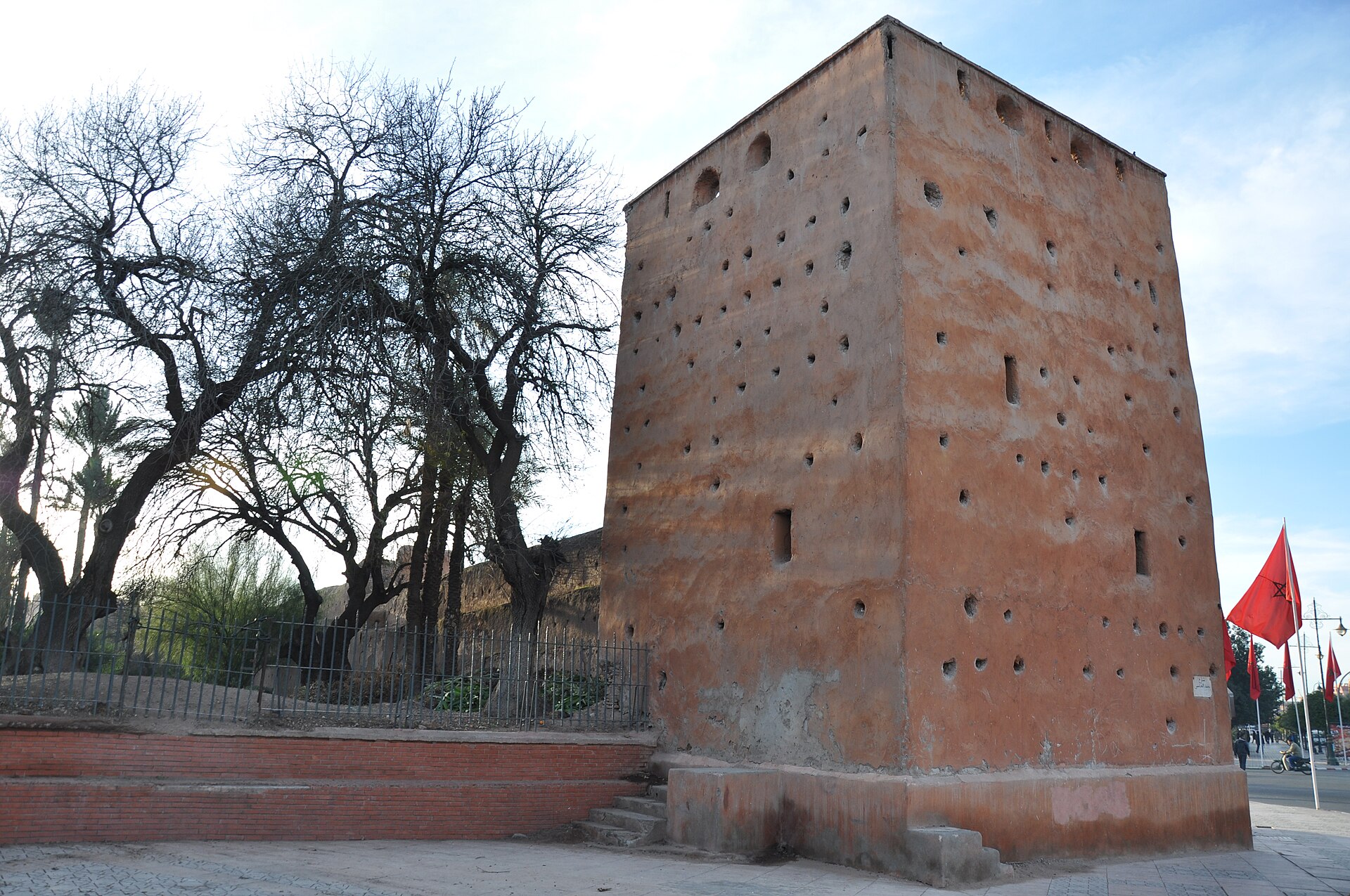
The medina walls of Marrakech are one of the most complete medieval fortification systems in the world — 19 kilometres of 12th-century pisé (rammed earth) walls, 10 metres high and 2 metres thick, encircling the old city in a continuous red-ochre barrier punctuated by 20 gates and 200 towers. The walls give Marrakech its nickname — the Red City — and their colour, which comes from the iron-rich clay of the Haouz Plain, glows gold at sunset in a daily spectacle that has been performing for 900 years.
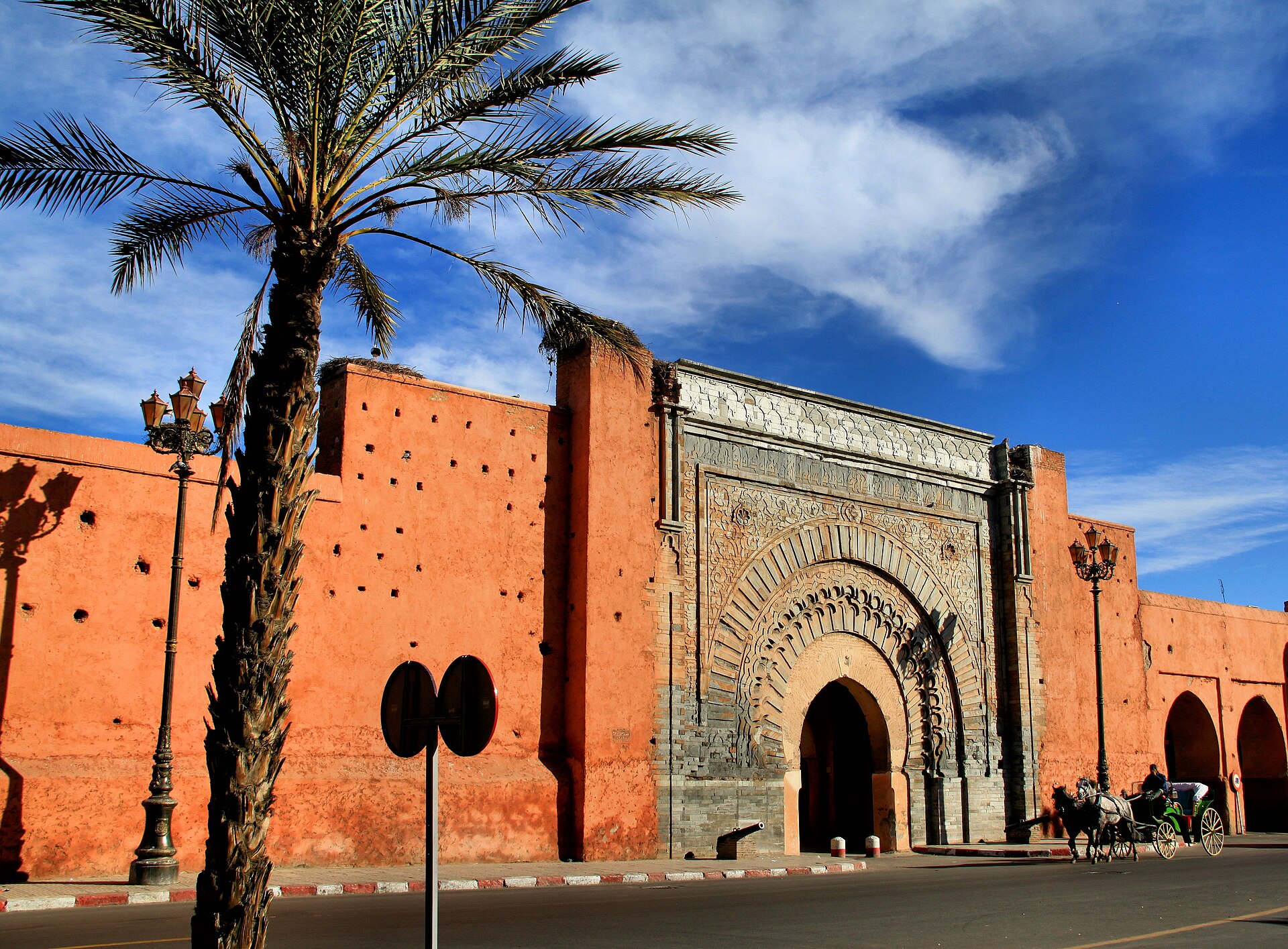
Bab Agnaou, the most ornate of the medina gates, is a masterpiece of Almohad stonework — a horseshoe arch carved with geometric patterns and Quranic calligraphy that served as the ceremonial entrance to the royal kasbah quarter. The gate's decoration — concentric arches of carved stone, each progressively more elaborate — demonstrates the Almohad principle that architectural decoration should lead the viewer's eye inward toward a centre that represents divine unity.
Walking along the outside of the medina walls — particularly the stretch between Bab Agnaou and Bab Doukkala — provides a perspective on the city that the dense interior streets can't offer. The walls were built using a tabiya technique (rammed earth between wooden formwork, the same method used to build the Alhambra's walls in Granada), and the construction lines are still visible in the surface, showing where each section of formwork was placed. The walls are remarkably well-preserved given their age, a testament to the durability of rammed earth in the dry Moroccan climate.
Verified Facts
The medina walls stretch approximately 19 kilometres
The walls are 12th-century Almohad construction, approximately 10 metres high
The walls have 20 gates and approximately 200 towers
Bab Agnaou is the most ornate gate, serving the kasbah quarter
Get walking directions
Rue Bab Agnaou, Marrakesh, 40008, Morocco