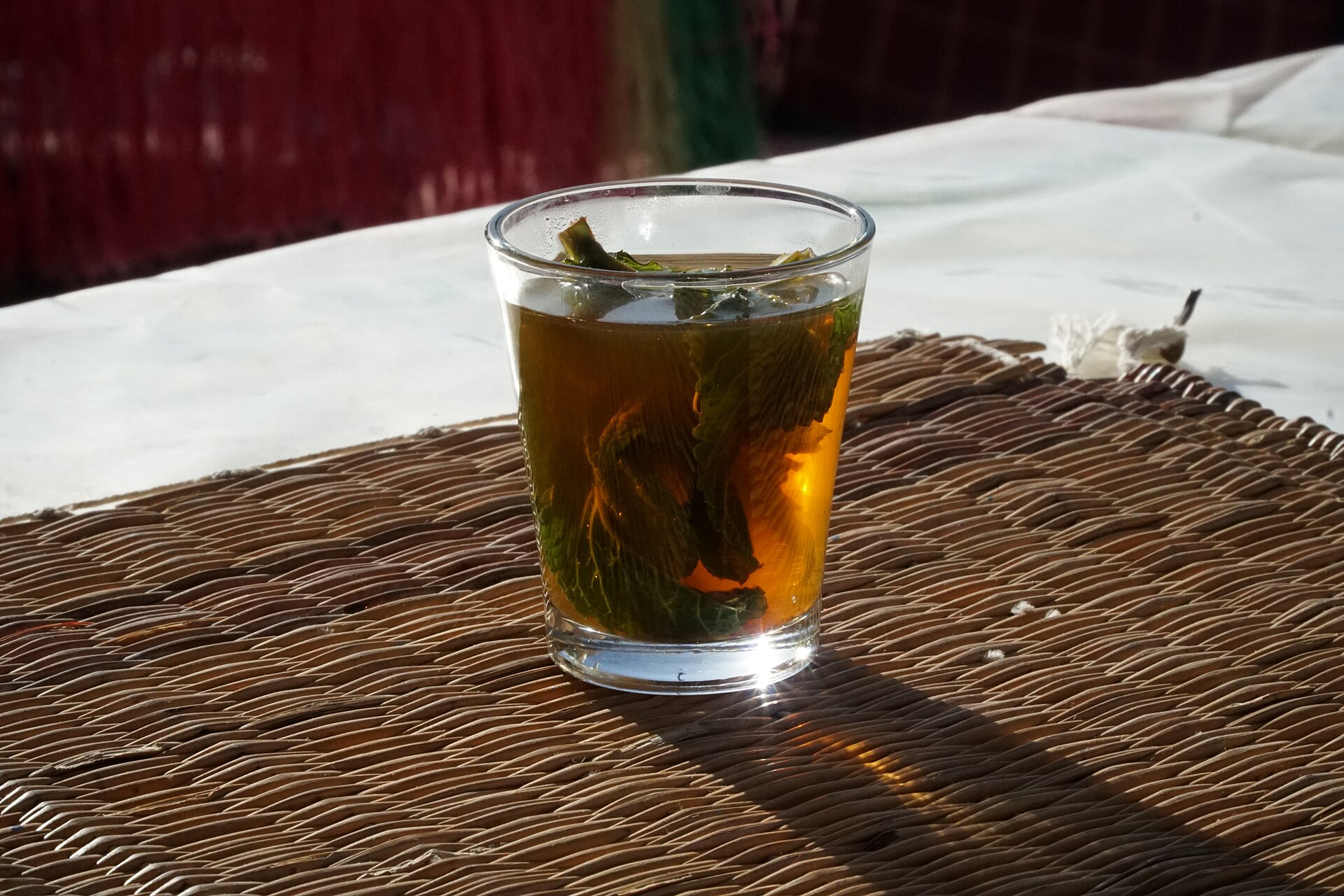
Mint tea (atay) is Morocco's national drink and Marrakech's social lubricant — a mixture of Chinese gunpowder green tea, fresh spearmint, and a quantity of sugar that would alarm a dentist, brewed in a silver teapot and poured from height (the higher the pour, the better the froth) into small glass cups. The tea is served everywhere — in cafés, in shops during bargaining, in homes as a gesture of hospitality, and in the souks as a prelude to any commercial transaction. Refusing tea is considered impolite; accepting it is an acceptance of relationship.
The rooftop cafés surrounding Jemaa el-Fna — Café de France, Café Glacier, Nomad, Terrasse des Épices — provide the most theatrical setting for tea, with views across the square to the Koutoubia Mosque and the Atlas Mountains. The ground-level cafés in the medina's quieter streets — where men sit on low stools watching football on wall-mounted televisions while sipping tea — provide the more authentic version. The café is Morocco's third space (after home and mosque), and the ritual of sitting, sipping, and watching the world pass is the social practice that holds Moroccan community life together.
The tea preparation itself is a minor performance — the tea is brewed in the pot, poured into a glass and back into the pot (to mix the sugar), and then poured from as high as the server can manage without missing the glass. The pour is functional (it aerates the tea and creates foam) and theatrical (it demonstrates skill and hospitality). Three glasses is the traditional number — 'the first glass is as gentle as life, the second is as strong as love, the third is as bitter as death,' according to the Moroccan proverb.
Verified Facts
Moroccan mint tea uses Chinese gunpowder green tea and fresh spearmint
The tea is poured from height to create froth
Three glasses is the traditional serving number
Refusing tea is considered impolite in Moroccan culture
Get walking directions
Various cafés, Jemaa el-Fna & Medina, Marrakech