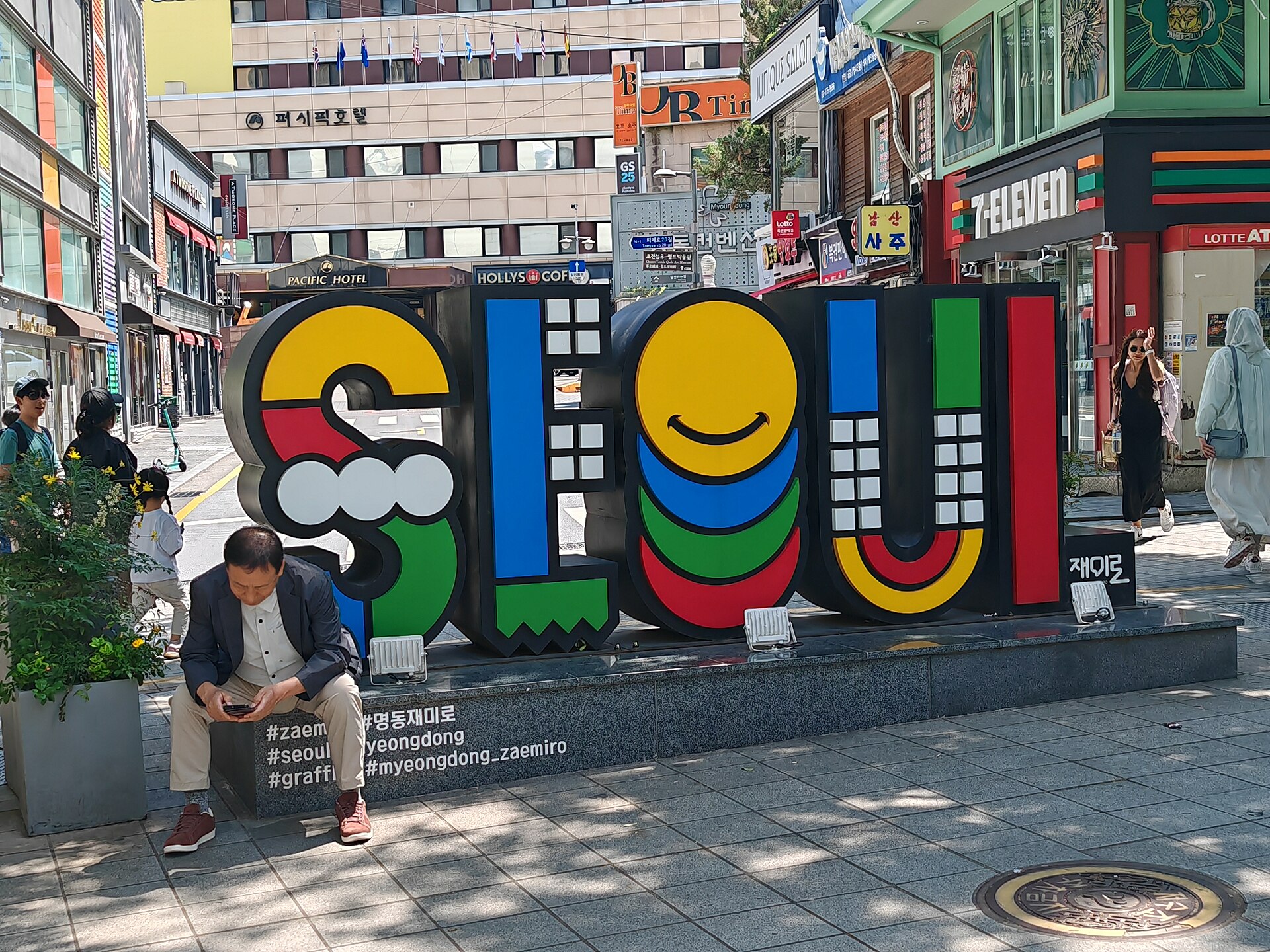
Myeongdong is Seoul's neon-drenched shopping and street food district — a dense grid of pedestrianised streets lined with K-beauty shops, fashion brands, and food stalls that attracts more visitors per square metre than almost anywhere else in the city. The neighbourhood runs between Myeongdong Station and the Myeongdong Cathedral, and on a busy evening the pedestrian flow is so dense that you move at the speed of the crowd, which is slowly.
The street food is the real draw. The stalls that set up on the main drag every afternoon sell an ever-evolving repertoire of Korean street snacks: tteokbokki (spicy rice cakes), hotteok (sweet filled pancakes), egg bread (gyeran-ppang), tornado potatoes (spiralled and deep-fried on a stick), Korean corn dogs (coated in potato chunks or ramen noodles), and about 30 other items that exist primarily to be photographed and secondarily to be eaten. The quality is uneven — some stalls are excellent, others are tourist traps — but the experience of eating your way down the street while surrounded by K-pop music, LED screens, and the general sensory overload of Korean commercial culture is uniquely Myeongdong.
The Myeongdong Cathedral, completed in 1898, sits on a hill above the shopping streets and is Korea's most historically significant Catholic church — it served as a sanctuary for pro-democracy protestors during the military dictatorship era and remains a symbol of Korean political activism. The contrast between the cathedral's Gothic brick exterior and the neon shopping frenzy below it is Seoul in microcosm.
Verified Facts
Myeongdong is one of Seoul's most visited shopping districts
Myeongdong Cathedral was completed in 1898
The cathedral sheltered pro-democracy protestors during the military dictatorship
The district is a major centre for K-beauty retail
Get walking directions
Myeongdong-gil, Jung-gu, Seoul