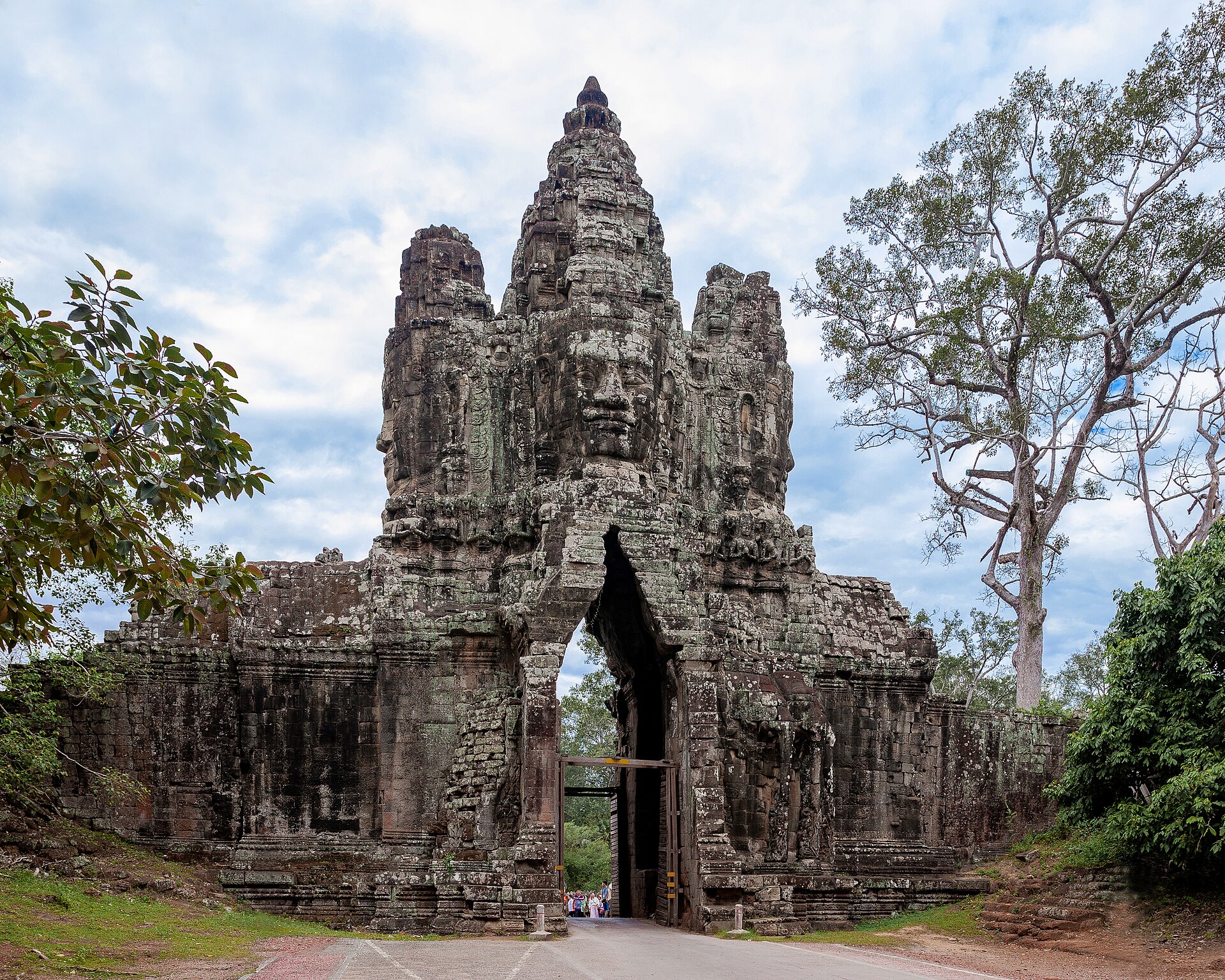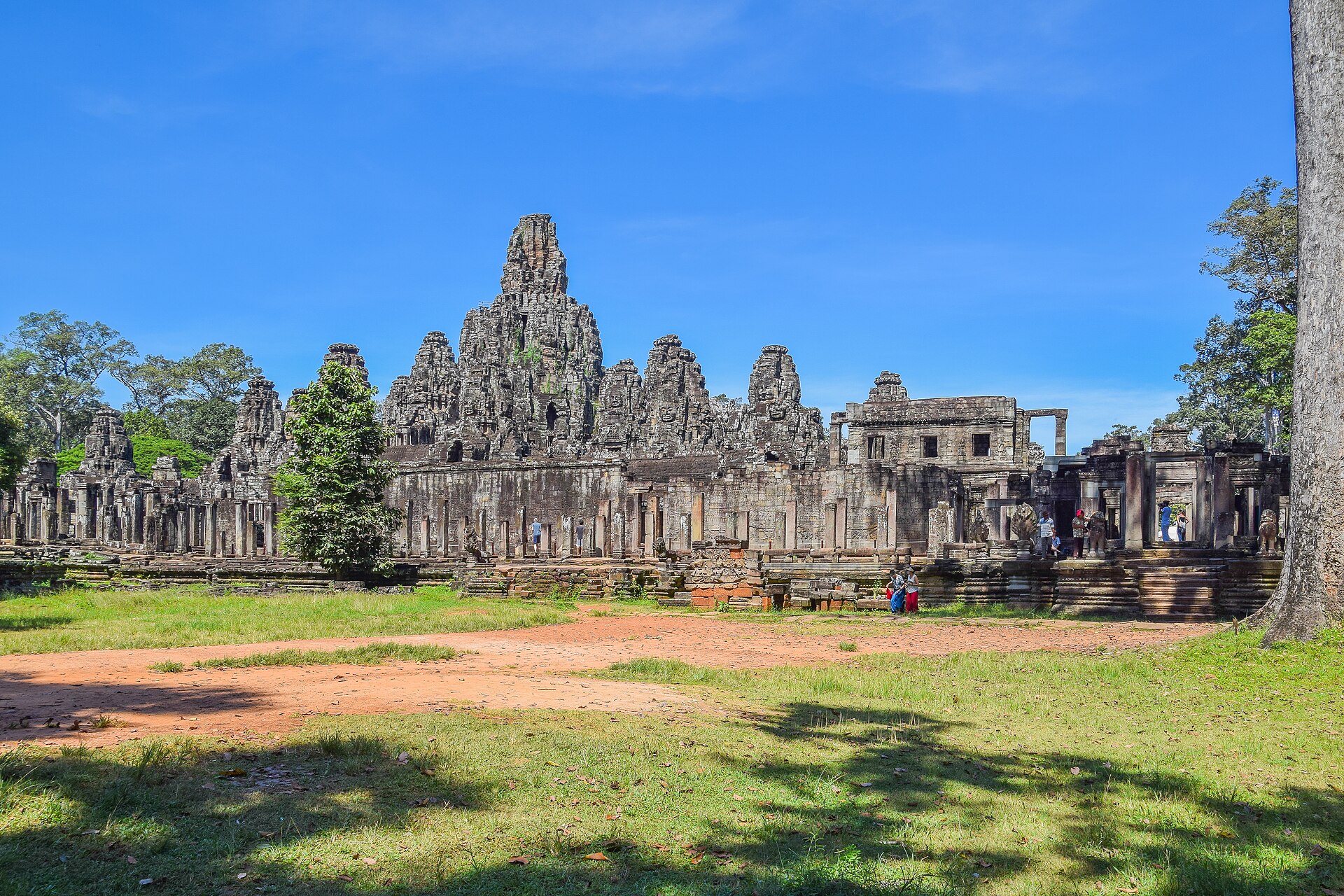
Bayon is the most enigmatic temple at Angkor — a late 12th-century Buddhist temple at the exact centre of Angkor Thom (the walled city that succeeded Angkor Wat as the Khmer capital) whose 216 enormous stone faces, each carved with a serene, slightly smiling expression, gaze outward in every direction from the temple's towers. The faces are believed to represent either the bodhisattva Avalokiteshvara or King Jayavarman VII himself (or both simultaneously — in Khmer theology, the king was a manifestation of the divine).
The experience of walking through Bayon is unlike any other temple at Angkor. The structure is a labyrinth of narrow corridors, steep staircases, and the face-towers that appear around every corner — sometimes at eye level, sometimes looming above, always wearing the same expression that has been variously described as compassionate, knowing, and unsettling. The faces are best photographed in the early morning or late afternoon, when the low-angle light creates shadows that give the carved features their most dramatic expression.
The outer gallery bas-reliefs at Bayon are unique among Angkor temples in depicting daily life rather than mythology — scenes of market trading, cockfighting, childbirth, fishing, and military campaigns show the Khmer Empire not as a theological abstraction but as a living civilisation. The reliefs provide the most detailed visual record of medieval Southeast Asian daily life in existence.
Verified Facts
Bayon contains 216 giant stone faces on its towers
The temple was built by King Jayavarman VII in the late 12th century
Bayon sits at the exact centre of Angkor Thom
The bas-reliefs depict daily life rather than mythology
Get walking directions
Angkor Thom, Angkor Archaeological Park, Siem Reap