30 Landmarks in Siem Reap
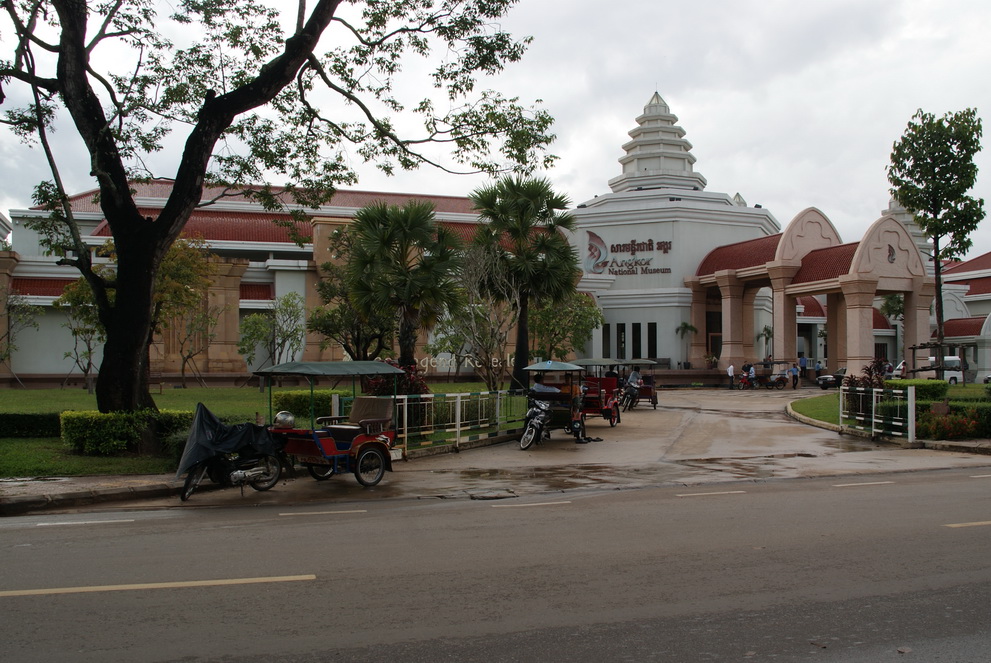
Angkor National Museum
Nokor Thum, Siem Reap, Cambodia
The Angkor National Museum is the essential first stop before visiting the temples — a modern, air-conditioned museum in Siem Reap town that provides the historical, religious, and artistic context that makes the temple complex comprehensible. Without understanding the Hindu and Buddhist cosmology that the temples express, the difference between Angkor Wat (Hindu, 12th century, Suryavarman II) and Bayon (Buddhist, late 12th century, Jayavarman VII) is invisible — the museum makes these distinctions clear. The collection includes over 1,000 Khmer sculptures, bronzes, ceramics, and artifacts spanning the 6th to 13th centuries, displayed in eight galleries that trace the rise and fall of the Khmer Empire. The Gallery of a Thousand Buddhas — a room of stone and bronze Buddha images in every size and style — demonstrates the evolution of Khmer Buddhist sculpture across centuries. The Angkor Wat gallery uses multimedia and models to explain the temple's astronomical alignments, engineering, and the bas-relief narratives that are impossible to follow without preparation. The museum is privately operated (ticket prices are higher than state-run Cambodian museums) and uses modern museum technology (multimedia, interactive displays, climate control) that provides a Western-standard museum experience. The audioguide is excellent and provides the narrative thread that connects the different periods and temples.
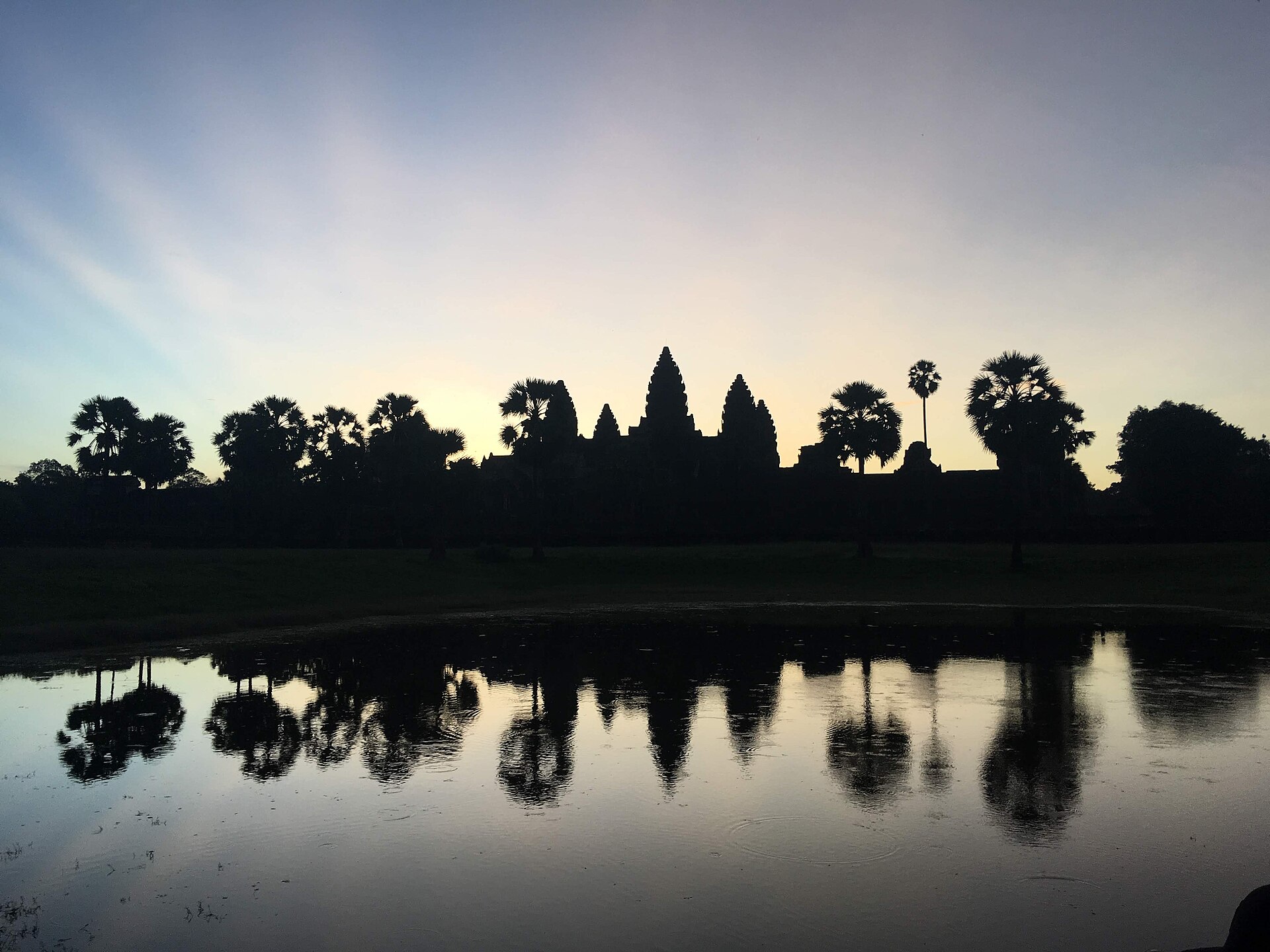
Angkor Sunrise & Sunset Spots
Various locations, Angkor Archaeological Park, Siem Reap
The sunrise at Angkor Wat is the single most popular tourist experience in Cambodia — thousands of visitors gather at the reflection pools before dawn to watch the sun rise behind the temple's five towers, silhouetting them against an orange sky and reflecting the scene in the still water below. The experience is genuinely beautiful (the combination of scale, symmetry, and the tropical sky produces a different colour show every morning) and genuinely crowded (arrive by 5am to secure a position at the northern reflection pool). The sunset viewing at Pre Rup (a 10th-century temple-mountain whose upper terrace provides a westward view across the forest canopy) or Phnom Bakheng (the original 9th-century Angkor capital, whose hilltop temple offers a panoramic sunset view that includes Angkor Wat's towers silhouetted against the sky) provides the evening counterpoint. Phnom Bakheng limits visitor numbers (300 at a time), which has improved the experience since the days when 3,000 people would crowd the small summit. The light at Angkor is the variable that transforms good photographs into extraordinary ones — the early morning light (golden, directional, with mist rising from the moat) and the late afternoon light (warm, raking across the carved surfaces to reveal details that midday glare obliterates) are the times when the temples are most photogenic. The middle of the day (10am-2pm) is hot, harsh, and best spent at the less-visited temples where shade is available.
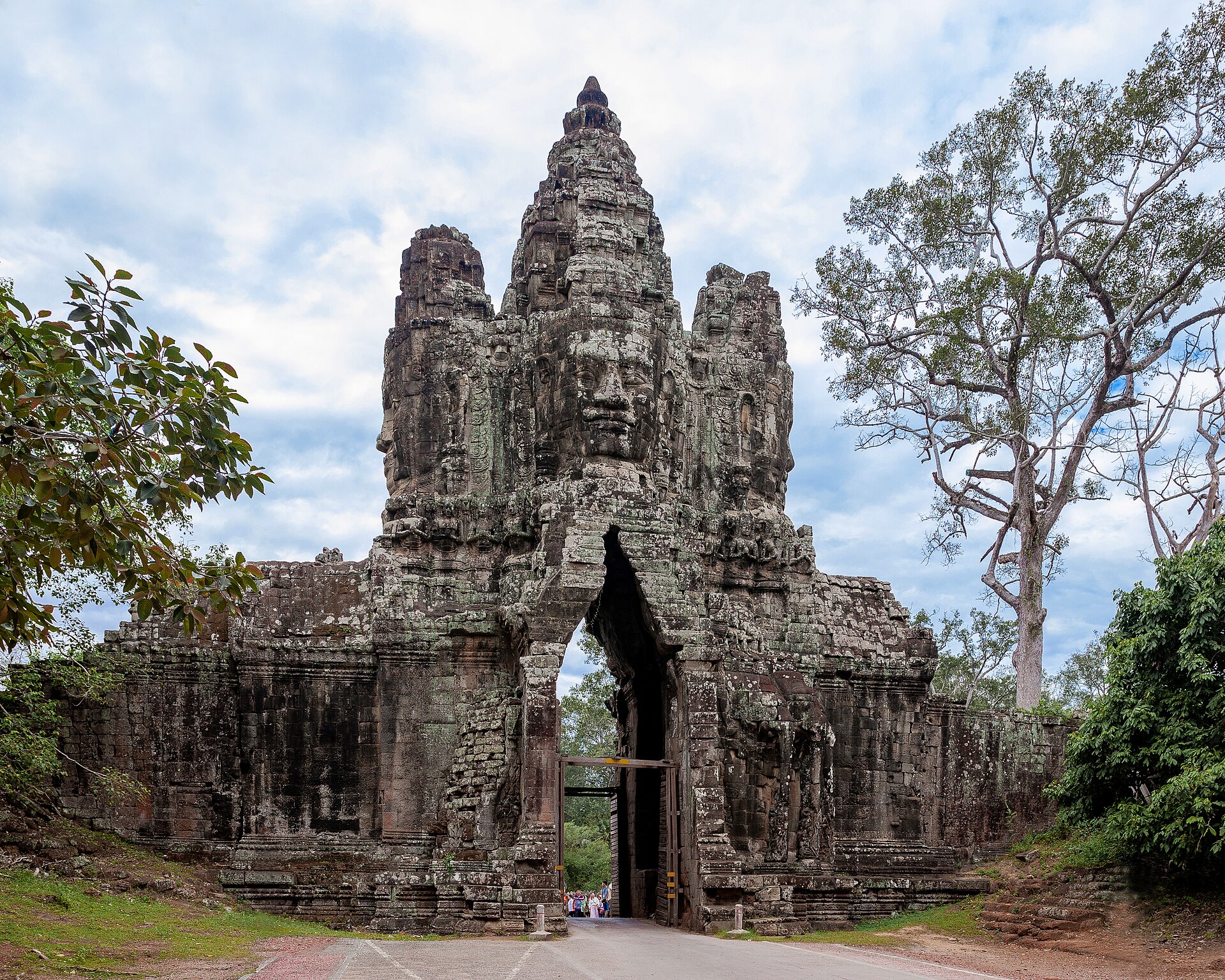
Angkor Thom (Great City)
Angkor Archaeological Park, Siem Reap
Angkor Thom was the last and most enduring capital of the Khmer Empire — a walled city of 9 square kilometres (larger than most medieval European cities) enclosed by an 8-metre-high wall and a moat, entered through five monumental gates, each flanked by rows of stone gods and demons pulling a giant naga (serpent) in a representation of the Hindu creation myth, the Churning of the Ocean of Milk. The South Gate is the most visited and most dramatic — a tower carved with four faces (the same smiling Jayavarman VII/Avalokiteshvara faces as Bayon), flanked by 54 devas (gods) on the left and 54 asuras (demons) on the right, each team pulling the body of a seven-headed naga in a tug-of-war that represents the churning of the primordial ocean to produce the elixir of immortality. Driving or cycling through the gate — past the stone armies frozen in their eternal struggle — is one of the most extraordinary entrance experiences in architecture. Within the walls, Angkor Thom contains the Bayon, the Baphuon (a massive 11th-century temple-mountain recently restored), the Terrace of the Elephants (a 300-metre-long platform carved with life-sized elephants), the Terrace of the Leper King (with its extraordinarily detailed carved walls), and the ruins of the royal palace — a city's worth of monuments that could fill a full day of exploration.
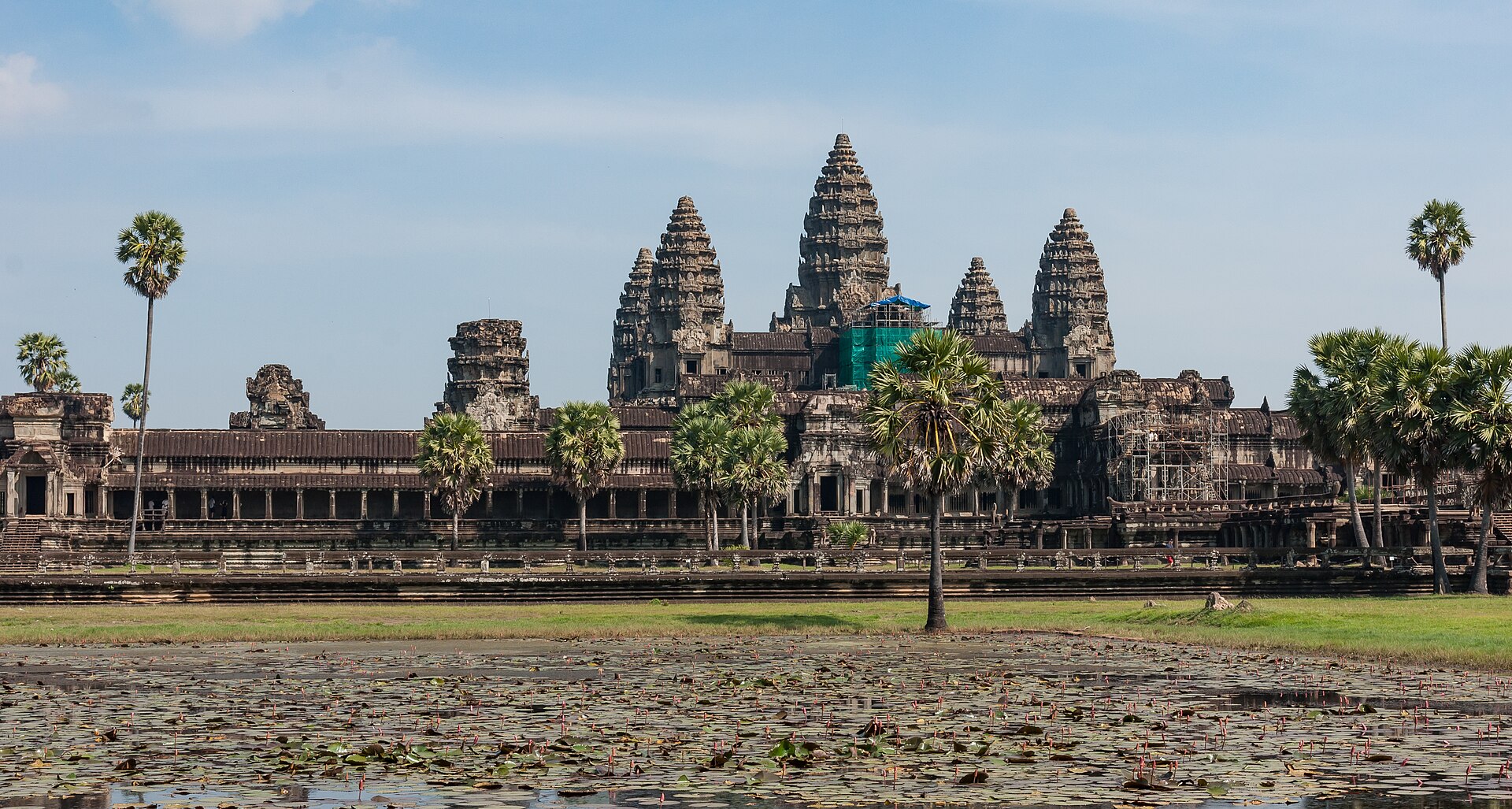
Angkor Wat
Angkor Archaeological Park, Siem Reap
Angkor Wat is the largest religious monument in the world — a 12th-century Hindu temple complex covering 162.6 hectares that was built by King Suryavarman II as his state temple and eventual mausoleum, and whose five lotus-bud towers have become the symbol of Cambodia (they appear on the national flag). The temple is oriented to the west (unusual for Hindu temples, which typically face east), and the sunrise over the towers, reflected in the moat that surrounds the complex, is one of the most photographed moments in Asia. The approach — a 250-metre stone causeway across the 200-metre-wide moat, through the western gopura (entrance gate), and along a 350-metre elevated walkway to the temple itself — is designed to overwhelm with scale before revealing detail. The bas-reliefs on the outer gallery walls, stretching for nearly 800 metres, depict scenes from Hindu mythology (the Churning of the Ocean of Milk, the Battle of Lanka) and historical events (Suryavarman II's military campaigns) in a continuous stone narrative that is the longest bas-relief in the world. The central tower, reached by vertiginously steep stairs (a reconstruction of the original staircase provides a less terrifying alternative), provides a view across the temple's concentric galleries, the surrounding forest, and the plain that was once the capital of the Khmer Empire — a city of over a million people when London's population was 50,000. Angkor Wat has been in continuous use since the 12th century (it transitioned from Hindu to Buddhist worship in the 13th century), and the monks who maintain the temple today connect the site to a living religious tradition that most ruins have lost.
Angkor Wat by Bicycle
Starting from Siem Reap town, various routes
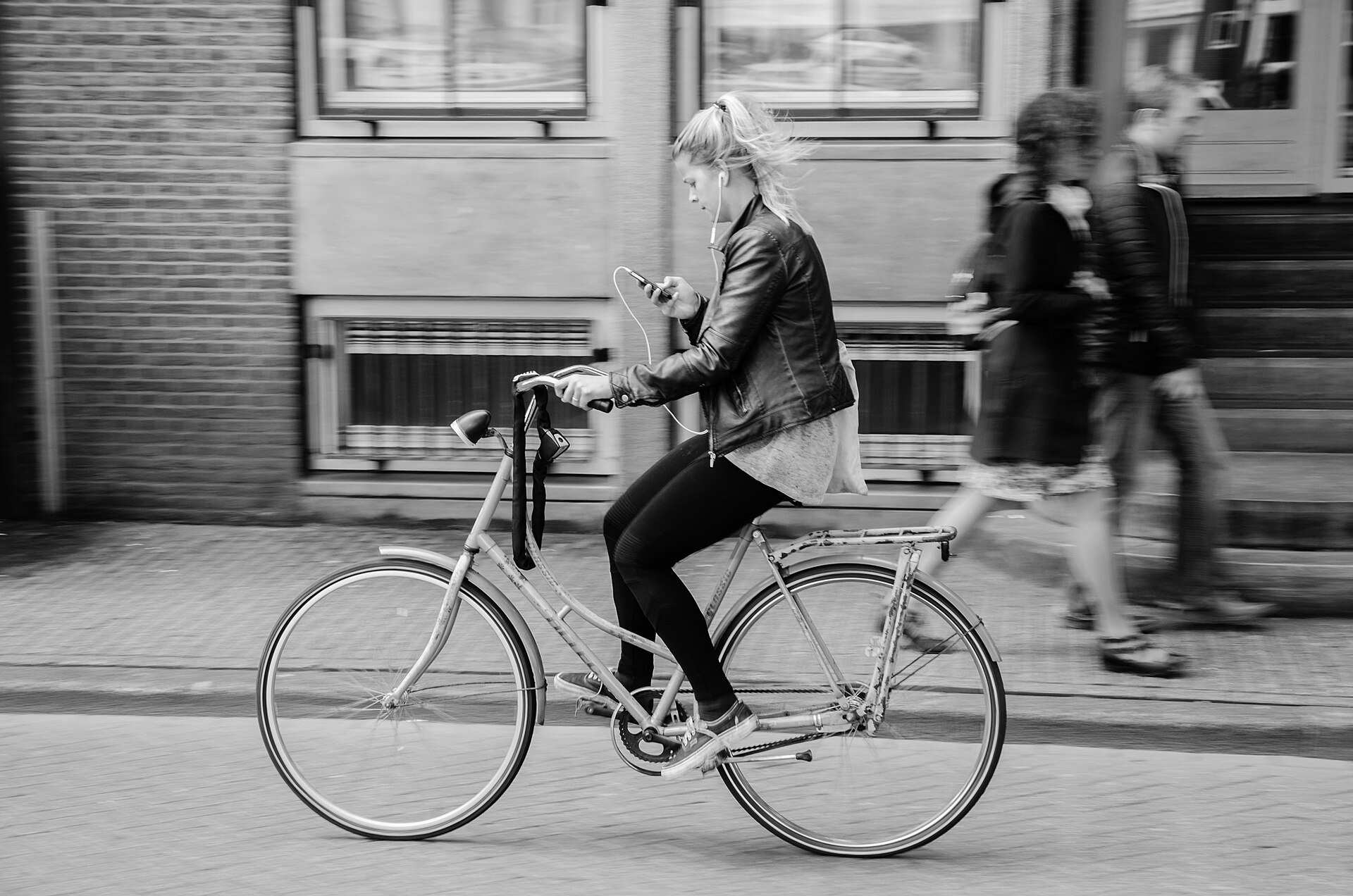
Cycling the Angkor circuit is the best way to experience the temples — a 26-kilometre loop through the archaeological park that passes the major temples (Angkor Wat, Angkor Thom, Ta Prohm, Preah Khan) along shaded forest roads that are flat, well-maintained, and punctuated by the kind of roadside discoveries (smaller temples, village life, monkeys, lotus ponds) that tuk-tuk passengers miss entirely. Bicycles are available for rent from every guesthouse and hotel in Siem Reap (about $2-5 per day), and the ride from town to the temple complex (about 7 kilometres) takes 20-30 minutes along a tree-lined road. The small circuit (Angkor Wat, Angkor Thom/Bayon, Ta Prohm) is about 17 kilometres and can be done in a day; the grand circuit (adding Pre Rup, East Mebon, Ta Som, Preah Khan, Neak Pean) is about 26 kilometres and makes a longer day. The advantages of cycling over tuk-tuk are numerous: you move at a speed that allows you to notice the carved stone half-hidden in the forest, the naga balustrade running alongside the road, or the monks in saffron robes walking between temples. You can stop whenever something catches your eye. And the physical effort of cycling in tropical heat creates an intimacy with the landscape — the heat, the dust, the shade of the ancient trees — that air-conditioned transport deliberately eliminates.
Apsara Dance Performance
National Road 63, Siem Reab, Siem Reap, Cambodia
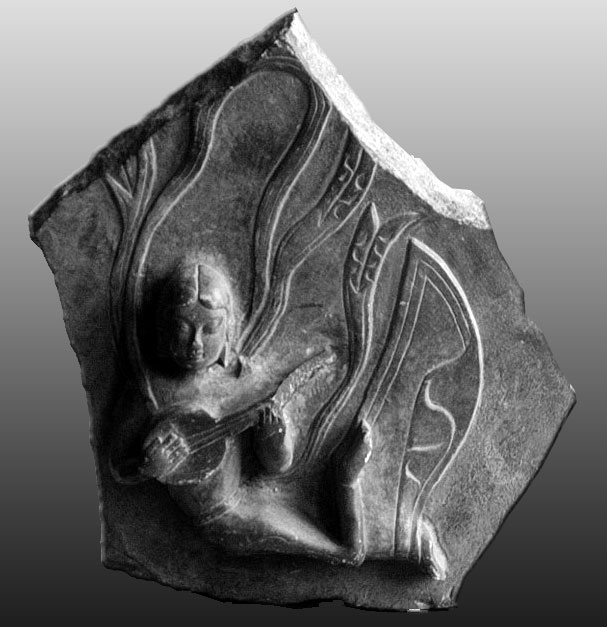
Apsara dance is Cambodia's classical dance tradition — an 1,000-year-old courtly art form depicting the celestial dancers (apsaras) carved into the walls of Angkor Wat and Bayon, performed by teenage girls who train from age 6 at the Royal University of Fine Arts in Phnom Penh or the Apsara Angkor School. The dance form nearly died during the Khmer Rouge years (1975-79) when 90% of classical performers were killed; its survival is owed to a handful of elderly masters who rebuilt the tradition from scratch after 1979. Performances in Siem Reap are held nightly at several venues — the most authentic is the Apsara Theatre (a purpose-built venue with temple-style architecture), while the more spectacular are the dinner-and-show productions at hotels like Raffles Grand d'Angkor and Angkor Village. Expect a 90-minute programme featuring the classical Apsara dance, coconut dance, and fishing dance — all derived from temple bas-reliefs.
Artisans Angkor
Stung Thmey Street, Svay Dankum, Siem Reap, Cambodia
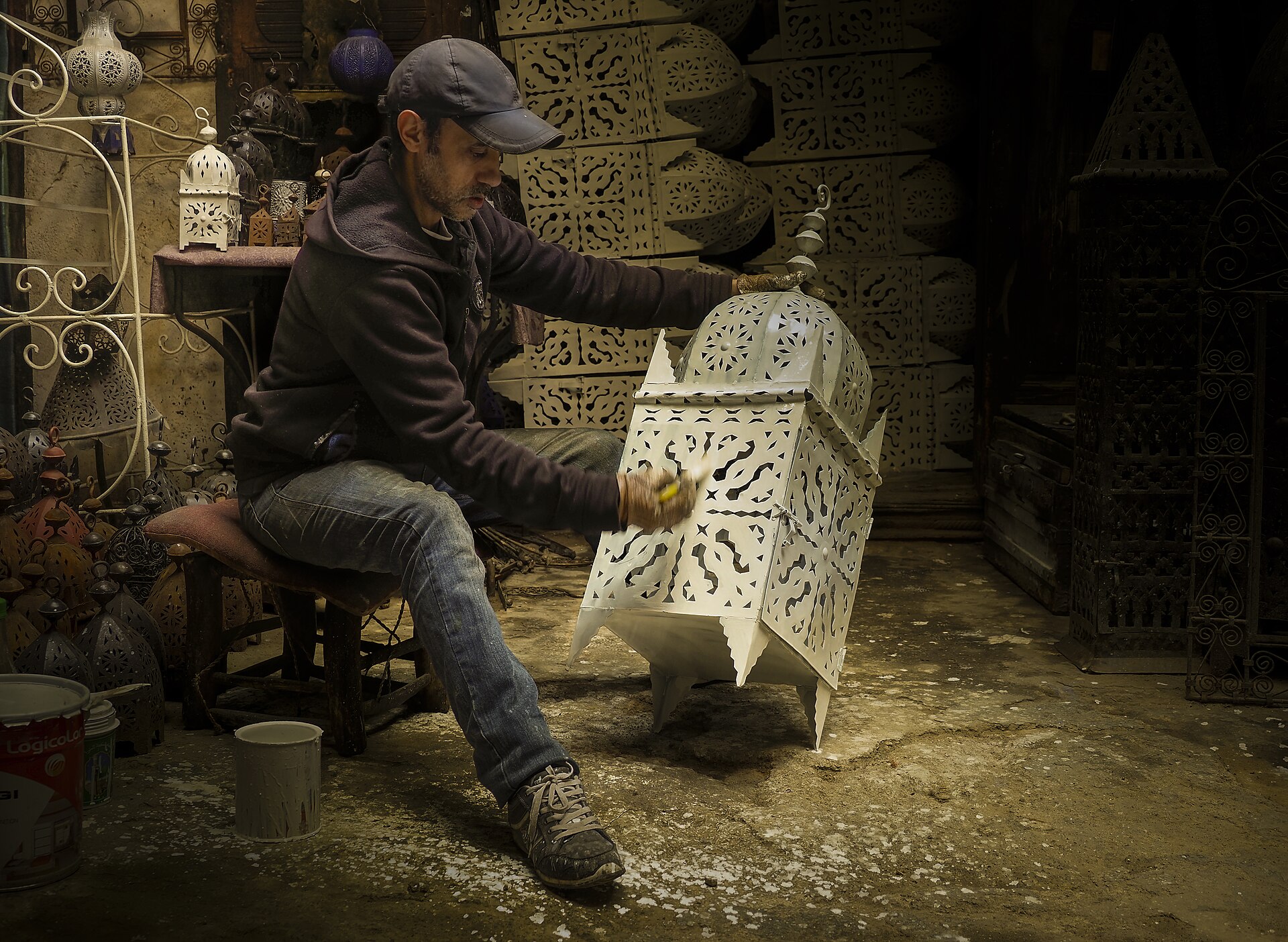
Artisans Angkor is Cambodia's flagship craft school and social enterprise — founded in 1992 by the French NGO Chantiers-Écoles de Formation Professionnelle to revive traditional Khmer crafts (stone carving, wood carving, silk weaving, lacquer, silver work, and gilded silk painting) after the Khmer Rouge had killed most of the country's master craftspeople. Today the school employs over 1,300 Cambodians, most of them rural young people from disadvantaged backgrounds, and produces some of the finest traditional crafts in Cambodia. The main workshop in Siem Reap offers free guided tours (about 30 minutes) through the production areas — watching a stone carver work on a sandstone apsara or a silk weaver at a loom is both educational and humbling. The shop sells the workshop's output at prices that are higher than the Night Market but that fund fair wages and training. The silk farm (Angkor Silk Farm) 16 km outside town provides a more comprehensive tour including mulberry growing and silkworm rearing.
Banteay Kdei
Angkor Archaeological Park
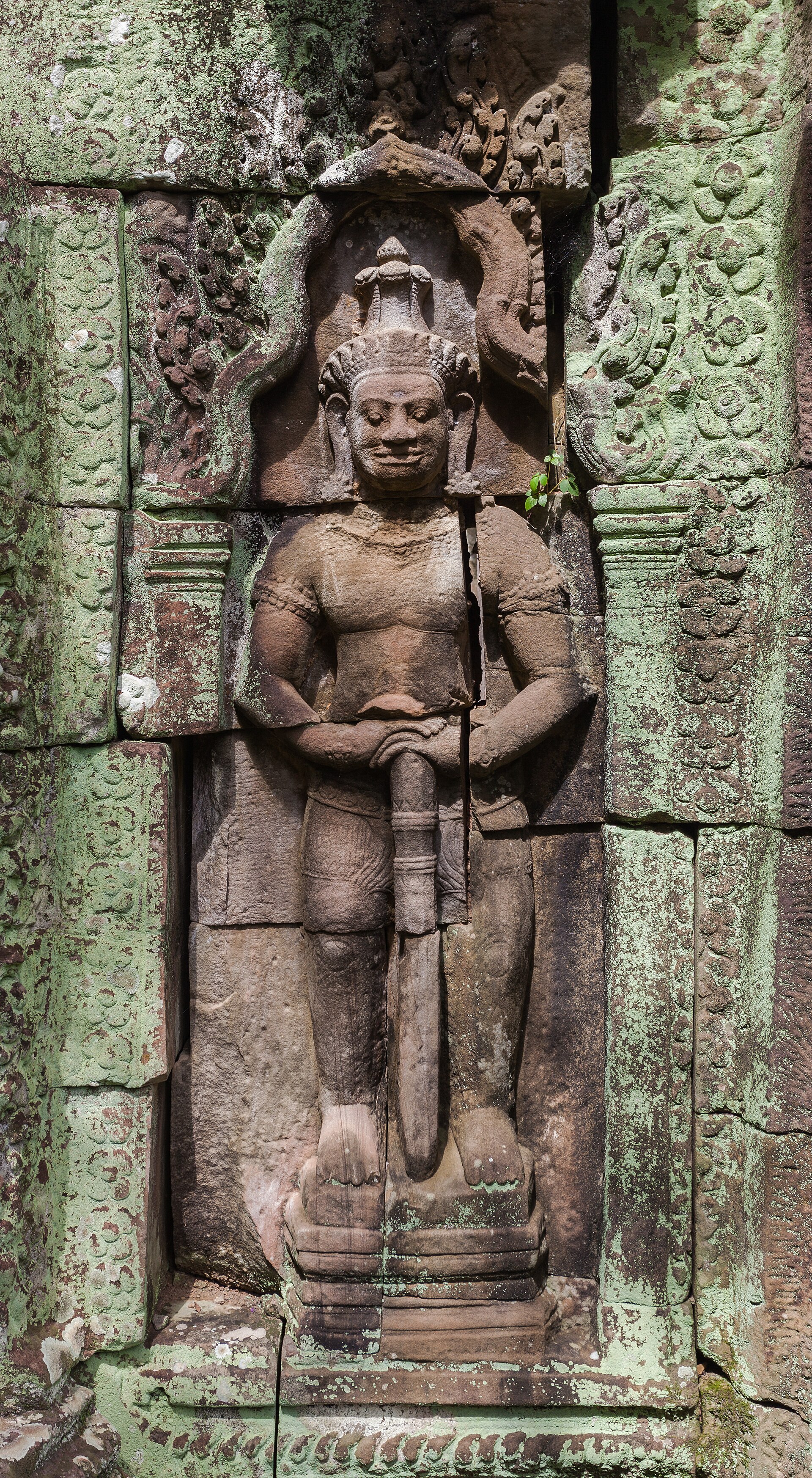
Banteay Kdei is a late 12th-century Buddhist monastery built by Jayavarman VII (the great builder-king who also built Angkor Thom and Bayon) that is often overlooked because of its proximity to the more famous Ta Prohm. The temple is similar in plan and atmosphere to Ta Prohm — surrounded by forest, with trees growing through ruined gallery walls — but with fewer visitors, better preservation of the carved galleries, and the atmospheric quiet that Ta Prohm lost when it became a tourist priority. The adjacent Srah Srang ('Royal Bathing Pool') — a 700 x 350 metre reservoir built in the 10th century and lined with sandstone steps — sits directly across the road and provides the best sunrise alternative to Angkor Wat (fewer crowds, a landscape rather than an architectural silhouette). Banteay Kdei is best visited as a pairing with Srah Srang, either early morning or late afternoon, and makes an excellent 'back door' entry to the Small Circuit.
Banteay Srei
Banteay Srei, Cambodia
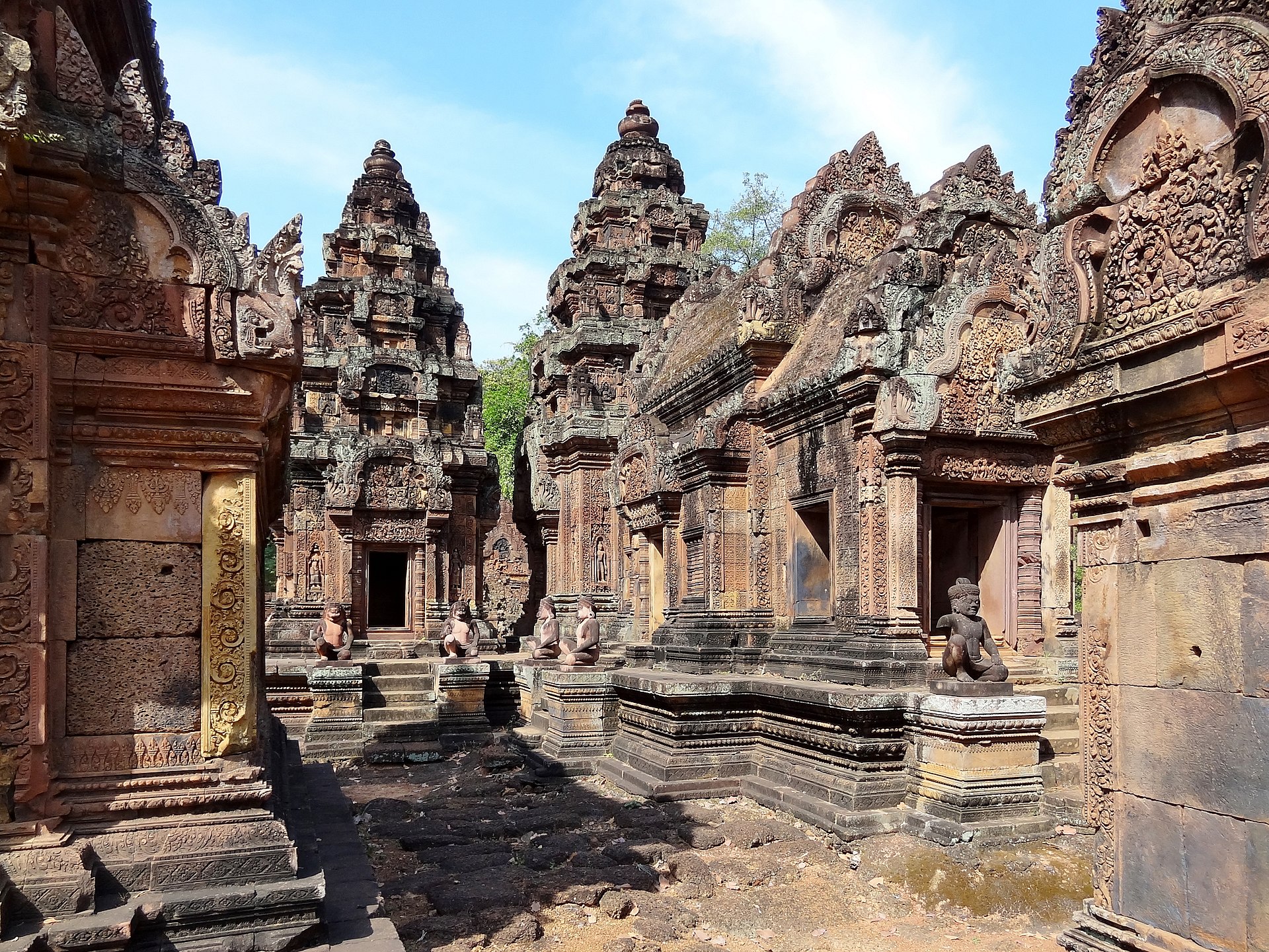
Banteay Srei is the jewel box of Angkor — a 10th-century Hindu temple 25 kilometres northeast of the main complex whose miniature scale and extraordinarily detailed pink sandstone carvings make it the most artistically refined temple in the entire Khmer architectural tradition. André Malraux (the French writer who later became Minister of Culture) attempted to steal several of the temple's carvings in 1923 — he was caught, convicted, and the incident made both him and the temple famous. The temple's carvings are the finest in the Angkor complex — scenes from Hindu mythology (Ravana shaking Mount Kailasa, the battle of the monkey kings Valin and Sugriva) rendered in pink sandstone with a precision and depth of relief that makes the carvings at Angkor Wat look rough by comparison. The sandstone's softness allowed the carvers to achieve a level of detail — individual hairs, textile patterns, facial expressions — that the harder stone used at larger temples cannot support. Banteay Srei means 'Citadel of Women,' though the name may refer to the temple's delicate carvings rather than any association with women. The temple's location, away from the main Angkor circuit, means it's less crowded than Angkor Wat or Bayon, and the drive through the Cambodian countryside — past rice paddies, palm-sugar production, and the village life that continues around the ancient monuments — provides context for the rural landscape that the Khmer Empire's wealth was built on.
Baphuon
Taphul Street, Svay Dankum, Siem Reap, Cambodia
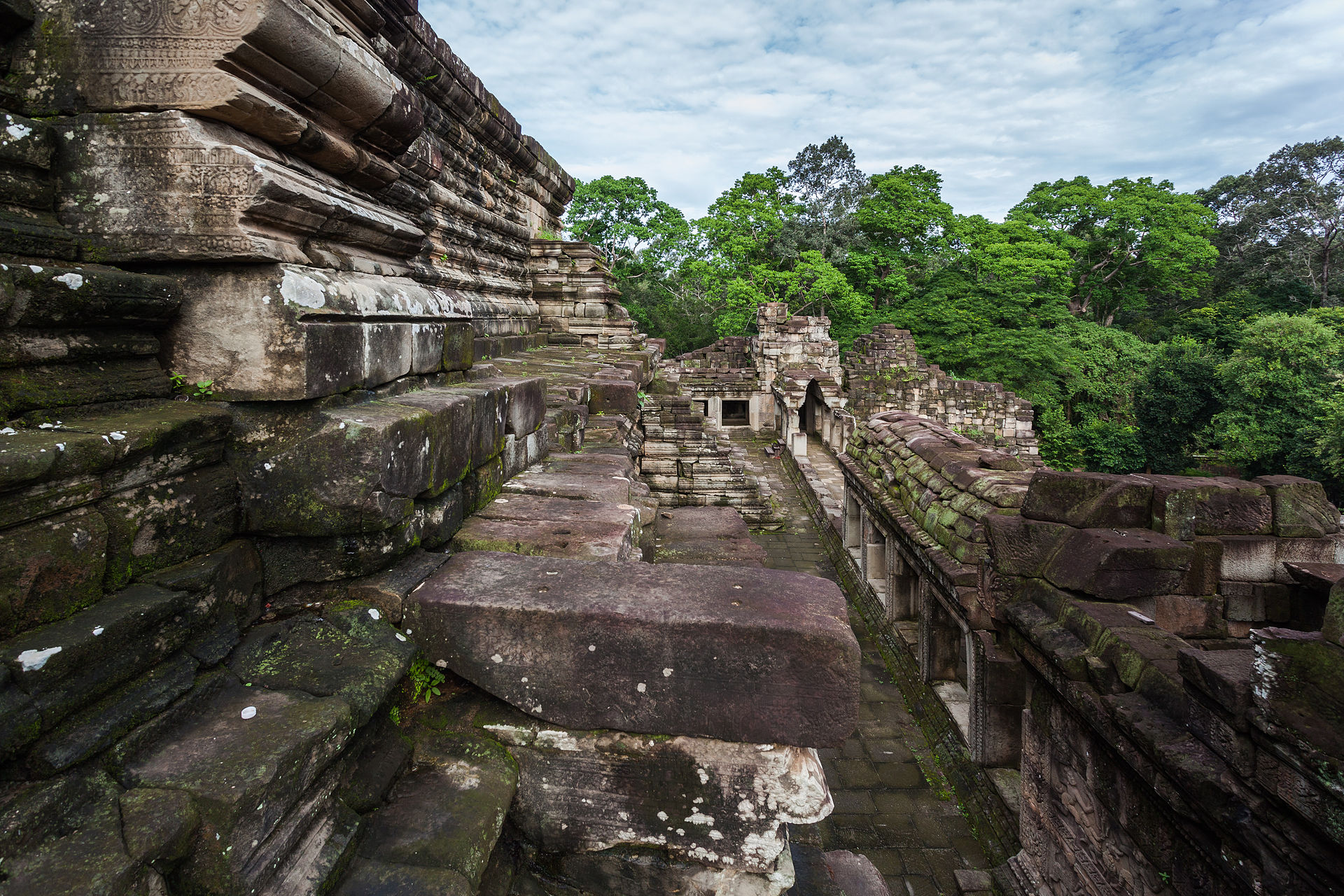
Baphuon is a massive 11th-century temple-mountain inside Angkor Thom dedicated to Shiva — the temple was built around 1060 under King Udayadityavarman II and originally rose three pyramidal levels to a bronze-clad tower that Chinese envoy Zhou Daguan (who visited Angkor in 1296) called one of the great wonders of the empire. Later, after Angkor converted to Theravada Buddhism in the 15th century, the western side of the temple was reshaped into an enormous 70-metre reclining Buddha, using stones taken from the original structure. Baphuon is famous in archaeological circles as 'the world's largest jigsaw puzzle' — it was dismantled stone by stone by the French in the 1960s in preparation for a complete rebuilding, but the civil war and Khmer Rouge period (1970-1979) interrupted the project and destroyed the plans, leaving 300,000 stones scattered across the jungle without documentation. A 50-year reconstruction project completed in 2011 finally put it back together. Climb the central tower for views across Angkor Thom.
Bayon Temple
Angkor Thom, Angkor Archaeological Park, Siem Reap
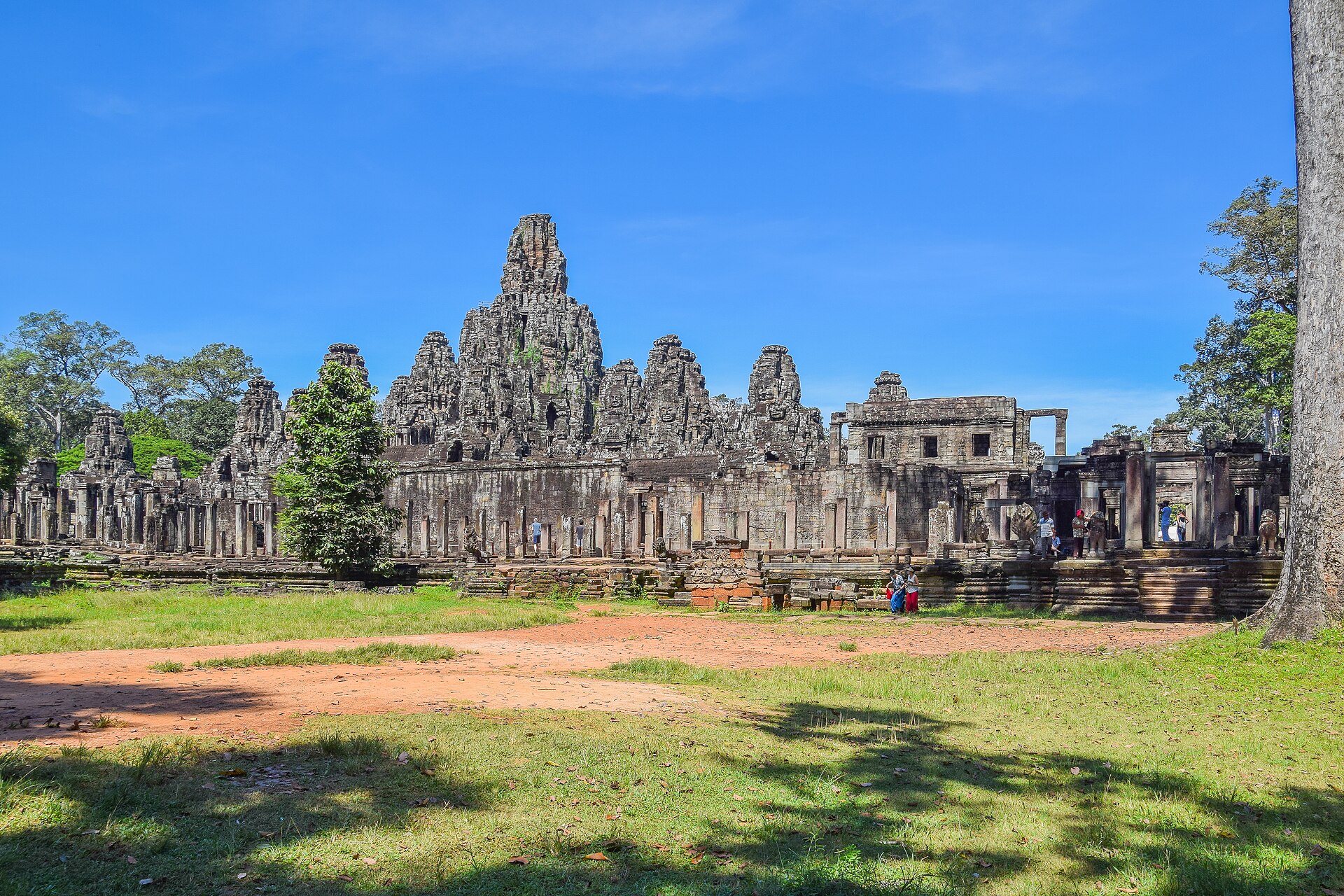
Bayon is the most enigmatic temple at Angkor — a late 12th-century Buddhist temple at the exact centre of Angkor Thom (the walled city that succeeded Angkor Wat as the Khmer capital) whose 216 enormous stone faces, each carved with a serene, slightly smiling expression, gaze outward in every direction from the temple's towers. The faces are believed to represent either the bodhisattva Avalokiteshvara or King Jayavarman VII himself (or both simultaneously — in Khmer theology, the king was a manifestation of the divine). The experience of walking through Bayon is unlike any other temple at Angkor. The structure is a labyrinth of narrow corridors, steep staircases, and the face-towers that appear around every corner — sometimes at eye level, sometimes looming above, always wearing the same expression that has been variously described as compassionate, knowing, and unsettling. The faces are best photographed in the early morning or late afternoon, when the low-angle light creates shadows that give the carved features their most dramatic expression. The outer gallery bas-reliefs at Bayon are unique among Angkor temples in depicting daily life rather than mythology — scenes of market trading, cockfighting, childbirth, fishing, and military campaigns show the Khmer Empire not as a theological abstraction but as a living civilisation. The reliefs provide the most detailed visual record of medieval Southeast Asian daily life in existence.
Beng Mealea
Nokor Thum, Siem Reap, Cambodia
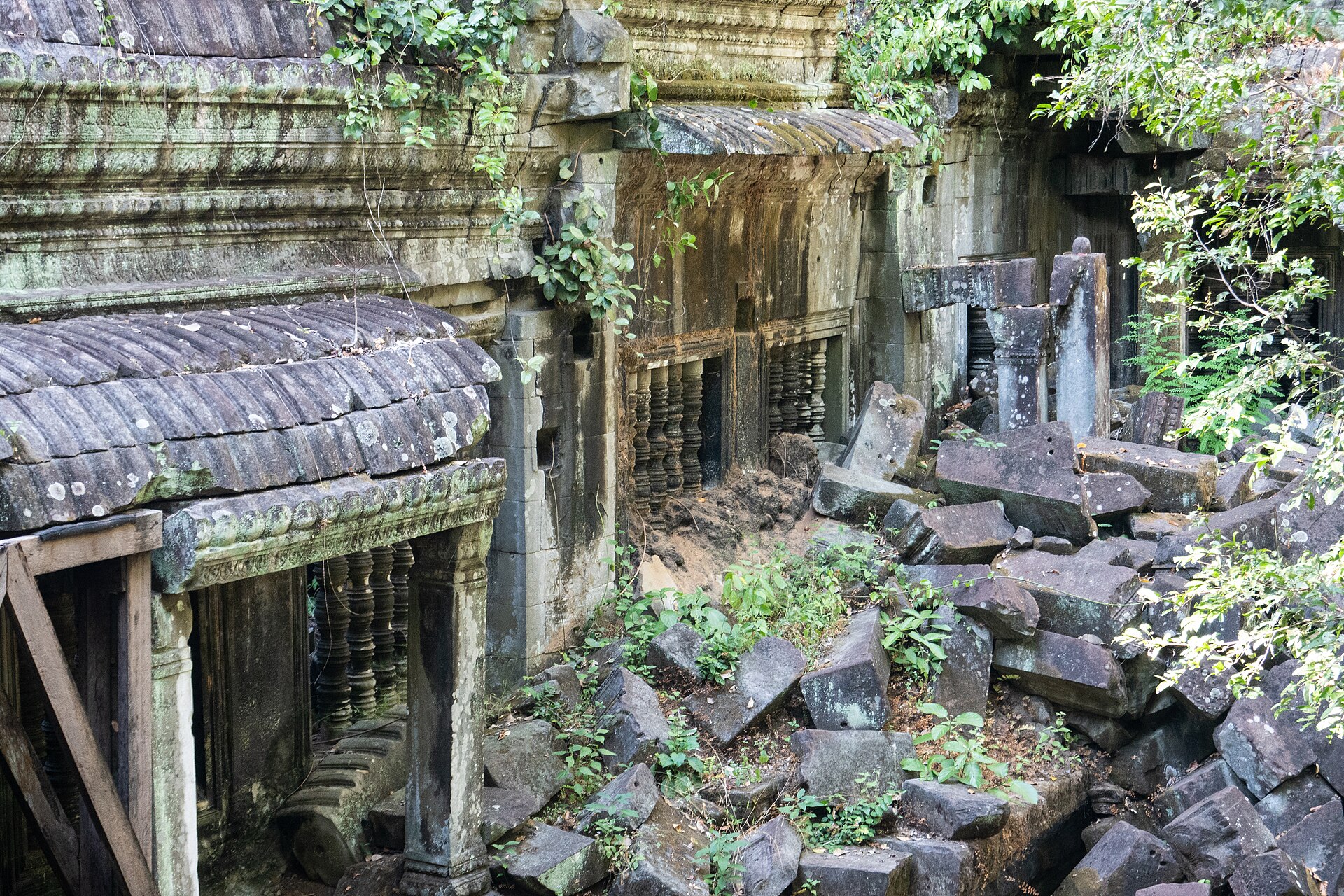
Beng Mealea is the Indiana Jones temple — a massive 12th-century temple 40 kilometres east of the main Angkor complex that has been left almost entirely unrestored, with collapsed galleries, tree roots threading through carved walls, and the jungle growing through every crack with an enthusiasm that makes Ta Prohm look tidy. The temple was probably built by Suryavarman II (the same king who built Angkor Wat) and follows a similar plan at a slightly smaller scale. The experience of exploring Beng Mealea is more adventure than tourism — wooden walkways thread through the collapsed corridors, over tumbled stone blocks, and through the tree-root networks that have claimed the building. The light filtering through the jungle canopy and the gaps in the collapsed roof creates a chiaroscuro that is both beautiful and slightly eerie — the sense of discovering a lost temple is stronger here than at any of the restored Angkor sites. Beng Mealea's distance from Siem Reap (about an hour by road) means it receives far fewer visitors than the main circuit temples, and you can often explore entire sections of the complex alone — an experience that the crowded main temples can't offer. The drive passes through Cambodian countryside (rice paddies, palm-sugar production, village markets) that provides context for the rural landscape that the Khmer Empire's temples were built to govern.
Cambodian Food & Cooking Classes
Various locations, Siem Reap
Cambodian cuisine is Southeast Asia's least-known great food tradition — a flavour palette that sits between Thai and Vietnamese cooking, using fish sauce, galangal, lemongrass, and the prahok (fermented fish paste) that is the foundation of Khmer cooking. Siem Reap's restaurant and cooking-class scene has developed rapidly since the tourism boom, and the cooking classes (which typically include a market visit, instruction in 3-4 dishes, and the meal) provide the most immersive introduction to a cuisine that most visitors have never encountered. Fish amok (a coconut curry of freshwater fish steamed in banana leaves, seasoned with a kroeung spice paste of lemongrass, galangal, turmeric, and kaffir lime) is the national dish and the one every cooking class teaches. Lok lak (stir-fried beef served with a lime-and-pepper dipping sauce on a bed of lettuce and tomato), green mango salad, and the Khmer curries (milder than Thai, richer than Vietnamese) round out the standard class menu. The Siem Reap restaurant scene ranges from the Khmer-fusion restaurants on the streets around Pub Street (try Cuisine Wat Damnak, Cambodia's only Michelin-worthy restaurant) to the street food stalls in the Old Market area (Psar Chas) and the roadside vendors selling grilled meats, noodle soups, and the nom banh chok (Khmer noodles with fish-based green curry) that is the traditional Cambodian breakfast.
Kampong Phluk Floating Village
Kampong Phluk, Tonle Sap
Kampong Phluk is the largest stilted village on Tonle Sap Lake — a community of about 800 Khmer families who live in wooden houses raised on 6-8 metre stilts along the lake's northern edge, which adapt to the dramatic annual flooding that can raise the water level by over 10 metres during the monsoon season (June-November). The village is about 35 kilometres southeast of Siem Reap and is typically visited by small boat from the floating market at Roluos. Unlike the more touristy Chong Kneas village, Kampong Phluk feels authentic — the residents are ethnic Khmer (not Vietnamese fishermen like at Chong Kneas), and the economy is genuine fishing, fish-sauce production, and rice cultivation rather than staged for visitors. The dry season (January-April) reveals the full towering height of the stilts; the wet season shows the flooded streets with boats as the only transport.
Kbal Spean
Kbal Spean, Banteay Srei District
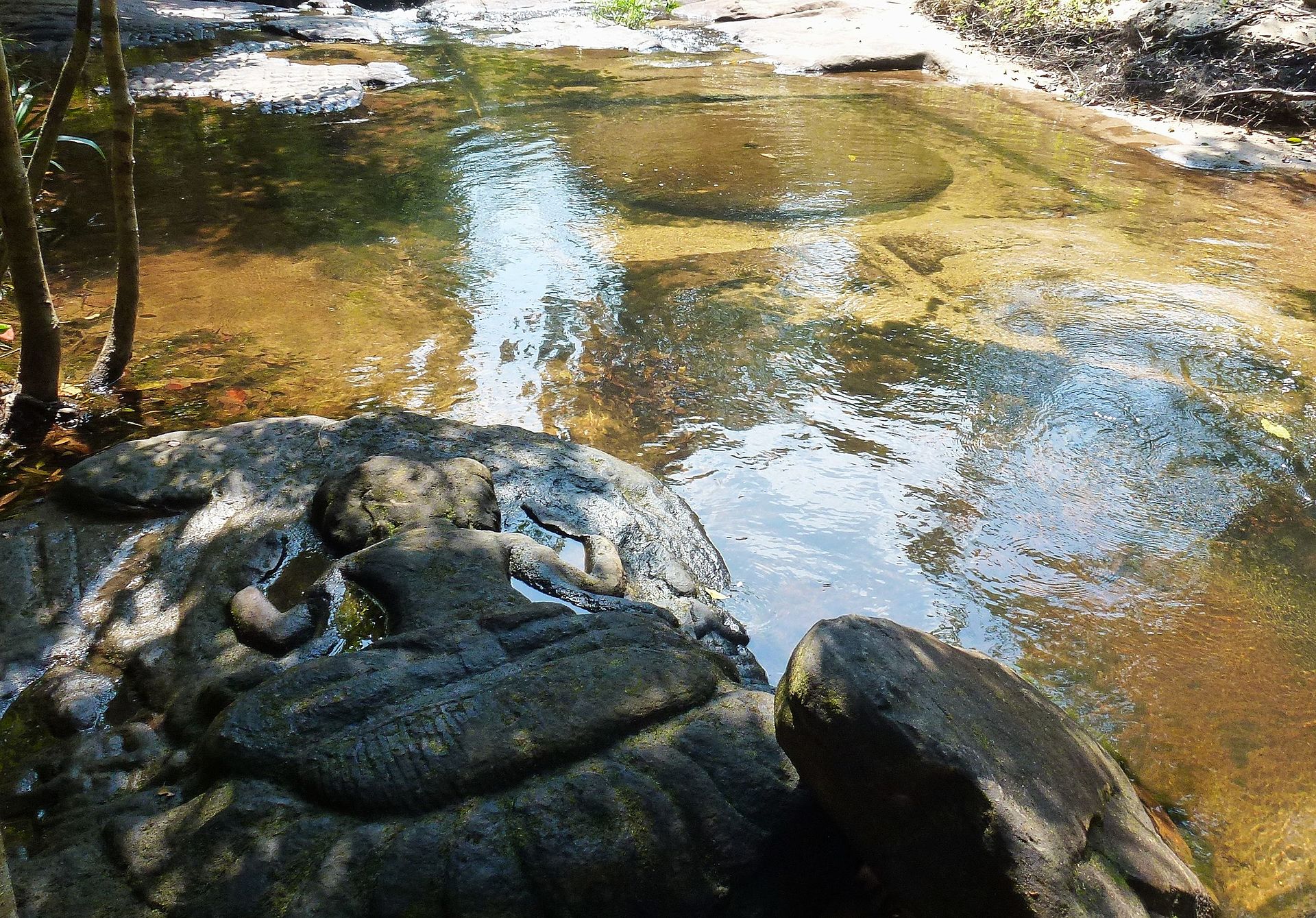
Kbal Spean ('Head of the Bridge') is the 'River of a Thousand Lingas' — a stretch of the Stung Kbal Spean river 50 kilometres north of Siem Reap (beyond Banteay Srei) where 11th and 12th-century Khmer craftsmen carved hundreds of Shiva lingams, yoni bases, and scenes from Hindu mythology directly into the sandstone riverbed. The water flowing over the carvings was believed to be sanctified and brought fertility to the rice paddies downstream. Reaching the site requires a 1.5-kilometre jungle hike uphill from the car park — genuinely steep in sections, with slippery rocks when wet — and is best combined with a Banteay Srei visit on the same day. The carvings are most visible and dramatic when the water level is low (December-April); in the rainy season the details are obscured. The nearby Phnom Kulen waterfall is a good extended-day pairing.
Landmine Museum
Angkor District, Siem Reap Province
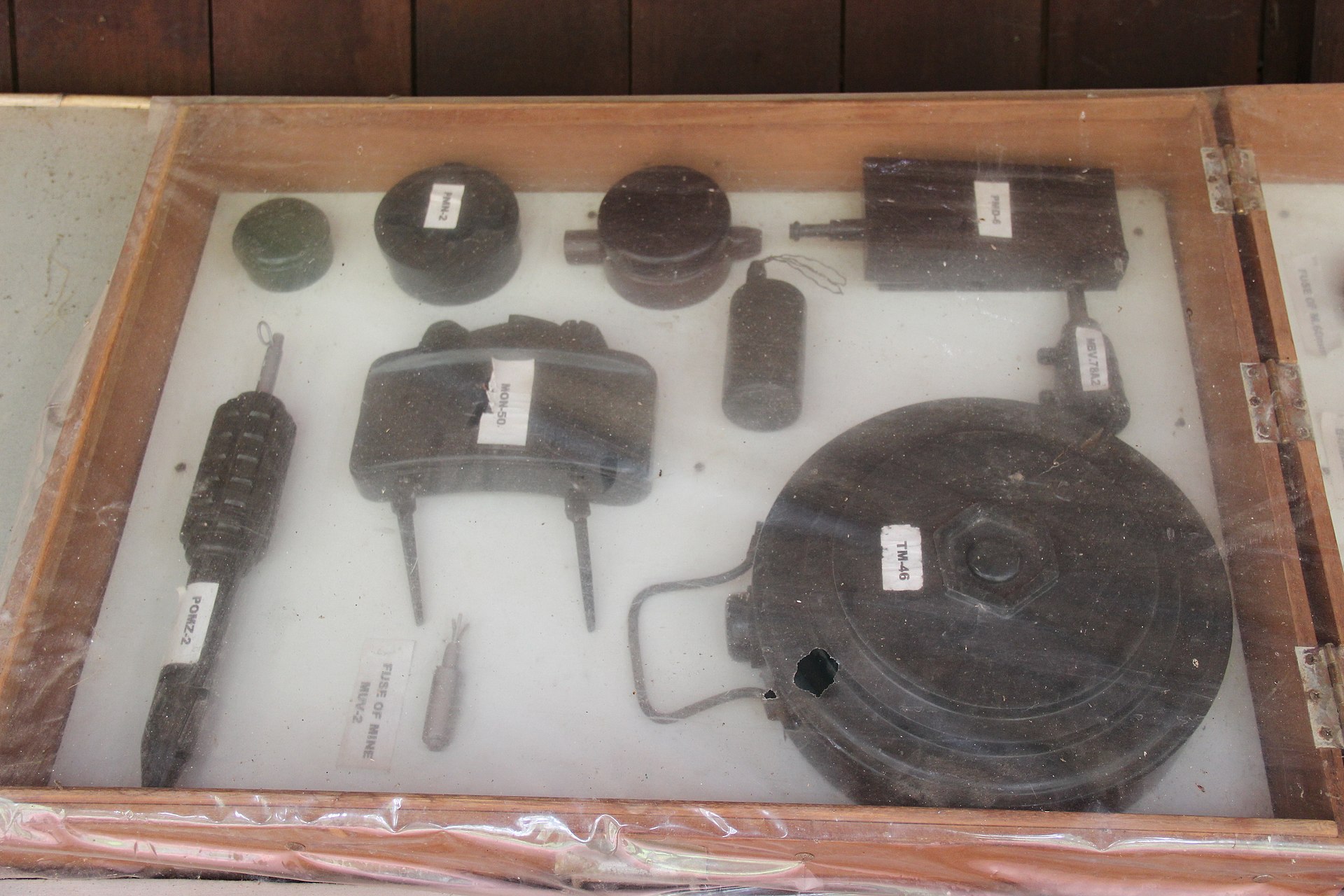
The Cambodia Landmine Museum is the most powerful museum in Siem Reap — a small institution founded by Aki Ra, a former child soldier who was forced to lay landmines as a boy and has spent his adult life removing them by hand. The museum, located on the road between Siem Reap and Banteay Srei, displays defused mines, UXO (unexploded ordnance), and the tools Aki Ra uses — sometimes nothing more than a knife and a stick — to clear the mines that still kill and maim Cambodians decades after the wars ended. Cambodia is one of the most heavily mined countries in the world — an estimated 4-6 million landmines and items of UXO remain in the soil, the legacy of the Vietnam War (when the US dropped more bombs on Cambodia than on Japan in WWII), the Khmer Rouge period, and the civil war that followed. The museum provides the context for these statistics through Aki Ra's personal story and the stories of the children he shelters — many of them mine victims — in the orphanage attached to the museum. The museum is unflinching but not sensationalist — the emphasis is on the ongoing danger, the demining process, and the lives of the survivors rather than on graphic injury. The experience is emotionally challenging and provides the historical dimension that the temple visits alone can't: the temples represent Cambodia's past glory; the Landmine Museum represents the trauma that followed.
Made in Cambodia Market
Achar Sva Street, Siem Reap
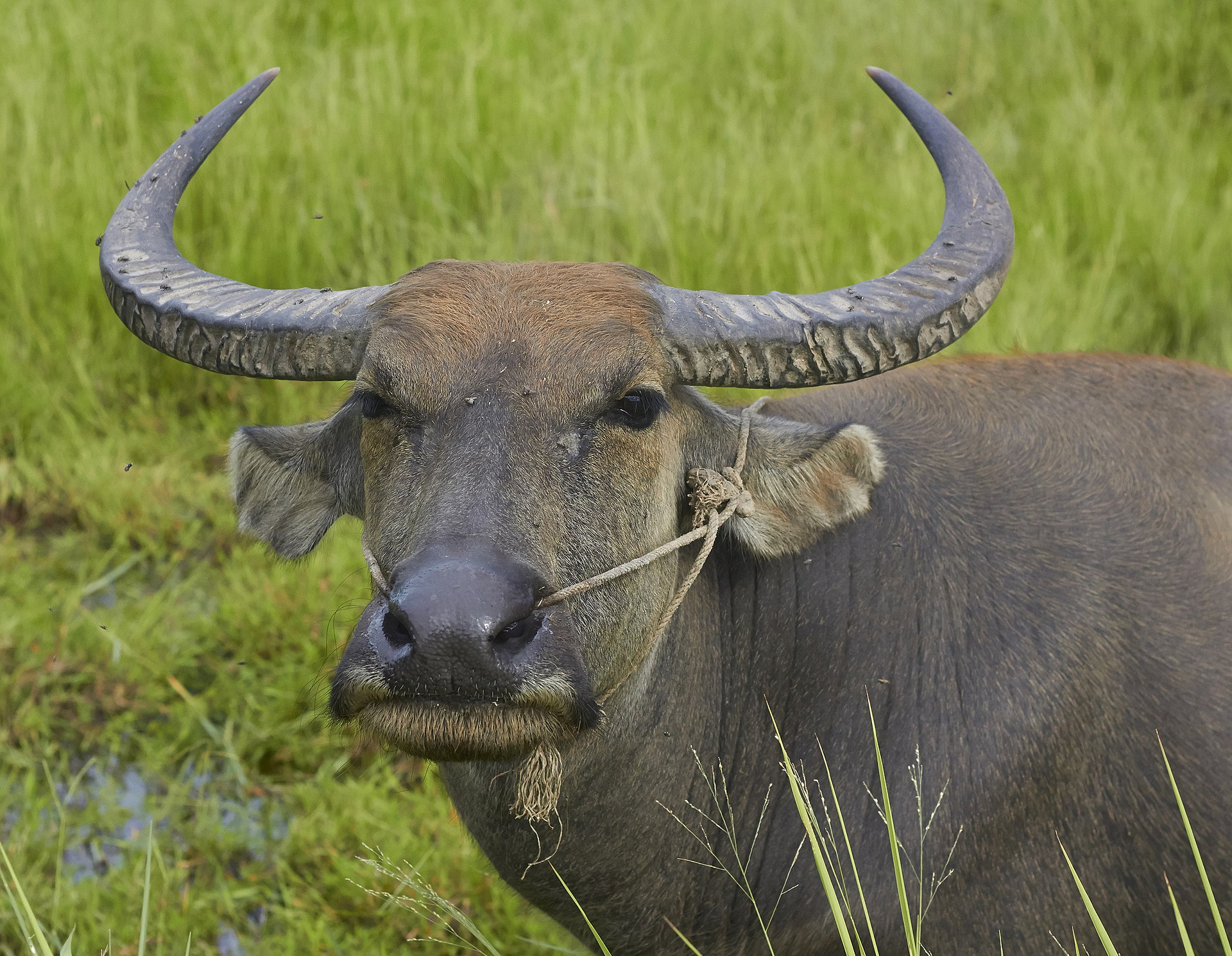
The Made in Cambodia Market is a curated handicraft market in the Shinta Mani hotel complex near the Old Market featuring only authentic, locally made Cambodian crafts — silk scarves from Artisans Angkor, stone and wood carvings by Cambodian sculptors, Khmer silver jewellery, and the handmade paper, ceramics, and textiles that are emerging as contemporary Cambodian design. Unlike the mass-produced knockoffs in the general Night Market, every item here is made in Cambodia by identifiable craftspeople. The market is held daily in the hotel's courtyard with around 40 vendors, most of whom work with NGO or social enterprise partners (Artisans Angkor, Friends International, Goel Community, etc.). Prices are higher than the main Night Market but the quality, fair-trade credentials, and opportunity to talk directly with artisans make this a better option for meaningful souvenirs.
Neak Pean
Angkor Archaeological Park
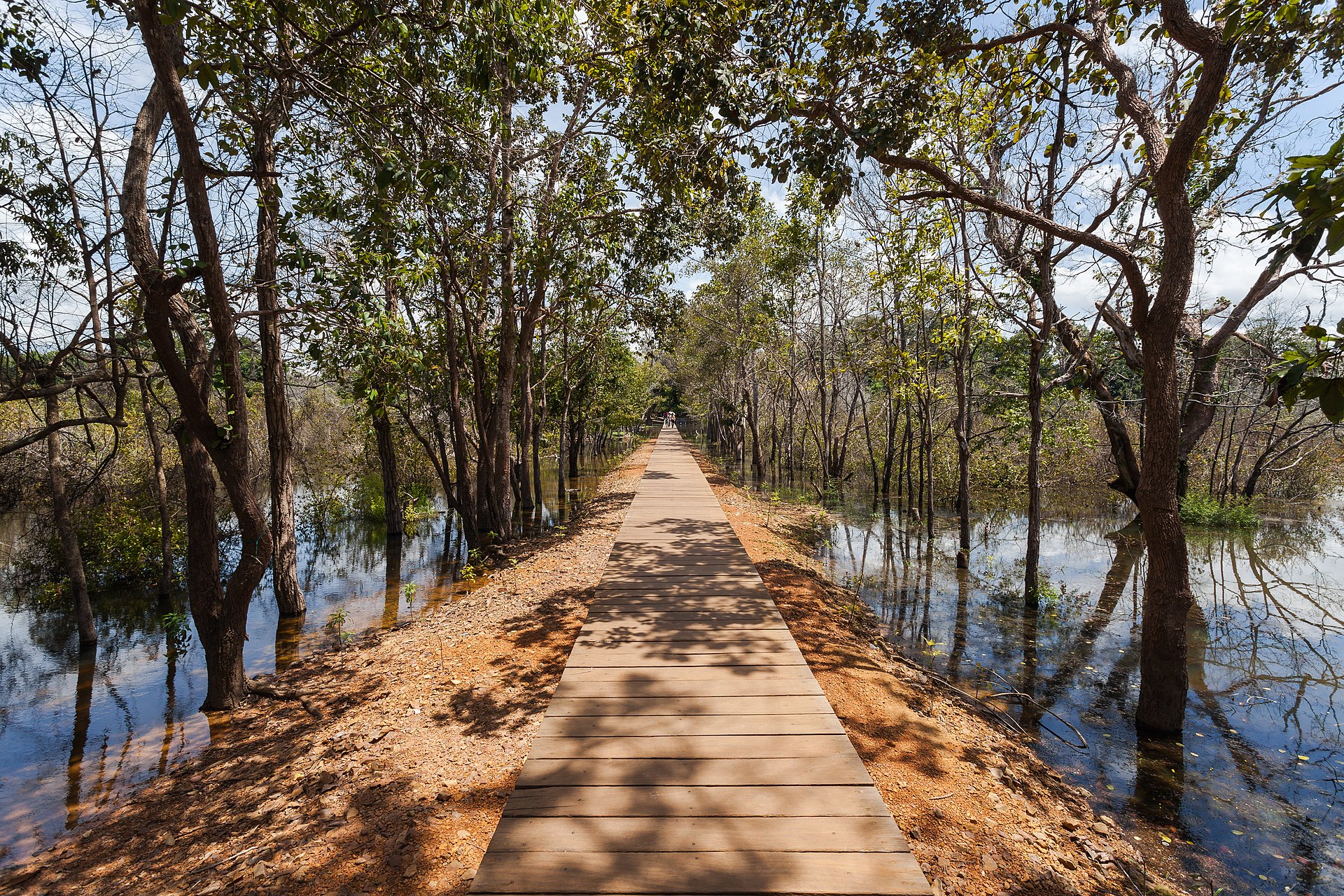
Neak Pean is one of Angkor's most unusual temples — a 12th-century Buddhist shrine on a small artificial island in the centre of a square baray, surrounded by four smaller pools representing the four elements (water, earth, fire, and wind). The temple was designed as a sacred hospital where pilgrims bathed in the smaller pools to cure specific ailments, with the water gushing from four animal-headed gargoyles (elephant, horse, lion, and human) into each quadrant. Access is via a wooden boardwalk across a flooded forest — a beautiful 300-metre walk through drowned trees that is itself one of Angkor's most atmospheric approaches. The temple is small and the experience is brief, but the combination of the flooded forest walk and the unique architectural concept makes it one of the most rewarding minor temples. Best visited during the rainy season (May-November) when the baray is full.
Phare Cambodian Circus
B41, Ung Oeun Street, Svay Dankum, Siem Reap, Cambodia
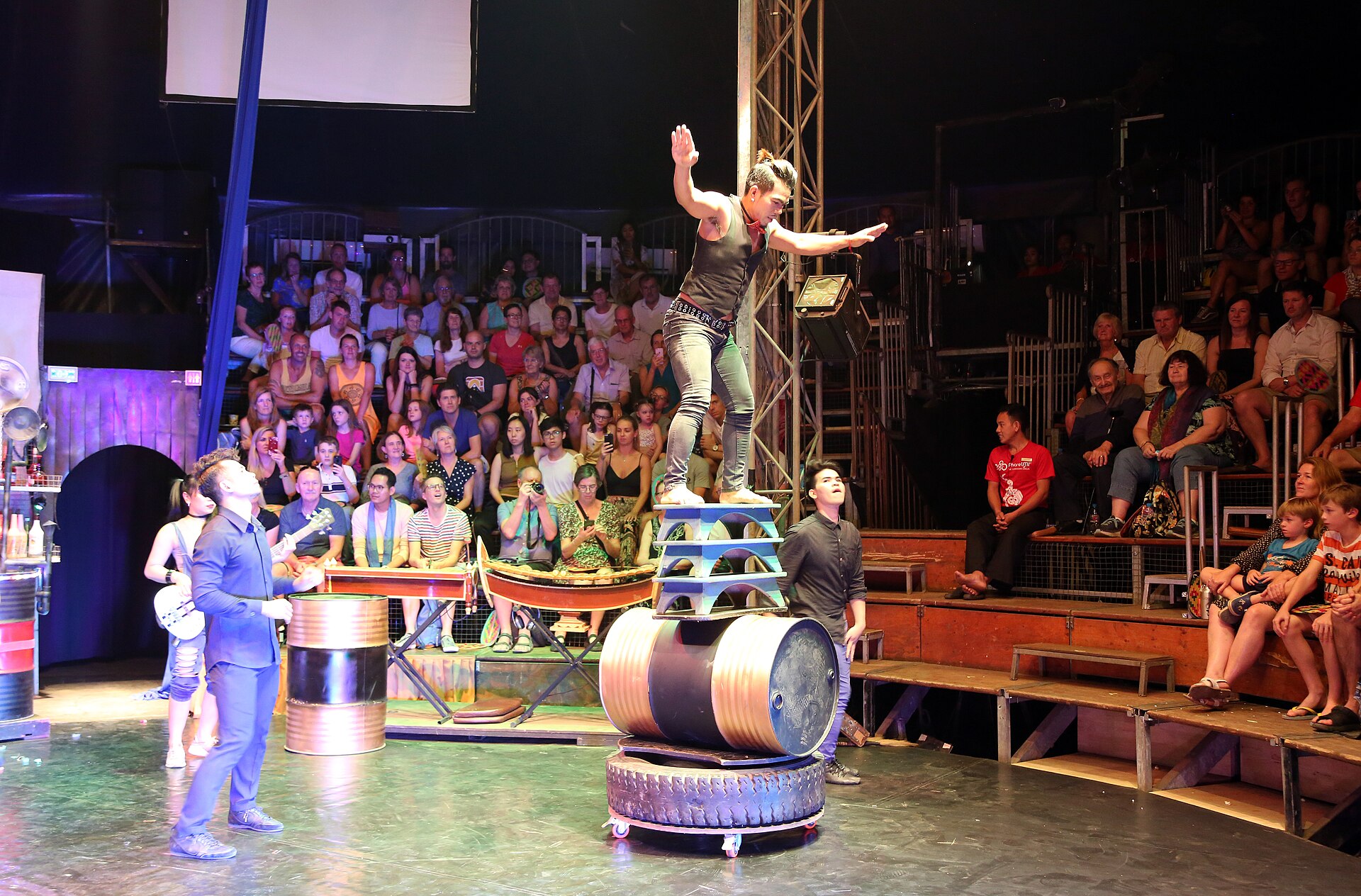
Phare, the Cambodian Circus, is the most acclaimed performing arts company in Cambodia — a circus-theatre troupe that combines acrobatics, music, dance, and storytelling to tell Cambodian stories, including the traumatic history of the Khmer Rouge era that the country is still processing. The shows are performed nightly in a red big-top tent in Siem Reap and have been called the best live entertainment in Cambodia by virtually every travel publication. Phare (Ponleu Selpak, meaning 'The Brightness of the Arts') was founded in 1994 in Battambang by young Cambodians who had grown up in refugee camps and used art as a means of processing the trauma of the Khmer Rouge genocide and its aftermath. The organisation trains young Cambodians in circus arts, music, and visual arts, and the performing company in Siem Reap provides employment for graduates while telling stories that Cambodia's conventional tourism rarely acknowledges. The shows change regularly and range from acrobatic retellings of Khmer folktales to original productions that address contemporary social issues (drug addiction, rural poverty, the legacy of genocide) through the medium of circus. The acrobatics are world-class (Phare performers have appeared at international circus festivals), the music is live, and the emotional range — from comedy to genuine sorrow — makes the shows more than entertainment.
Phnom Bakheng Sunset
Phnom Bakheng, Angkor
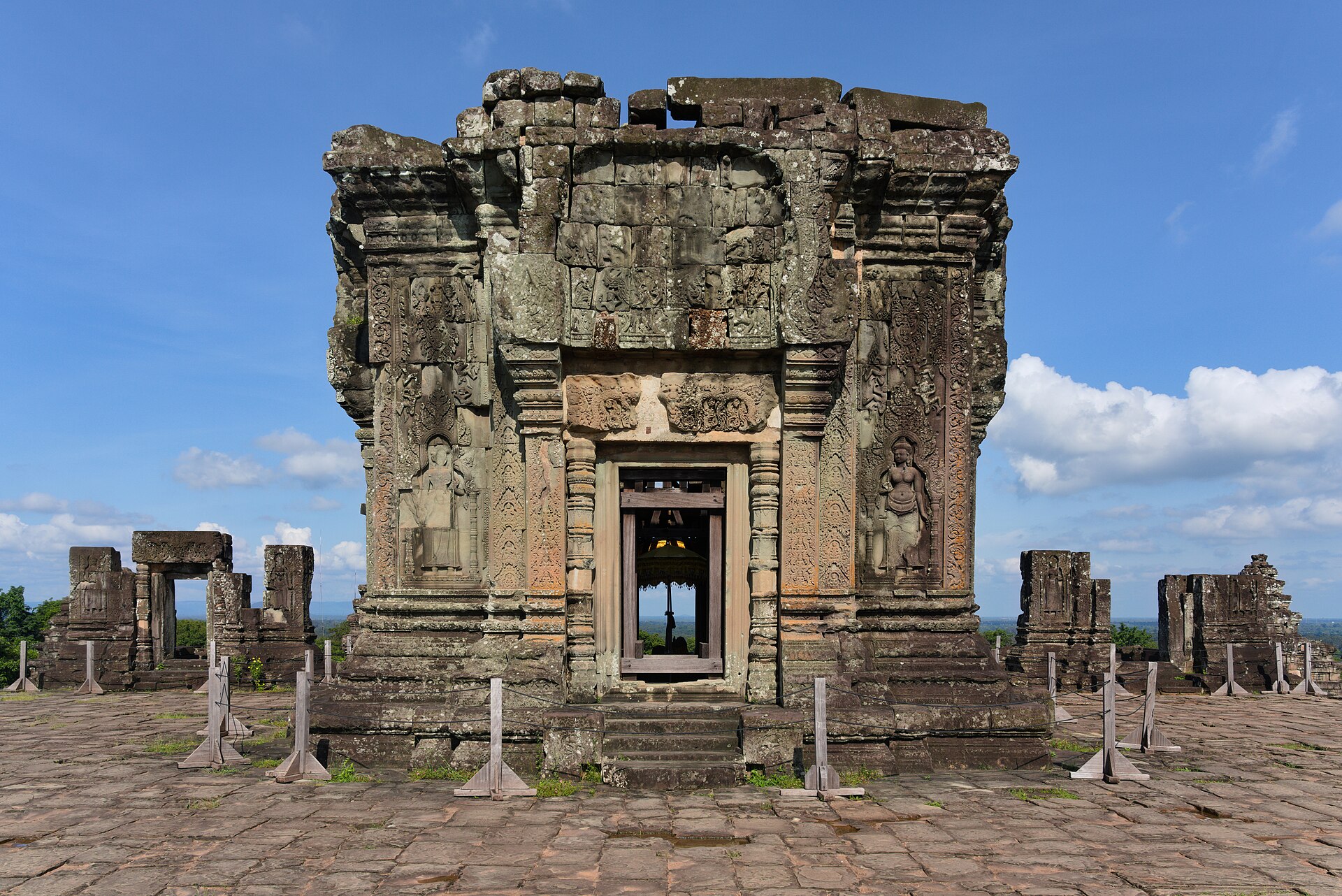
Phnom Bakheng is a hilltop temple-mountain between Angkor Wat and Angkor Thom that was built in the late 9th century as the state temple of the first city of Angkor (Yasodharapura, founded by King Yasovarman I around 900 AD) — predating Angkor Wat by over 200 years. The temple rises in five levels with 108 smaller towers surrounding a central sanctuary, arranged to represent Mount Meru in Hindu cosmology. The 67-metre hill provides the classic panoramic sunset view of Angkor Wat rising out of the jungle to the south, with the sun setting over the West Baray reservoir to the west. The sunset has become so popular that Cambodia's authorities now limit the number of visitors on the temple top to 300 at a time, with a queue forming from about 4:30 PM. Arrive early (before 4 PM) to secure a spot, or climb after sunset for a quieter experience.
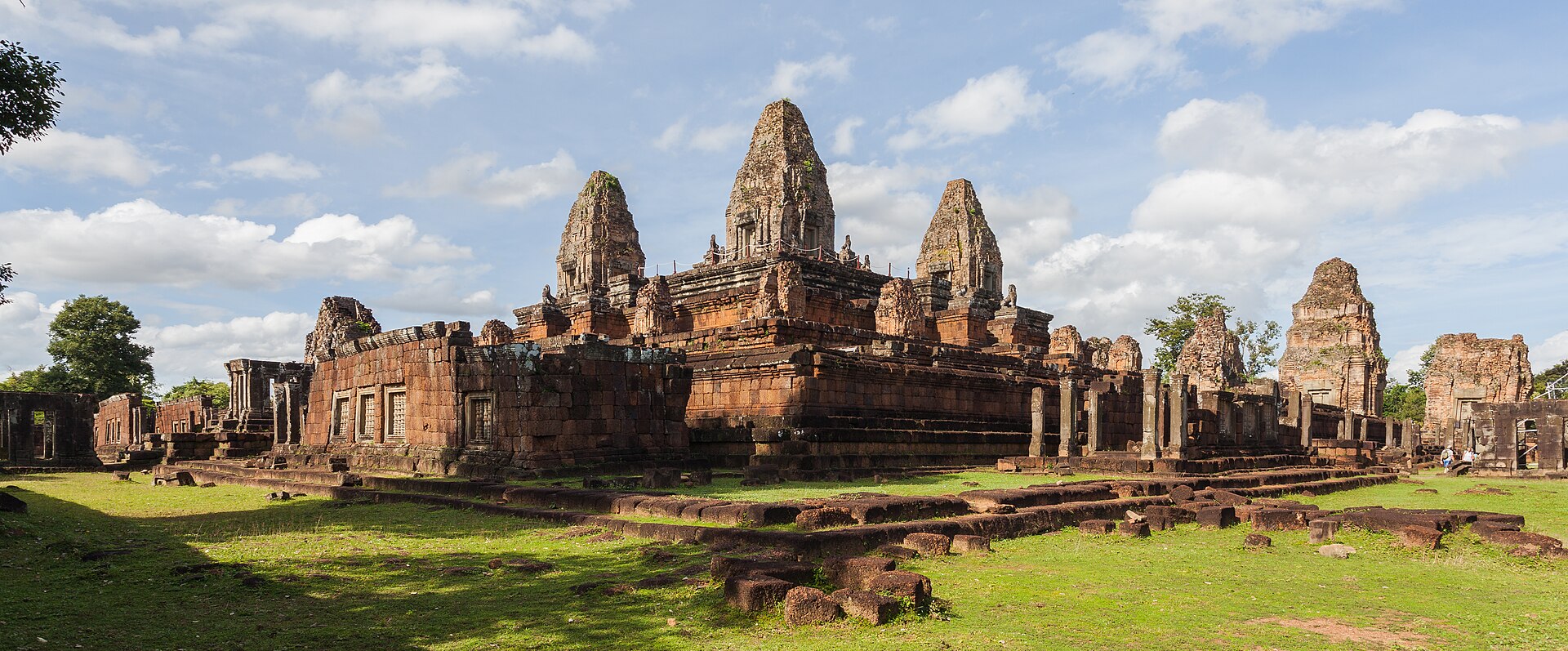
Pre Rup
Angkor Archaeological Park
Pre Rup is a 10th-century temple-mountain on the Large Circuit that is one of the best sunset alternatives to Phnom Bakheng — a stepped pyramid of brick, laterite, and sandstone topped by five towers in the quincunx arrangement that became standard in later Khmer architecture. The temple was completed in 961 AD by King Rajendravarman II as his state temple, and its relatively steep climb up four levels rewards with 360-degree views over surrounding rice paddies and the silhouettes of other temples in the distance. The name 'Pre Rup' means 'Turning the Body' and refers to a Hindu funeral ritual — the temple's location (facing a rectangular moat that may have been used for cremations) has suggested to some archaeologists that this was a royal crematorium, though the theory is debated. The warm orange glow of the sandstone at sunset makes Pre Rup especially photogenic.
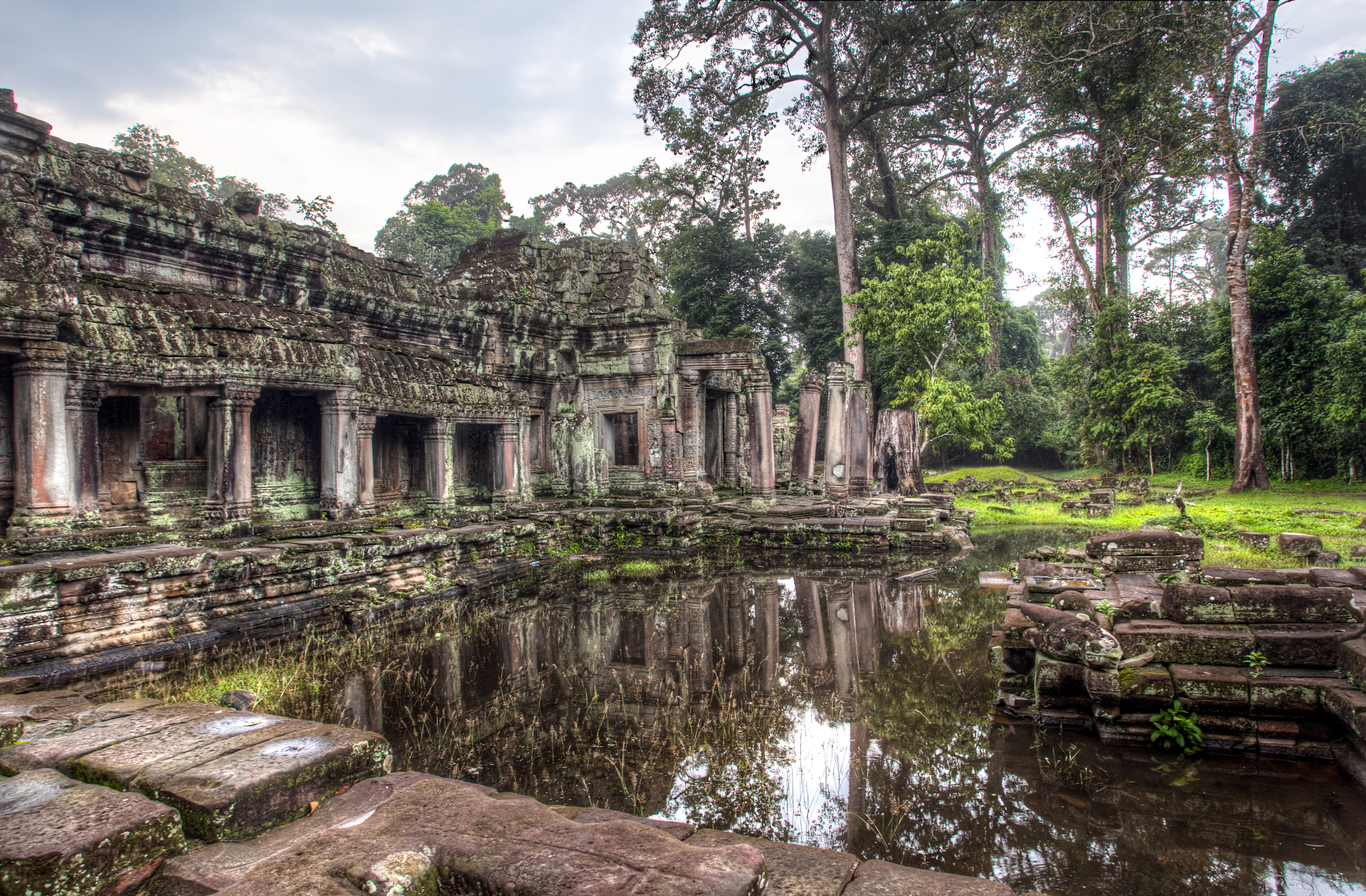
Preah Khan
Angkor Archaeological Park, Siem Reap
Preah Khan is one of the largest temple complexes at Angkor — a sprawling 12th-century Buddhist university and monastery built by Jayavarman VII that is less visited than Angkor Wat, Bayon, or Ta Prohm but offers an equally rewarding (and considerably less crowded) experience. The temple's name means 'Sacred Sword,' and it was both a religious and administrative centre that housed thousands of monks, scholars, and functionaries. The temple's layout is a concentric series of enclosing walls with a cruciform central sanctuary, and the approach through the eastern gopura — past a row of garudas (mythical bird-men) holding the body of a naga, a motif unique to Preah Khan — is one of the most dramatic entrances at Angkor. The two-storey building near the central sanctuary (the only two-storey structure at Angkor, with round columns that suggest Greek or Roman influence transmitted via trade routes) remains architecturally mysterious. Preah Khan has been partially cleared of vegetation but retains more of the jungle-ruin atmosphere than the heavily restored Angkor Wat — trees grow through doorways, roots grip carved walls, and the play of light through the canopy and the stone windows creates the kind of atmosphere that makes Angkor the most photogenic archaeological site in the world.
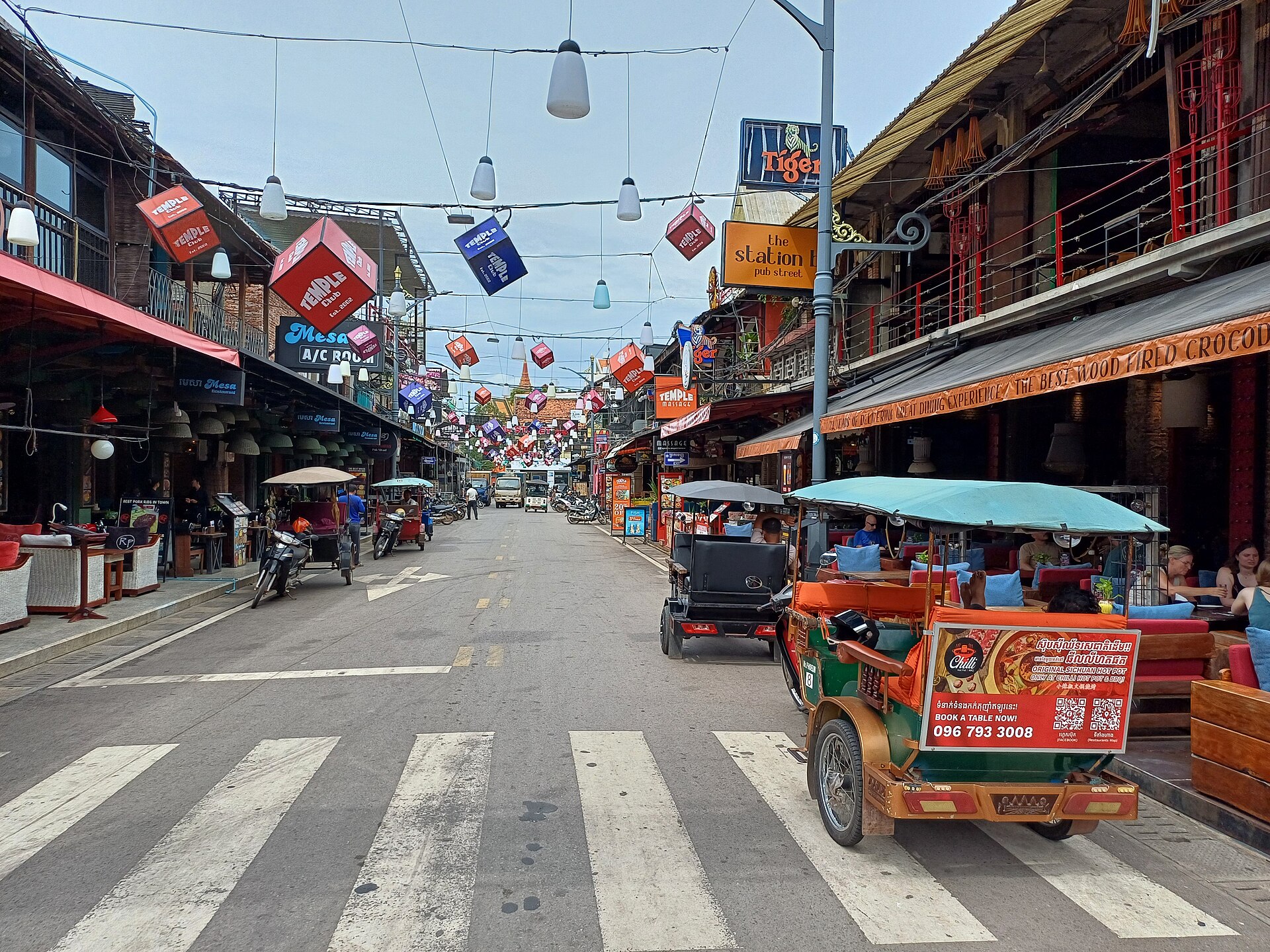
Pub Street & Siem Reap Night Market
Street 8 , Svay Dankum, Siem Reap, Cambodia
Pub Street is Siem Reap's tourist nightlife strip — a pedestrianised street of bars, restaurants, and the famous '$0.50 draft beer' signs that make Siem Reap one of the cheapest drinking destinations in Southeast Asia. The street, which barely existed before the tourism boom of the early 2000s, has become the default evening gathering place for visitors who spend their days at the temples and their nights eating Khmer food, drinking Angkor Beer, and recovering from the heat. The Night Market (Angkor Night Market and the surrounding Siem Reap Art Center Night Market) operates in a complex of bamboo and thatch structures near Pub Street, selling handicrafts, silk, paintings, and the T-shirts and souvenirs that every tourist town produces. The quality varies, but the silk scarves, stone carvings, and the silver jewellery produced by Artisans Angkor (a social enterprise training young Cambodians in traditional crafts) are genuinely good. The Cambodian food along and around Pub Street is better than its tourist-strip location might suggest — fish amok (the national dish, a coconut curry steamed in banana leaves), lok lak (stir-fried beef with pepper and lime dipping sauce), and the fried tarantulas, scorpions, and insects at the street food stalls (which are consumed by Cambodians as snacks, not just for tourist shock value) represent a cuisine that is distinct from its Thai and Vietnamese neighbours.
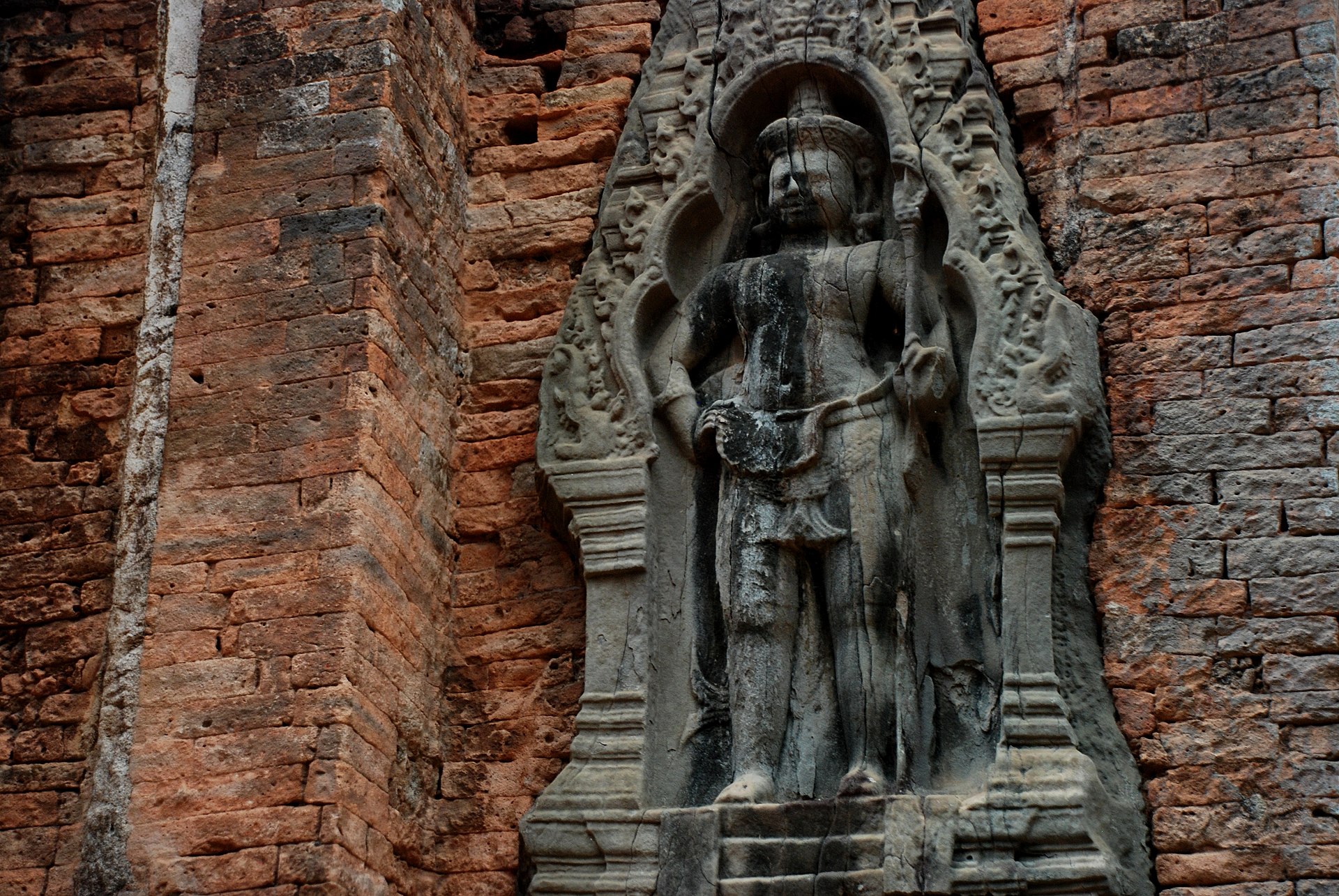
Roluos Group
Roluos, 13 km east of Siem Reap
The Roluos Group — three temples 13 kilometres east of Siem Reap (Preah Ko, Bakong, and Lolei) — are the oldest major Angkorian temples, built in the 880s at the site of Hariharalaya, the first capital of the Khmer empire before it moved to the main Angkor area. These are the temples where Khmer classical architecture was invented — the stepped pyramid plan, the quincunx of towers, the decorative brick and stucco surfaces — and visiting them provides a chronological foundation for understanding the later, more famous monuments. Bakong, the oldest pyramidal temple-mountain in Khmer architecture (completed in 881 by Indravarman I), is especially significant — its stepped design became the template for every later major temple including Angkor Wat. Preah Ko, a smaller brick temple with remarkable surviving stucco decoration, has some of the finest early Khmer sculpture. The Roluos group is typically much less crowded than the main Angkor sites.
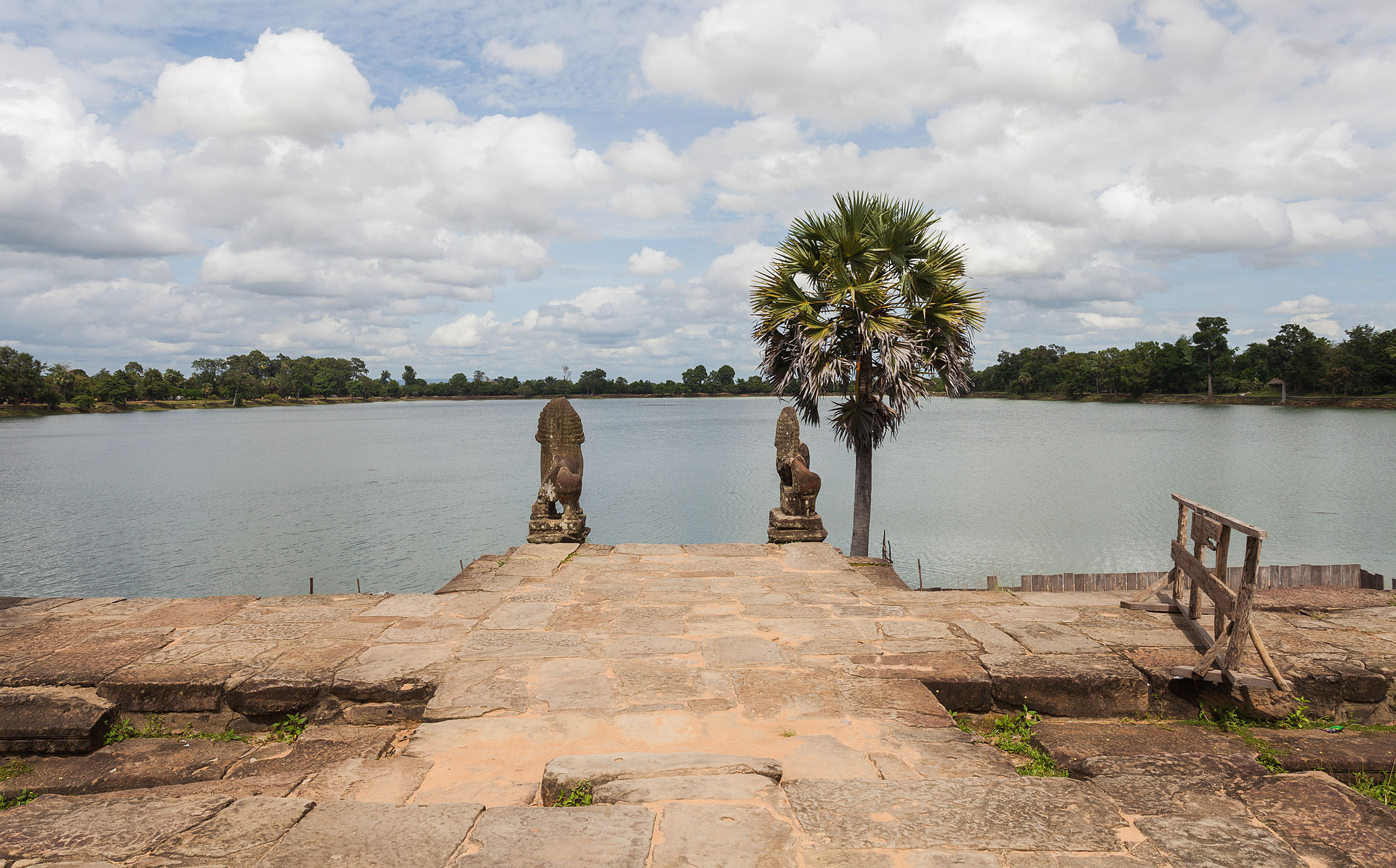
Srah Srang Sunrise
Srah Srang, Angkor
Srah Srang ('Royal Bath') is a 10th-century reservoir (baray) on the eastern side of the Small Circuit, measuring 700 by 350 metres, and is Siem Reap's finest alternative sunrise spot — the sun rises directly over the water from behind distant palm trees, reflecting in the perfectly still surface, and is accompanied by a bird chorus rather than the shouts of thousands of tourists at Angkor Wat. The sandstone landing platform on the western shore (built by Jayavarman VII in the late 12th century) provides the perfect foreground for photographs. The baray was originally constructed to store rainwater during the monsoon season for irrigation of the dry-season rice crop — the engineering that made Angkor's vast population sustainable. Arrive by 5:45 AM for the 6:15 AM sunrise, and wear warm clothes from December to February when dawn temperatures can drop to 15°C.
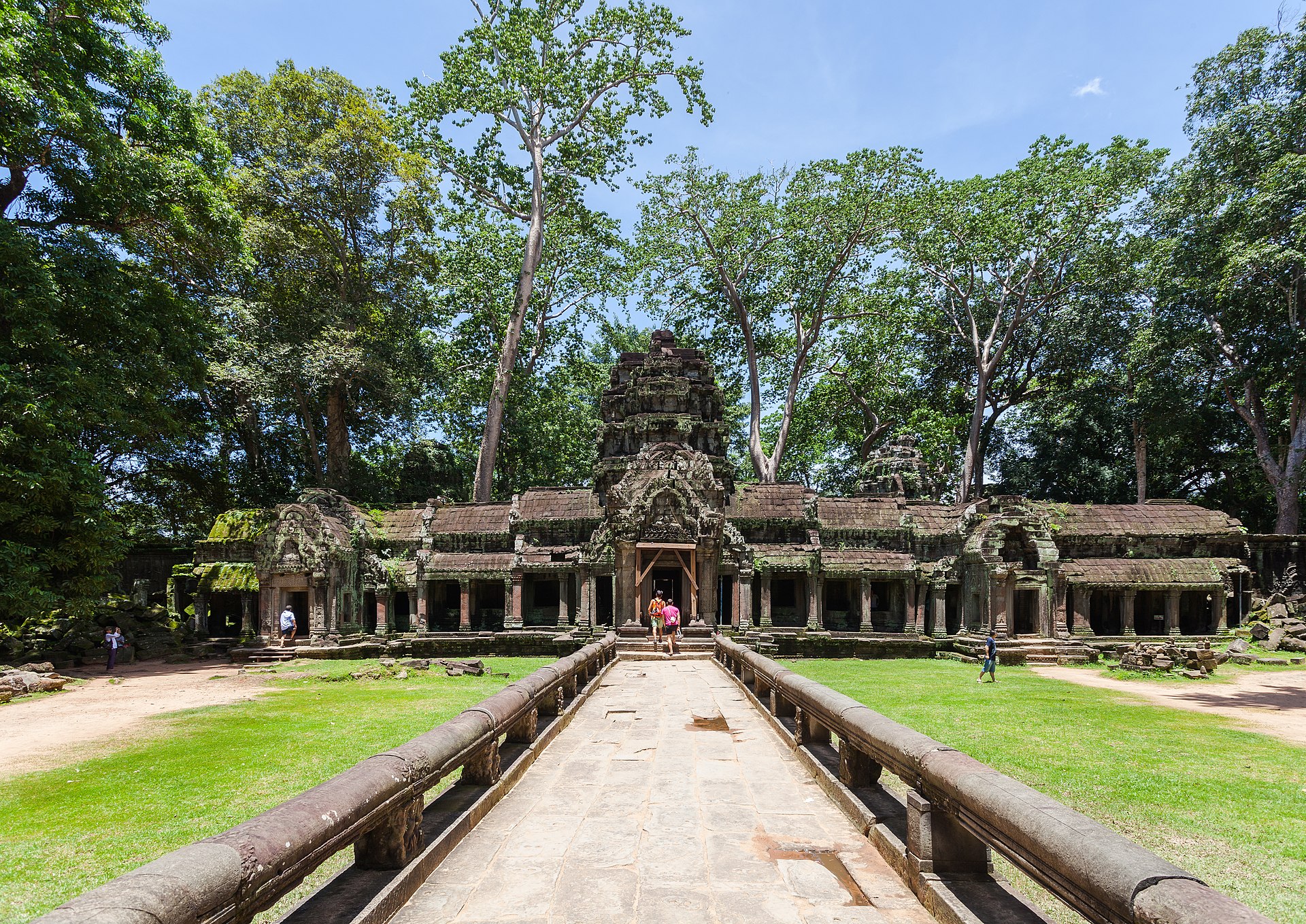
Ta Prohm (Tomb Raider Temple)
Angkor Archaeological Park, Siem Reap
Ta Prohm is the temple that the jungle reclaimed — a 12th-century Buddhist monastery that was deliberately left in the condition the French conservators found it, with massive silk-cotton and strangler fig trees growing through the stone walls, their roots prying apart carved galleries and wrapping around doorways in a slow-motion embrace between architecture and nature. The temple was used as a location in the 2001 film 'Tomb Raider,' which gave it international fame but also the misleading nickname. The temple was built by Jayavarman VII as a monastery and university — its inscription records that it had 12,640 inhabitants, including 18 high priests and 615 dancers, and that its maintenance required the output of 3,140 villages. The scale of this support system demonstrates the institutional power of the Khmer Buddhist monastery at the empire's peak. Ta Prohm's deliberate non-restoration was a conscious decision by the French École française d'Extrême-Orient, who chose to leave one major temple in its found condition to show how the entire complex looked before conservation began. The result — tumbled stone blocks, tree roots cracking walls, the jungle canopy filtering light into the corridors — creates the most atmospheric temple experience at Angkor and the one that most closely matches the romantic fantasy of discovering a lost city.
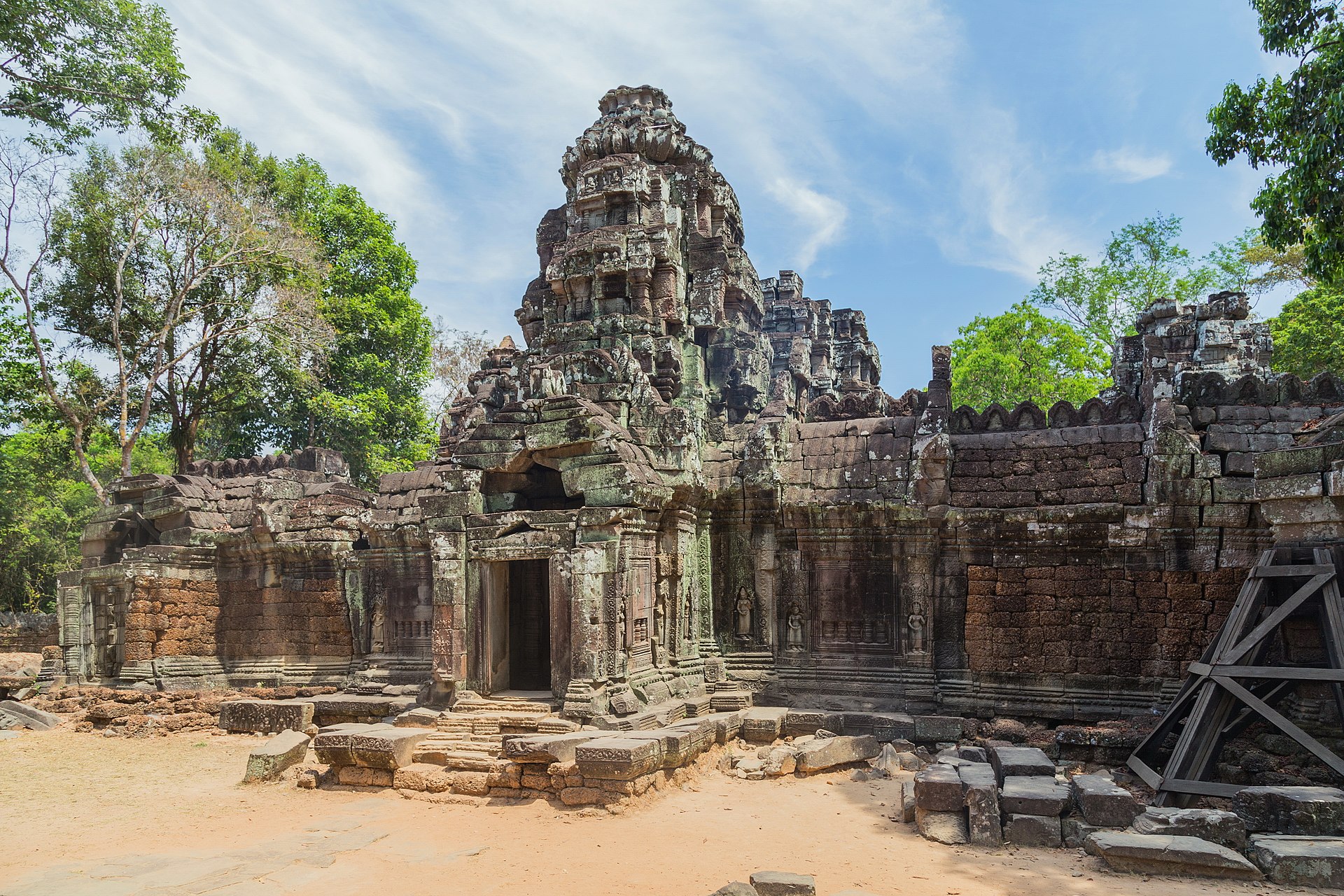
Ta Som
Angkor Archaeological Park
Ta Som is a small, intimate temple on the Grand Circuit built in the late 12th century by Jayavarman VII that offers one of Angkor's most photogenic tree-over-gopura images — the eastern gopura (gate tower) has an enormous strangler fig whose roots cascade over the carved face of a Buddha, creating a scene that rivals anything at Ta Prohm while drawing a fraction of the crowds. The temple's simple layout — a single enclosure with minor galleries — means it can be explored in 30-45 minutes, making it a good 'palate cleanser' between larger temples. The path through the temple leads visitors past the tree-consumed gopura at the eastern end, forming a natural climax to the visit. Best in late morning when sunlight filters through the roots.
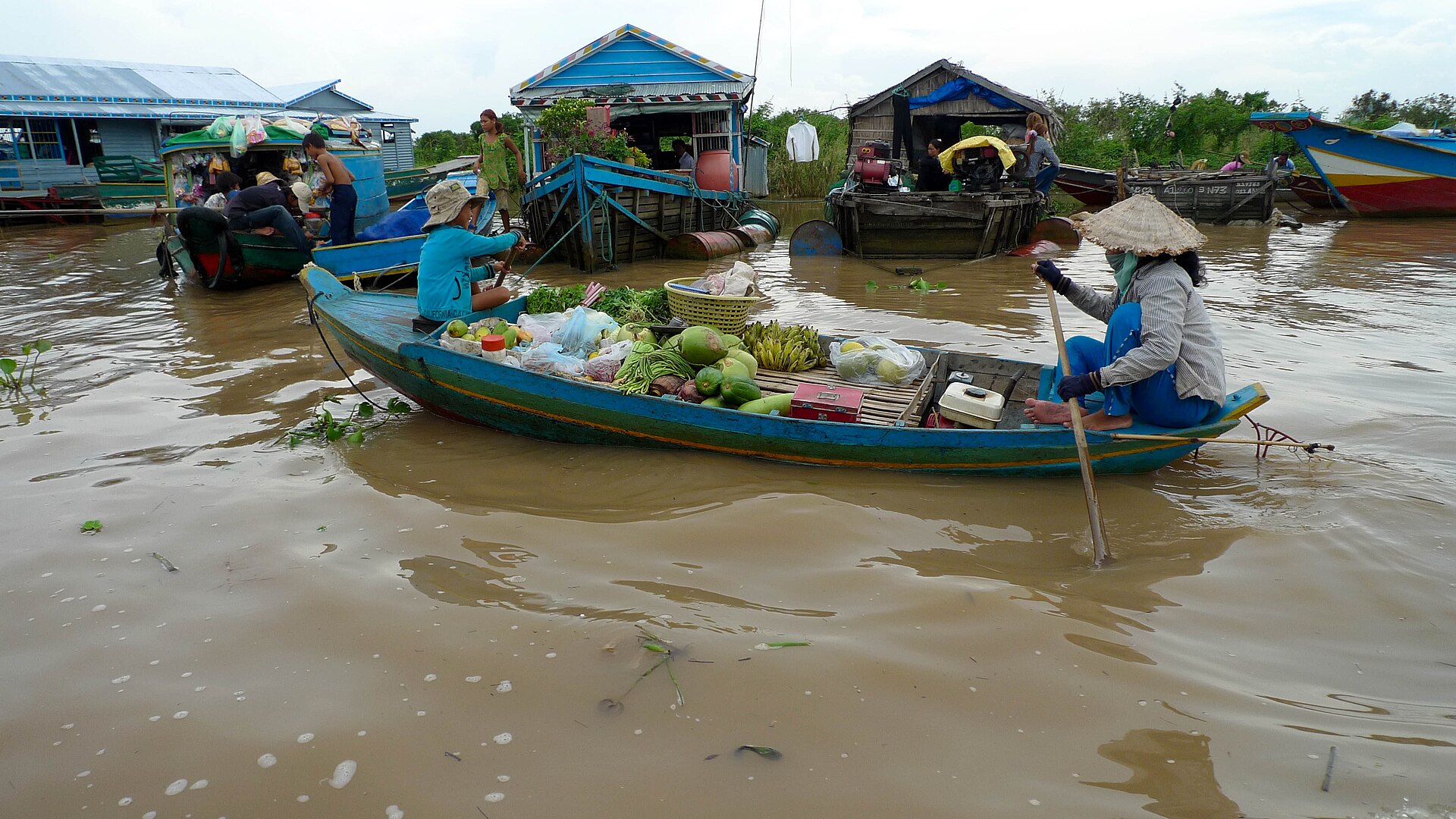
Tonle Sap Lake & Floating Villages
Tonle Sap Lake, Siem Reap Province
Tonle Sap is the largest freshwater lake in Southeast Asia — a body of water that expands from 2,500 square kilometres in the dry season to over 16,000 square kilometres during the monsoon (when the Mekong River's flood reverses the flow of the Tonle Sap River, quadrupling the lake's size). The floating villages on the lake — communities of houses, schools, churches, and shops built on bamboo platforms that rise and fall with the water level — are one of the most extraordinary human adaptations to a natural environment in Asia. Chong Kneas (the closest floating village to Siem Reap, about 15km south) and Kompong Phluk (a stilted village further along the lake, surrounded by flooded forest) are the two most visited communities. The boat trips to these villages — through flooded forest, past fish farms, and alongside the houses where families live entirely on water — provide a perspective on Cambodian rural life that the temples can't offer. Tonle Sap's ecosystem is one of the most productive in the world — the annual flood cycle creates a breeding ground for freshwater fish that provides the protein for Cambodia's entire population. The prahok (fermented fish paste) that is the foundation of Khmer cooking comes from Tonle Sap's fish, and the lake's ecological health is directly connected to Cambodia's food security.
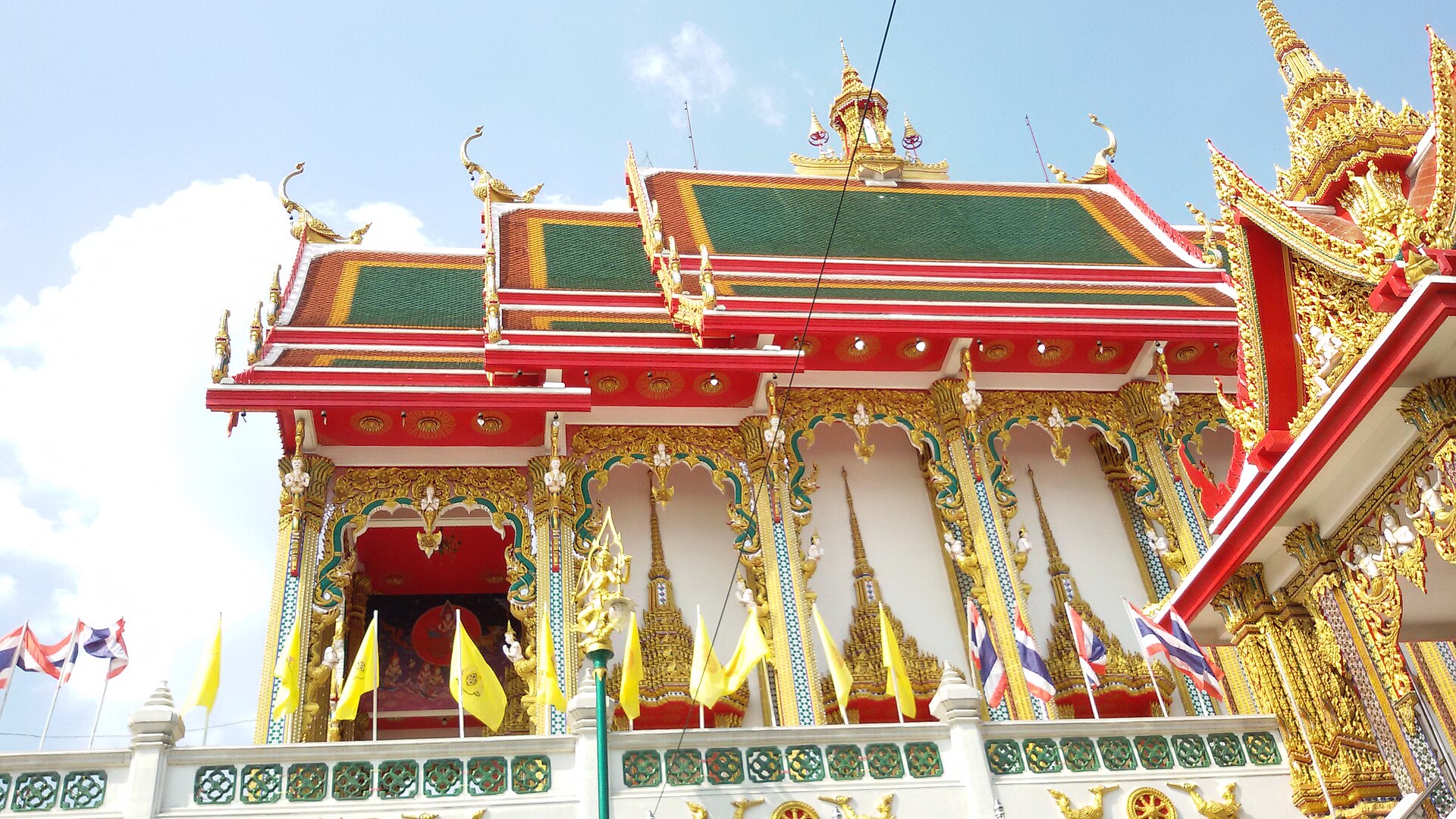
Wat Bo
Street 23, Siem Reap
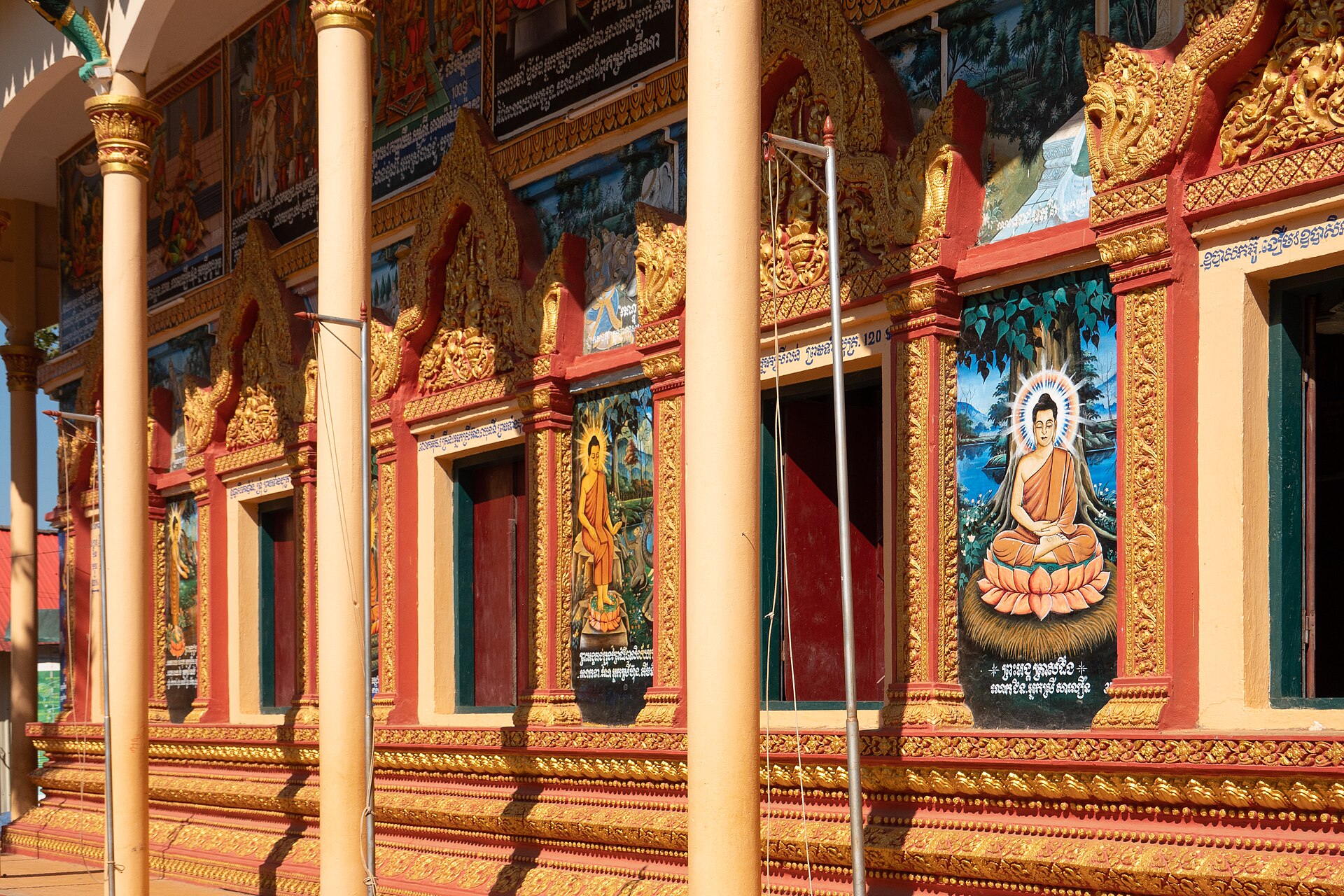
Wat Bo is a working Buddhist pagoda in the centre of Siem Reap that is one of the oldest temples in the city — founded in the 18th century and containing a main vihara (prayer hall) whose interior walls are covered with 19th-century murals depicting the Reamker (the Khmer version of the Ramayana). The murals are faded but still readable, with scenes of battles, demons, monkey warriors, and divine intervention rendered in the classical Khmer style with European influences from the French colonial period. The temple functions as an active Buddhist community — monks in orange robes, schoolchildren in uniforms, lay visitors making offerings — and provides a counterpoint to the archaeological abstraction of Angkor. Free to enter (a small donation is appreciated), with early morning chanting around 5 AM and evening chanting around 6 PM providing the most atmospheric times.
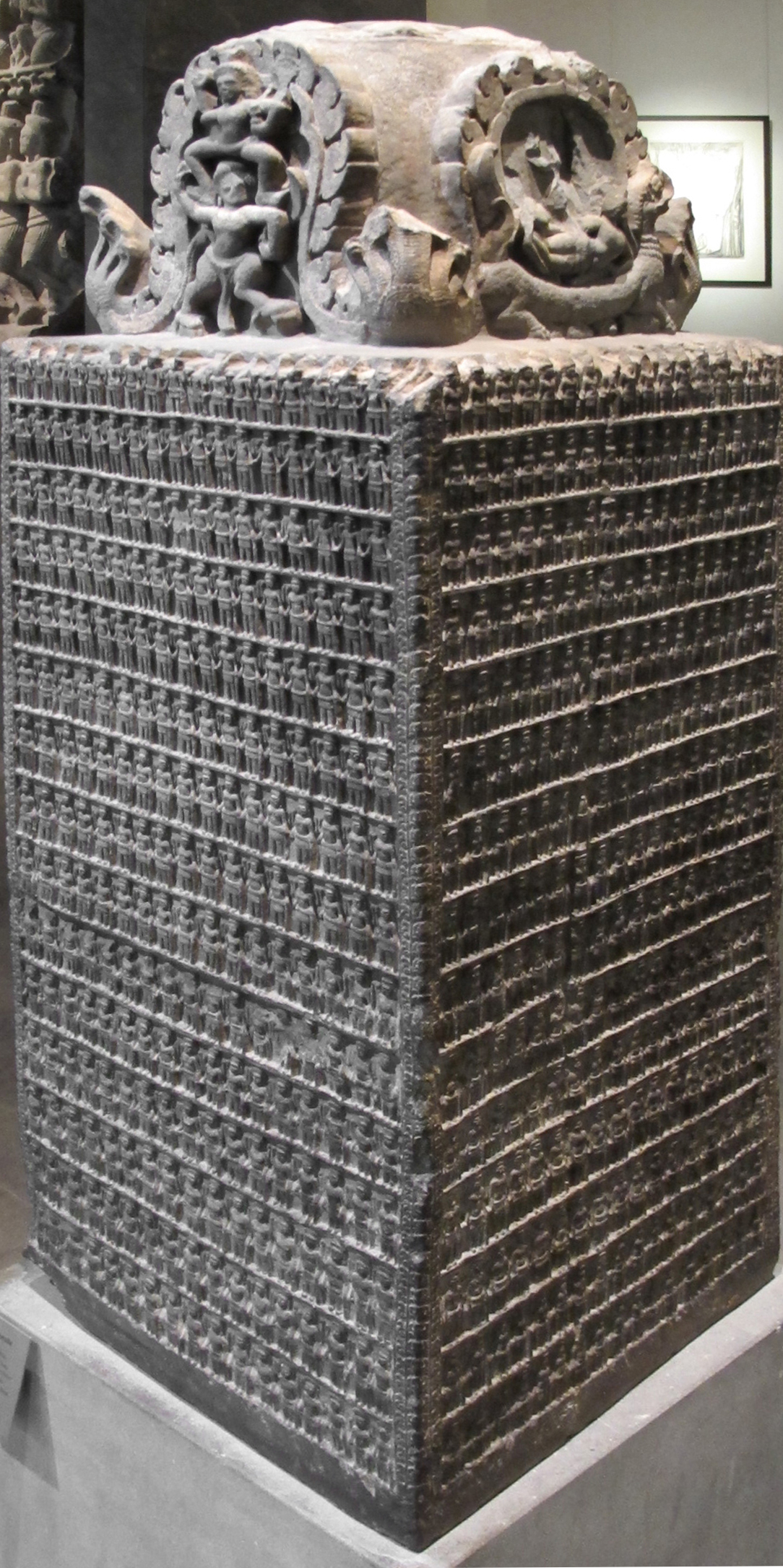
Wat Thmei (Killing Fields Memorial)
Charles de Gaulle Boulevard, Siem Reap
Wat Thmei is a Buddhist pagoda on the road to Angkor Wat that houses Siem Reap's main Khmer Rouge memorial — a glass-walled stupa containing the skulls and bones of about 500 victims of the 1975-79 genocide, many of whom were killed on the pagoda grounds. The memorial is a smaller, more localised counterpart to the famous Killing Fields memorial at Choeung Ek near Phnom Penh, and provides context for Cambodia's recent history that the Angkor narrative tends to skip. The pagoda also functions as a living Buddhist temple, and the monks will often speak to visitors in English about Cambodia's recovery from the Khmer Rouge period. Visits are usually free, with donations appreciated. The memorial is most meaningfully visited early in your Siem Reap trip, before the temples — it provides the shadow against which the temples' survival and reconstruction becomes more poignant.