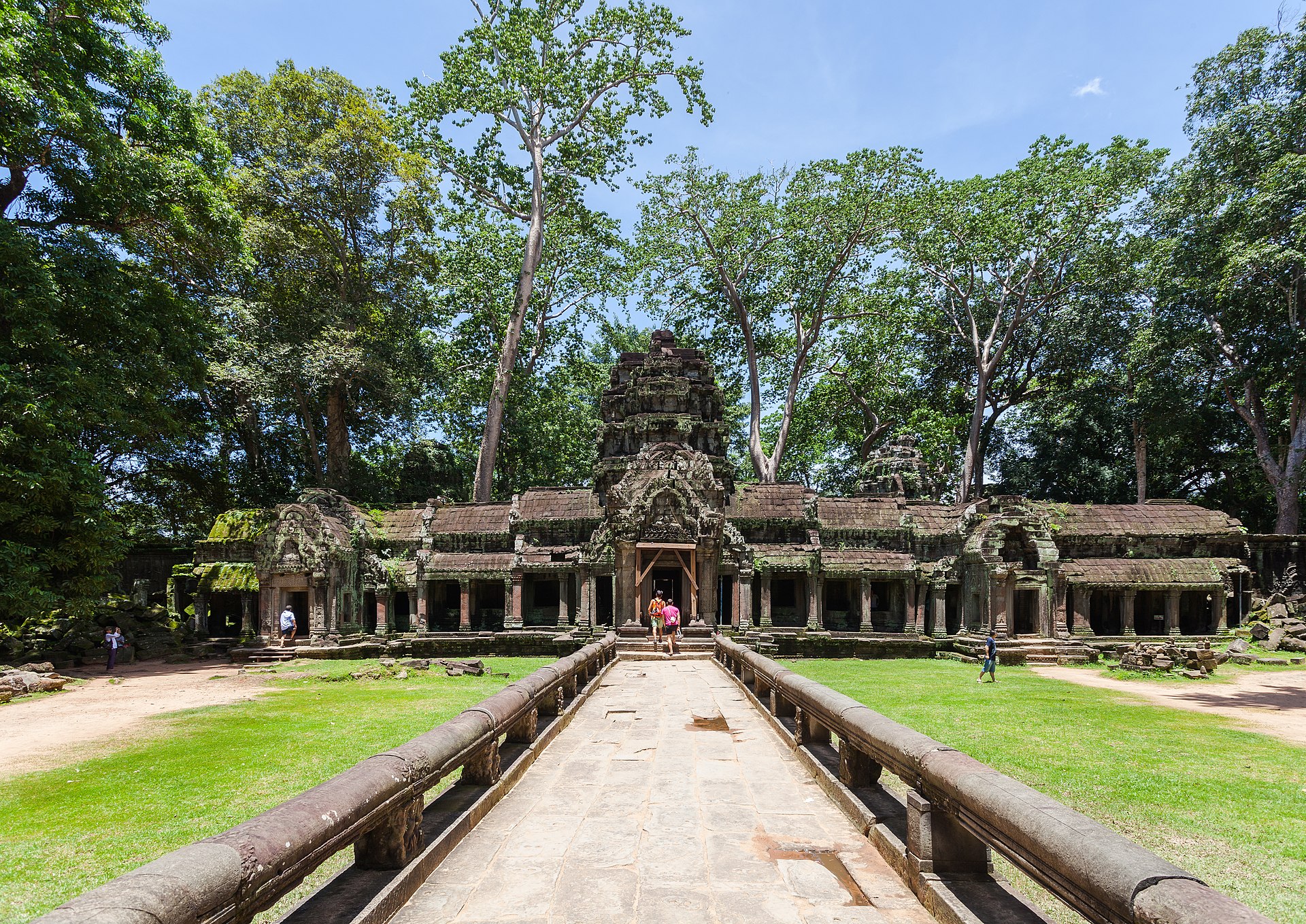
Ta Prohm is the temple that the jungle reclaimed — a 12th-century Buddhist monastery that was deliberately left in the condition the French conservators found it, with massive silk-cotton and strangler fig trees growing through the stone walls, their roots prying apart carved galleries and wrapping around doorways in a slow-motion embrace between architecture and nature. The temple was used as a location in the 2001 film 'Tomb Raider,' which gave it international fame but also the misleading nickname.
The temple was built by Jayavarman VII as a monastery and university — its inscription records that it had 12,640 inhabitants, including 18 high priests and 615 dancers, and that its maintenance required the output of 3,140 villages. The scale of this support system demonstrates the institutional power of the Khmer Buddhist monastery at the empire's peak.
Ta Prohm's deliberate non-restoration was a conscious decision by the French École française d'Extrême-Orient, who chose to leave one major temple in its found condition to show how the entire complex looked before conservation began. The result — tumbled stone blocks, tree roots cracking walls, the jungle canopy filtering light into the corridors — creates the most atmospheric temple experience at Angkor and the one that most closely matches the romantic fantasy of discovering a lost city.
Verified Facts
Ta Prohm was built by Jayavarman VII as a Buddhist monastery
The temple was featured in the 2001 film 'Tomb Raider'
The inscription records 12,640 inhabitants
The temple was deliberately left in its overgrown state by French conservators
Get walking directions
Angkor Archaeological Park, Siem Reap