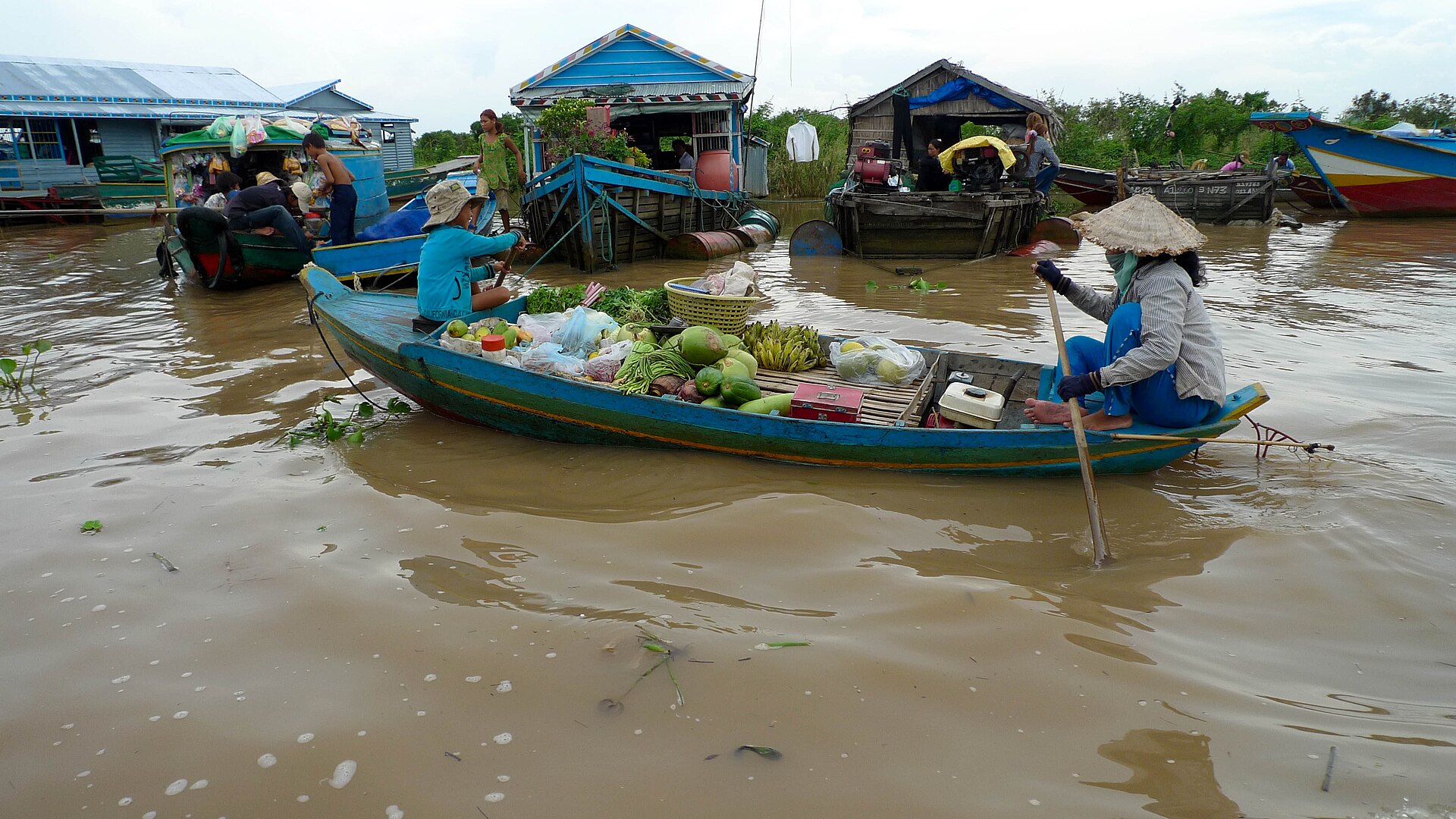
Tonle Sap is the largest freshwater lake in Southeast Asia — a body of water that expands from 2,500 square kilometres in the dry season to over 16,000 square kilometres during the monsoon (when the Mekong River's flood reverses the flow of the Tonle Sap River, quadrupling the lake's size). The floating villages on the lake — communities of houses, schools, churches, and shops built on bamboo platforms that rise and fall with the water level — are one of the most extraordinary human adaptations to a natural environment in Asia.
Chong Kneas (the closest floating village to Siem Reap, about 15km south) and Kompong Phluk (a stilted village further along the lake, surrounded by flooded forest) are the two most visited communities. The boat trips to these villages — through flooded forest, past fish farms, and alongside the houses where families live entirely on water — provide a perspective on Cambodian rural life that the temples can't offer.
Tonle Sap's ecosystem is one of the most productive in the world — the annual flood cycle creates a breeding ground for freshwater fish that provides the protein for Cambodia's entire population. The prahok (fermented fish paste) that is the foundation of Khmer cooking comes from Tonle Sap's fish, and the lake's ecological health is directly connected to Cambodia's food security.
Verified Facts
Tonle Sap expands from 2,500 to over 16,000 sq km seasonally
The Mekong flood reverses the Tonle Sap River's flow
Prahok (fermented fish paste) is the foundation of Khmer cooking
Tonle Sap is the largest freshwater lake in Southeast Asia
Get walking directions
Tonle Sap Lake, Siem Reap Province