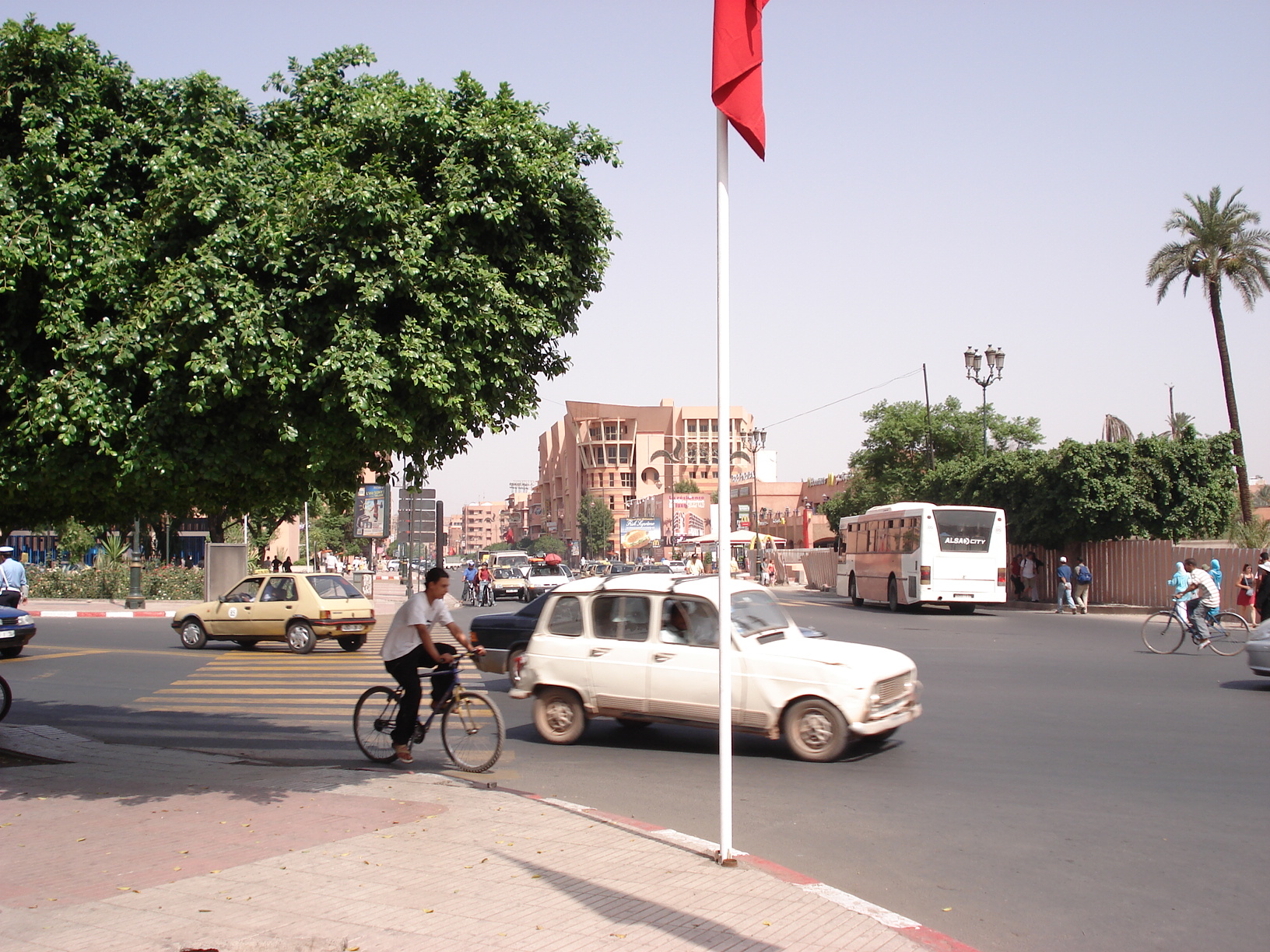
Guéliz is Marrakech's French-built new town — a grid of Art Deco and Modernist buildings laid out during the Protectorate period (1912-1956) that provides the counterpoint to the medina's labyrinthine chaos. Avenue Mohammed V, the main boulevard connecting the medina to Guéliz, is lined with cafés, banks, and commercial buildings that could be in any French provincial city, and the contrast between the medieval density of the medina and the wide, tree-lined avenues of Guéliz — created by French urban planner Henri Prost under the direction of Resident-General Hubert Lyautey — captures the dual identity of modern Marrakech.
The Art Deco architecture of Guéliz is underappreciated — the cinema, the post office, the Marché Central (central market), and the residential buildings along Boulevard Mohammed Zerktouni represent a tropical adaptation of French Art Deco that uses the Moroccan palette (ochre, white, turquoise) and local craft traditions (zellige, carved plaster) alongside European geometric forms. The result is a hybrid style — Art Deco Marocain — that exists only in the former protectorate cities.
The food scene in Guéliz has evolved beyond French colonial pastry shops (though those survive, and the croissants at Amandine are excellent) to include the contemporary Moroccan restaurants, juice bars, and rooftop terraces that cater to a younger, more cosmopolitan Marrakech. The Marché Central, a covered market selling meat, fish, vegetables, and spices in a less tourist-oriented setting than the medina souks, provides the most authentic local shopping experience in the new town.
Verified Facts
French urban planner Henri Prost designed the ville nouvelle
Guéliz was laid out during the French Protectorate period (1912-1956)
The Marché Central is the main food market in Guéliz
Art Deco Marocain is a hybrid architectural style unique to former protectorate cities
Get walking directions
Boulevard Mohammed V, Marrakesh, 40008, Morocco