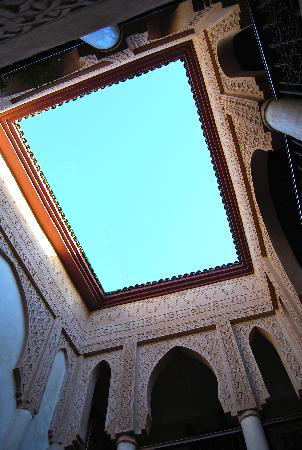
The riad is Marrakech's defining architectural form — a traditional courtyard house built around a central garden (the word riad comes from the Arabic ryad, meaning garden) that turns its back on the street and opens inward to light, water, and plantings. The riad's blank exterior walls — giving nothing away to the street — and its lush interior courtyard — fountains, zellige tiles, orange trees, bougainvillea — create the contrast between public austerity and private beauty that defines Moroccan domestic architecture.
Hundreds of riads in the medina have been converted into boutique hotels since the early 2000s, when French and European investors began purchasing derelict medina houses and restoring them to a standard of luxury that exceeds anything the original owners could have imagined. The best riad hotels (Riad Jardin Secret, Riad Goloboy, La Mamounia's smaller properties) demonstrate Moroccan craftsmanship at its finest — carved plaster, painted cedar ceilings, hand-cut zellige, and the courtyard gardens that provide the cool, green heart of every riad.
The riad design is a response to climate — the courtyard creates a microclimate several degrees cooler than the surrounding streets, the thick walls absorb heat during the day and release it at night, and the rooftop terrace (essential for evening socialising) catches the breeze above the medina walls. Staying in a riad is the most immersive accommodation experience in Marrakech, and the nightly ritual of climbing to the rooftop to watch the sunset over the medina — minarets silhouetted, swallows circling, the call to prayer rising from the mosques below — is one of the great travel moments in Morocco.
Verified Facts
Riad comes from the Arabic word ryad meaning garden
Riads are built around a central courtyard open to the sky
The riad hotel conversion trend accelerated in the early 2000s
La Mamounia is Marrakech's most famous luxury hotel
Get walking directions
Various riads, Medina, Marrakech