Preah Khan is one of the largest temple complexes at Angkor — a sprawling 12th-century Buddhist university and monastery built by Jayavarman VII that is less visited than Angkor Wat, Bayon, or Ta Prohm but offers an equally rewarding (and considerably less crowded) experience. The temple's name means 'Sacred Sword,' and it was both a religious and administrative centre that housed thousands of monks, scholars, and functionaries.
The temple's layout is a concentric series of enclosing walls with a cruciform central sanctuary, and the approach through the eastern gopura — past a row of garudas (mythical bird-men) holding the body of a naga, a motif unique to Preah Khan — is one of the most dramatic entrances at Angkor. The two-storey building near the central sanctuary (the only two-storey structure at Angkor, with round columns that suggest Greek or Roman influence transmitted via trade routes) remains architecturally mysterious.
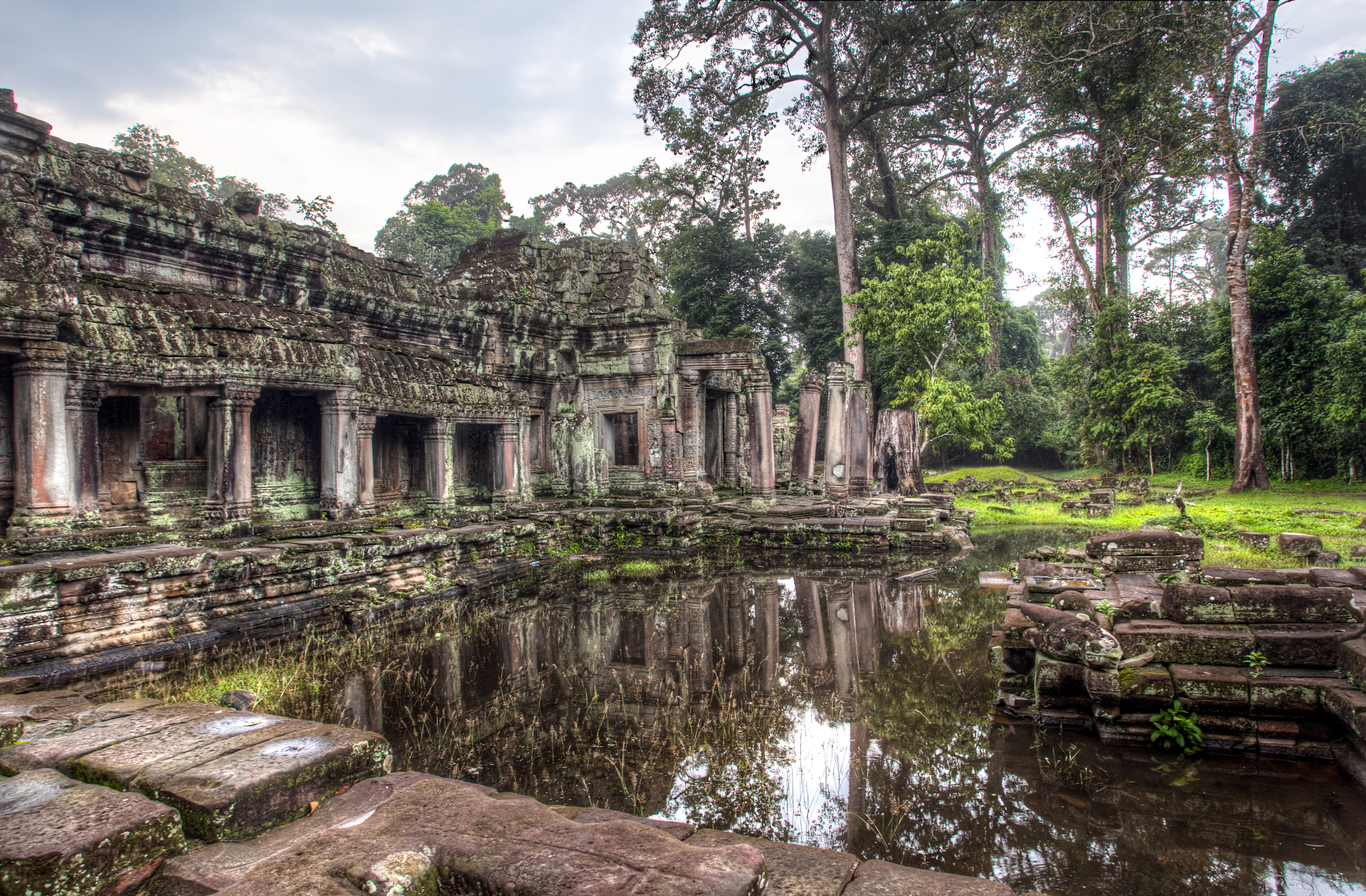
Preah Khan has been partially cleared of vegetation but retains more of the jungle-ruin atmosphere than the heavily restored Angkor Wat — trees grow through doorways, roots grip carved walls, and the play of light through the canopy and the stone windows creates the kind of atmosphere that makes Angkor the most photogenic archaeological site in the world.
Verified Facts
Preah Khan was built by Jayavarman VII in the 12th century
Preah Khan means 'Sacred Sword'
The two-storey building with round columns is unique at Angkor
The temple functioned as a Buddhist university and monastery
Get walking directions
Angkor Archaeological Park, Siem Reap